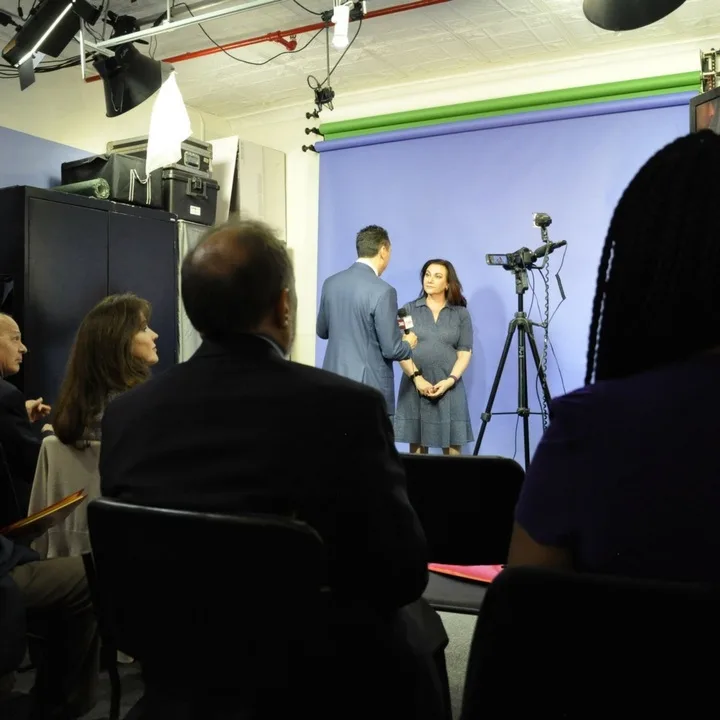
I spent 13 years as a TV producer, helping create over 5,000 segments for networks including NBC, ABC, and Fox. In that time, I watched countless guests walk in, do a perfectly decent interview, and walk out having left 90% of the value on the table.
An interview isn't a moment. It's a launch pad. What you do before, during, and after determines whether it generates one day of attention or months of leads, credibility, and new opportunities. This guide covers everything.
Before the Interview
Most guests show up. The pros shape the interview before they ever arrive.
Send a Sample Q&A
Offer the interviewer a list of suggested questions. It feels like a courtesy, but here's what actually happens: they use most of the questions you wrote. That means you're answering questions you already practiced. That's not luck, that's preparation paying off.
Ask About Website or Resource Mentions
Politely ask whether the outlet can mention or display your website. Most hosts want to give their audience a takeaway, and a free resource tied to your URL is perfect for that. TV will often flash a chyron, radio will read it aloud, and podcasters will drop it in the show notes. You have to ask.
Provide a Fact Sheet
Send a one-page fact sheet covering the key data points of your topic. Producers are busy. When you make their job easier with ready-to-use facts, those facts often make it into the segment or article word for word.
Provide a Top 5 or Top 10 List
Numbered lists are a producer's best friend. They fill air time, give the audience easy takeaways, and create natural on-screen graphics. Write the list for them and it'll show up on screen with your name attached.
Be a Resource, Not Just a Guest
Offer to help source props, data, video clips, or other experts for the segment. When you make the producer's story better, you become someone they call again. The goal is not to be a one-time guest, it's to get into the rotation.
Build a Dedicated Landing Page
Before the interview airs, set up a simple URL you can mention on air, tied to a free resource and an email opt-in. That page is your virtual storefront. Make sure it has exactly one offer. Driving traffic to a confusing page wastes the moment entirely.
For Podcasts: Research the Show Deeply
Podcast hosts notice when guests have actually listened to their show. Reference a past episode during the interview. Match your energy level to the show's tone. Listeners trust guests who fit naturally, and hosts remember guests who felt like a genuine fit rather than someone pitching their way through a media tour.
During the Interview
This is where most people play defense. The pros play offense.
Build the Relationship, Not Just the Answer
You're not just performing for the audience. The host, producer, or reporter is a relationship worth cultivating. Ask questions about their show. Take notes. If they mention having kids or loving a particular topic, write it down. That detail is the foundation of a long-term media relationship.
Give Tips Even If They Weren't in the Pitch
Your pitch got you in the door, but the audience wants value in real time. Don't limit yourself to exactly what was agreed on. When you give more than expected, both the host and the audience notice. That generosity is what makes you memorable and brings you back.
Offer a Free Resource to the Audience
Give the audience something to take away, a free report, checklist, video, or guide, accessible at your website. When you frame it as a gift rather than a plug, everyone wins. The host looks generous for making the offer, and you get opt-ins from warm, interested people.
P.L.U.G. Your Website with Purpose
PLUG stands for Properly Leverage UR (your) Gift. Don't just say your website address. Tell the audience what they'll get when they go there. "At [yoursite].com you'll find a free guide to X that saves most people about two hours a week." That's a reason to visit. A bare URL is not.
Plant Seeds That Drive Action
As you give tips and share value, weave in language that nudges the audience toward a next step, without stopping to pitch. "When my clients do this, what usually happens next is..." creates curiosity. "You can find the full checklist at my website" closes the loop. Do it naturally, not mechanically.
Make the Host Look Great
Your job is not to impress yourself. Your job is to make the host glad they booked you. When you deliver value, engage the audience, and make the conversation flow naturally, you've done your job. Hosts remember the guests who made them look smart for inviting them on.
Bring a Thoughtful Gift (When Appropriate)
This works better than people expect. A copy of your book, something relevant to the segment, or something simple and memorable for the crew, cookies, snacks, anything inexpensive and genuine, creates goodwill. It's not a bribe. It's the kind of thing people remember about guests they enjoyed working with.
Control the Narrative with Message Points
Every tangent the host introduces is an opportunity to bridge back to your core messages. Prepare three message points before you walk in. Every answer should connect to at least one of them. This isn't rigidity, it's discipline. Guests who ramble get one appearance. Guests who stay on message get invited back.
Have a Game Plan
Decide in advance: where do you want this conversation to go, what do you want the audience to do, and what is the single most important thing they should walk away knowing? "Winging it" is not a strategy. It's an excuse for an inconsistent result.
Match Your Energy to What You're Selling
The experts who generate the most business from media appearances are energized. Not fake, not over-the-top, genuinely excited about their topic. Ask yourself before every interview: why am I passionate about this? Find that answer, and let it show. Flat energy is invisible energy.
Connect with the Specific Audience
A morning news audience, a business podcast audience, and a trade publication readership all have different problems and different vocabularies. Customize your language and examples to the specific audience in front of you. Generic messaging gets forgotten. Specific relevance gets shared.
Know the Three Stages of a Buying Audience
Stage one: the audience wonders if this is relevant to them. Stage two: they confirm it is. Stage three: they take action. Your job is to move people through all three stages during the interview. Most guests only address stage two and skip the other two entirely.
Deliver a Clear Call to Action
You must tell the audience what to do, or they won't do it. This is as true on a podcast as it is on live TV. "Go to [URL], grab the free guide, and you'll have everything you need to get started this week." Specific, simple, actionable. No call to action means no response.
Build a Lead Capture System Behind the CTA
When someone goes to your free resource page, they should enter their email to receive it. That opt-in puts them in an automated follow-up sequence. Most people don't buy on first contact; research consistently shows it takes multiple impressions. An email sequence handles those impressions while you sleep.
Reference Your Book Without "Selling" It
Work your book into the conversation naturally: "When I was researching this, I found something surprising..." or "This is actually where the idea for the book came from..." or "In the book I go deep on exactly this scenario..." Each phrase gives you a mention without feeling like a commercial break inside your interview.
Lead with Benefits, Not Features
Features explain what something is. Benefits explain why someone should care. "This framework has 13 principles" is a feature. "This framework gives you a way to stay calm and on-message in any interview, even hostile ones" is a benefit. Always lead with what it does for the audience.
Welcome Objections and Handle Them Live
When a host pushes back or voices skepticism, that's not an attack, it's an opportunity. When you handle an objection clearly and confidently, you're demonstrating authority for every skeptic in the audience who was thinking the same thing.
Raise Objections Before the Host Does
"You might be wondering whether this works for people who don't have any media experience..." When you raise the objection yourself and then answer it, you control the narrative and eliminate doubt before it becomes a distraction.
Create Yes in the Audience's Mind
Ask rhetorical questions that lead the audience to agree with you: "Have you ever watched someone on TV and thought, I could never do that?" That yes creates buy-in. A series of small agreements builds toward a big one.
Smile (When the Topic Allows)
It sounds almost too simple. But people who smile are more likable, more trustworthy, and more watchable. Likability is a business asset. Unless your topic is genuinely somber, let your face show that you enjoy what you do.
Use Authentic Body Language
Move your head. Use your hands. Adjust your posture. Stillness reads as nervousness or disengagement on camera. Natural movement signals confidence and keeps the audience's eye moving. You don't need to be theatrical, just present.
"An interview isn't a moment. It's a launch pad. What you do before, during, and after determines whether it generates one day of attention or months of results."
Jess Todtfeld, CSP • Guinness World Record HolderMost Radio Interviews in 24 Hours
Is Your Team Ready for High-Stakes Interviews?
Jess Todtfeld has trained executives at IBM, JPMorgan, LinkedIn, the UN, and AARP to perform under pressure. In one focused session, your spokespeople can learn to control any interview, on camera or on stage.
Get DetailsAfter the Interview: Repurpose Everything
This is where most value is left on the table. One interview can produce weeks of content if you work it right.
Add "As Featured In" to Your Website
Download the outlet's logo (or screenshot the segment) and add it to your homepage, your media page, and your bio with the phrase "As Featured In" or "As Seen On." Third-party credibility from recognized media brands does more for your positioning than almost anything you can write about yourself.
Publish the Interview on Your Website
Embed the video or audio, reprint the article (check the legal requirements first and always credit the source), and add a written summary with bonus takeaways. This gives search engines content to index and gives visitors a reason to stay on your site longer.
Pull and Display Strong Quotes
If a publication called you a "leading voice" or "a top expert in the field," that phrase belongs on your bio page, your proposals, and your email signature. Third-party validation carries more weight than self-description every time.
Share on Social, Always Linking Back to Your Site
Post the interview across LinkedIn, Instagram, and wherever your audience lives, but link to your website rather than directly to the media outlet. You want people taking action on your property, not scrolling away on someone else's platform.
Create Short Video Clips for LinkedIn and Instagram
Pull 60-to-90-second clips of your strongest moments. Add captions (viewers watch without sound far more often than you think). Post these as individual short-form videos. One TV segment can produce 4 to 6 short clips, each of which is a separate piece of content with its own reach.
Tools: Descript, CapCut, Opus ClipUpload TV Interviews to YouTube
Start a YouTube channel if you haven't already and upload every TV interview. YouTube is the second-largest search engine in the world. For radio or podcast appearances, pair the audio with a static graphic showing the station logo, your headshot, and bullet points of the key takeaways.
Write a Blog Post Expanding on the Interview
Take the topic and go deeper than you could in a 4-minute TV segment. Add the examples that got cut. Include the data you didn't have time to explain. Credit the original outlet. This gives you an SEO-indexed article that benefits from the credibility of the appearance without simply duplicating it.
Turn It Into an Email Newsletter
Send your list a note sharing the interview, what you discussed, and one or two bonus takeaways they won't find in the clip. This positions the media appearance as an event worth their attention and keeps your list warm between larger campaigns.
Create a Quote Graphic
Take a strong line from your interview and turn it into a shareable graphic with your name, your website, and the media outlet's logo or name. This works well on LinkedIn and Instagram, builds credibility at a glance, and extends the life of the appearance for weeks.
Tools: Canva, Adobe ExpressTranscribe the Audio and Repurpose It
Modern transcription is fast, accurate, and often free. Transcribe podcast or radio appearances and use the content as a blog draft, a LinkedIn article, or the foundation of an ebook. Edit for clarity, then publish or sell it.
Tools: Otter.ai, Descript, Riverside, iPhone and Android native transcription (built into phone recording apps on most current devices)Sell the Transcript as a Low-Cost Ebook
A well-edited, structured transcript from a substantive interview has real value. Format it, add a cover, and sell it on Amazon, Gumroad, or your own site at a low price point ($5 to $15). It becomes a passive revenue stream and a lead generator simultaneously.
Use AI to Repurpose at Scale
Once you have a transcript, AI tools can help you draft social media posts, generate a blog outline, create a Q&A-style FAQ from the content, and suggest headlines. You're still the expert providing the ideas; AI just handles the mechanical reformatting so you can move faster.
Tools: Claude, ChatGPT, PerplexityAdd Media Logos to Your Business Cards
"As Seen On" with recognizable outlet logos on a business card or leave-behind is a credibility signal that works in person just as well as online. It's especially effective at conferences, speaking engagements, and sales meetings.
Use It in Your Speaking Introduction
Ask your event host to reference your media appearances in the introduction. "As seen on NBC News..." carries more weight than a recited list of credentials. Audiences warm to speakers who have already been vetted by media they recognize.
Create a Physical Framed Credential
Frame a print article, a TV screenshot, or a co-branded graphic and hang it in your office. In video calls and in-person meetings, visible media credentials function as continuous, passive social proof for every client and prospect who sees them.
Add Everything to Your Media Page
Maintain a dedicated media page on your website with outlet logos, links to clips and articles, and downloadable assets for journalists. This page is what a producer or journalist checks first when vetting whether to book you. Make it comprehensive and current.
Use One Medium to Pitch Another
A TV segment becomes a credential when pitching print. A print article becomes a credential when pitching TV or radio. A podcast appearance is evidence that you translate well to audio. Show journalists and producers that others have already vetted you.
Use the Coverage to Pitch Book Publishers
If you're working toward a book deal, a portfolio of media appearances demonstrates platform, which is one of the primary things publishers evaluate. Collect and organize your appearances as evidence that an audience already exists for your ideas.
After the Interview: Staying in the Media Ecosystem
One appearance is a credential. A relationship is a recurring revenue stream.
Keep the Relationship Alive
Send a genuine thank-you to the producer or reporter within 24 hours. Then stay in touch by pitching new story ideas relevant to their format and audience. The goal is to become someone they think of when a topic in your space comes up, not someone they have to Google every time.
Pitch Every 5 to 6 Weeks
Once you have a relationship at an outlet, send a new story idea every 5 to 6 weeks. Any more frequent and you become noise. Any less frequent and you fall off the radar. Be consistent, keep pitches short (3 sentences is ideal), and tie them to what's happening in the news.
Get Into the Rotation
Many TV and radio programs have regular contributors or rotating experts. Make it known that you're available for fast turnaround, especially for breaking news in your area. Producers book the expert they can reach, not necessarily the most prominent one.
Pitch Other Reporters at the Same Outlet
Once you've been featured at an outlet, you have an internal credibility signal you can use with other reporters there. Just confirm with your original contact first before approaching their colleagues. Most won't mind, and it extends your reach within the same institution.
Become Their Expert Rolodex
Connect reporters and producers with other experts and authors who would be useful to them, even when it's not your story. When you become a reliable resource, they keep calling. Being generous with your network is one of the highest-leverage things you can do in media relations.
For Podcasts: Ask About a Follow-Up Episode
If your first appearance went well, pitch the host on a follow-up covering a different angle. Podcast hosts love guests who bring their audience back, and a returning guest signals authority to new listeners who haven't heard you before.
For Podcasts: Propose an Audience Swap
Offer to promote the episode to your email list and social following in exchange for the host doing the same. This is one of the most underused levers in podcasting. A genuine audience swap benefits both sides and the host will appreciate that you're invested in the episode's success beyond the day it drops.
Podcast-Specific Strategies
Podcasting is now one of the highest-value media channels for experts and executives. It deserves its own playbook.
Record Your Own High-Quality Audio
Your audio quality is your first impression before you've said a word. A USB condenser microphone (Rode NT-USB Mini, Blue Yeti, or similar) in a quiet room with soft furnishings produces noticeably better audio than a built-in laptop mic or earbuds. Hosts notice. Listeners notice. It signals that you take this seriously.
Tools: Rode NT-USB Mini, Blue Yeti, Shure MV7Use a Professional Recording Platform
If the host gives you a choice, suggest Riverside.fm or Squadcast. These platforms record each participant's audio locally at full quality, which eliminates the internet-compression artifacts that make guest audio sound hollow or choppy. Better audio means the episode is more likely to get used, shared, and promoted.
Tools: Riverside.fm, Squadcast, ZencastrAsk for the Edited File Before It Publishes
Some hosts will share the edited audio before publication. This gives you a chance to catch any errors, confirm your URL was mentioned correctly, and plan your promotional push around the actual release date rather than guessing.
Clip the Podcast for YouTube Shorts, TikTok, and Reels
Short video clips from podcast recordings perform well on every short-form platform. A 60-second insight with your name and the show title creates discoverability beyond the podcast audience. Use auto-captioning tools so the clip works without sound.
Tools: Descript, Opus Clip, CapCutGet Transcribed and Repurpose as LinkedIn Content
Transcribe the episode (most modern iPhones and Android devices have built-in transcription in their voice memo apps; Otter.ai, Descript, and Riverside also transcribe automatically), then extract 3 to 5 LinkedIn posts from the best moments. Each post should stand alone as a piece of value, with the episode linked as a resource for those who want more.
Tools: Otter.ai, Descript, Riverside auto-transcription, iPhone Voice Memos, Google Recorder (Android)Write a Guest Pitch That Actually Works
Most podcast pitch emails are too long, too vague, and too focused on the guest's credentials rather than the host's audience. The best pitches are 4 to 5 sentences: what you'd discuss, why it's relevant to their specific listeners, and one concrete proof point (a previous appearance, a book, a company name the host's audience would recognize).
Build a One-Page Podcast Guest One-Sheet
Create a single PDF that includes your headshot, your bio (2 to 3 sentences max), your three best interview topics with a sentence describing each, a few previous podcast appearances as proof, and your contact information. Send this alongside your pitch. It makes you look prepared and professional, which already puts you ahead of most pitches hosts receive.
Using AI to Multiply Every Interview
AI doesn't replace the interview. It multiplies everything that comes out of it.
Use AI to Prepare Smarter
Before any interview, use an AI assistant to research the host, the show's typical topics, recent episodes, and the audience demographics. You'll walk in with context that most guests don't have, and hosts can feel the difference immediately when someone has actually done their homework.
Tools: Claude, ChatGPT, PerplexityGenerate a Full Content Repurposing Plan
After an interview, paste the transcript into an AI tool and ask it to generate 5 LinkedIn posts, 3 tweet threads, an email newsletter draft, a blog post outline, and 10 short-form clip ideas. You still write and review everything, but you're working from a complete draft rather than a blank page.
Optimize Your Repurposed Content for AI Search
AI-powered search tools (Perplexity, ChatGPT, Google's AI Overviews) increasingly pull from structured, expert-authored content when answering questions. When you publish blog posts built from your interview content, use clear headings, numbered lists, and an FAQ section. This format makes it easier for AI systems to surface your content when someone asks a question you can answer.
Ready to Get More From Every Interview?
Jess Todtfeld delivers hands-on media training and presentation coaching for corporate leaders, executives, and communications teams. His clients leave with the confidence, message discipline, and delivery skills to perform in any media environment.
Get DetailsFrequently Asked Questions
How do you leverage a media interview?
What should you do after a media interview?
How do I get more from a podcast interview?
How often should you pitch a media outlet?
Can you repurpose a media interview into other content?
What makes a good podcast guest pitch?
What tools help with media interview preparation?