The single biggest thing that moves the needle for a book is not a bigger push. It is meeting the media where they actually are, then handing them something so useful they cannot say no. After four decades of promoting authors across television, radio, print, and podcasts, I have watched the tools change and change back. The letter became the fax, the fax became email, email became noise, and now a well-timed piece of direct mail lands better than almost anything. What never changes is the thinking behind it.
I have been doing this since college, when I ran student activities at UNLV and brought in speakers like Leonard Nimoy, Carl Bernstein of Woodward and Bernstein, and Vincent Bugliosi, the prosecutor who put away Manson. Nearly every one of them had a book. That was the lesson that set the course for everything I do now.
Why a book changes everything
Without a book, you are just another person with an idea. A book focuses that idea and gives it a platform. Suddenly people want to interview you for TV, radio, newspapers, and magazines. They want to bring you in for a speech or a signing. You cannot have a book signing without a book. It is the foundation of a smart marketing strategy for anyone who wants to grow a consulting business, change their community, or make a real impact.
Meet the media where they are
Everything in publicity comes down to reaching the right person in the way they actually respond. I use Twitter constantly, where I have more than 47,000 followers, many of them journalists and people in publishing, and I post for my clients several times a day. LinkedIn is strong too. But the beautiful thing about a platform like Twitter is that I do not need an existing relationship to reach out to someone. On LinkedIn, you kind of do.
And after years of email fatigue, direct mail is working again. I had a package going out just today: a book, a focused pitch, and the materials to go with it. When most people have abandoned a channel, the channel that still gets opened becomes your advantage. That is the whole game.
Do whatever actually works
I do not get attached to tactics. I care about results. If a carrier pigeon would work, I would use one. I have gone to remote studios and tracked down reporters, and once, for a client in New York whose insurance company would not pay a judgment after an oil spill, we dug up the ground and lit it on fire so the eyewitness news teams had something they could not resist putting on television. She finally got her judgment paid, more than a million dollars. There is no point winning a judgment you never collect.
Build a press kit that does the work for them
A producer or journalist might get five books a week and do five interviews a week. Nobody can read all of that. So the job of a press kit is to give them a taste, enough to sound smart and say yes. We write the press release, pull excerpts from the book, gather author blurbs, and, importantly, we write suggested questions. Journalists use them. They are busy, the questions are good, and it quietly hands us a measure of control over the conversation.
Think of it like an hors d'oeuvre. Here, try this. You like it? Great, the whole meal is in the restaurant. The press release is the taste that gets you in the door.
Find the angle nobody else saw
The audience is always out there somewhere; my job is to find it. A children's book about a business raccoon became a story about a first-time author on a kidney transplant list, which opened a door to talk about organ donation. A gun-safety book for kids got booked all through June because we tied it to Gun Safety Awareness Month, a natural hook for a year-round subject. A retired veterinarian's memoir turned into a run of television because people love stories about dogs, cats, and horses. And a book about tattoos became a story about creativity, tied to a book trailer scored with a symphony orchestra.
- Meet the media where they are. Twitter, LinkedIn, and, right now, direct mail. Use the channel people still open.
- Lead with the book, not the sale. The book is the platform that earns the interview, the speech, and the signing.
- Make it effortless to say yes. A press kit with excerpts, blurbs, and suggested questions does the reporter's work for them.
- Find the angle. Tie the book to a moment, a cause, or a season the audience already cares about.
- Earn real reviews. High-level, credible reviews are the punch in the punch bowl when readers arrive.
The above and beyond: reviews, trailers, and bigger swings
Reviews matter more than authors think. If your only two reviews are from your spouse and your grandmother, that is a problem. We reach genuine, high-level reviewers: library-journal types, Amazon Hall of Fame reviewers, PhDs who love to read. Inviting readers to your Amazon page with no good reviews waiting is like inviting people to a party with no punch in the punch bowl.
Then there are book trailers, sixty-second previews of coming attractions set to music, sometimes narrated by the author. And every so often a book becomes something bigger. One of my authors, Lucette Walters, who once worked for Mario Puzo and screened scripts for major studios, wrote Light of the Desert, a story about a woman escaping an honor killing. It now has a screenplay and a high-level director attached, and it is on its way to becoming a movie.
Relationships are still number one
I pay a serious subscription for a media database that is updated around the clock, and it gives me access to essentially every outlet in the world. But the database is not the reason people say yes. Relationships are. When I pitch someone I know, they trust that I am not going to hand them a dud. What we bring is not a product to push. It is an idea, a story, a way to help or even change the world, and that is why people are receptive to the pitch.
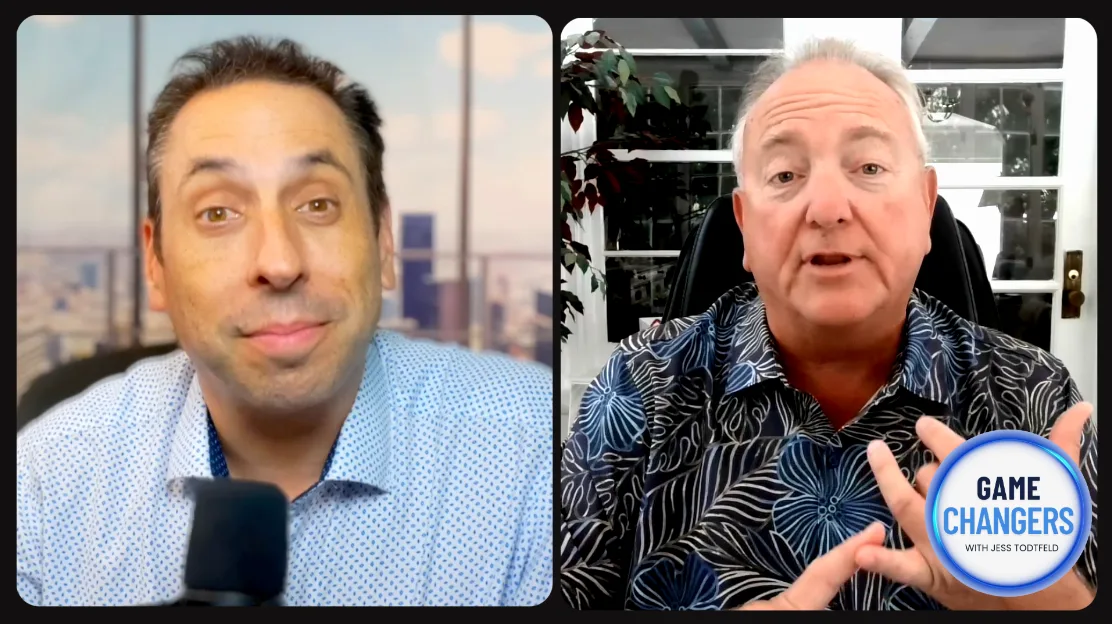
I met Jess Todtfeld years ago when he was a television producer and I was pitching him. He was one of the few who was neither too pushy nor invisible; he was thinking about what the show actually needed. We became friends, and now we work together. When an author of mine needs to be sharp on camera, he is the one I send them to.
Watch the conversation
Jess and I sat down to talk through all of this in more depth. You can watch the full conversation here.
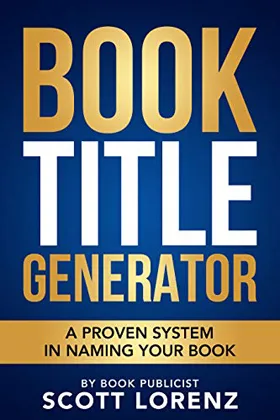
Book Title Generator
Before you publish, do the smart thing and get the title right. My book Book Title Generator walks through the techniques, from clichés and idioms to numbers and biblical phrases, that make a title findable and memorable. Do not put out a book with a stupid title. Find it by searching Book Title Generator on Amazon.
If you have a book, or you are about to, and you want to do this the smart way, reach out. The only books I turn away are the textbooks nobody wants to read, including the students forced to buy them. Everything else has an angle. My job is to find it.