
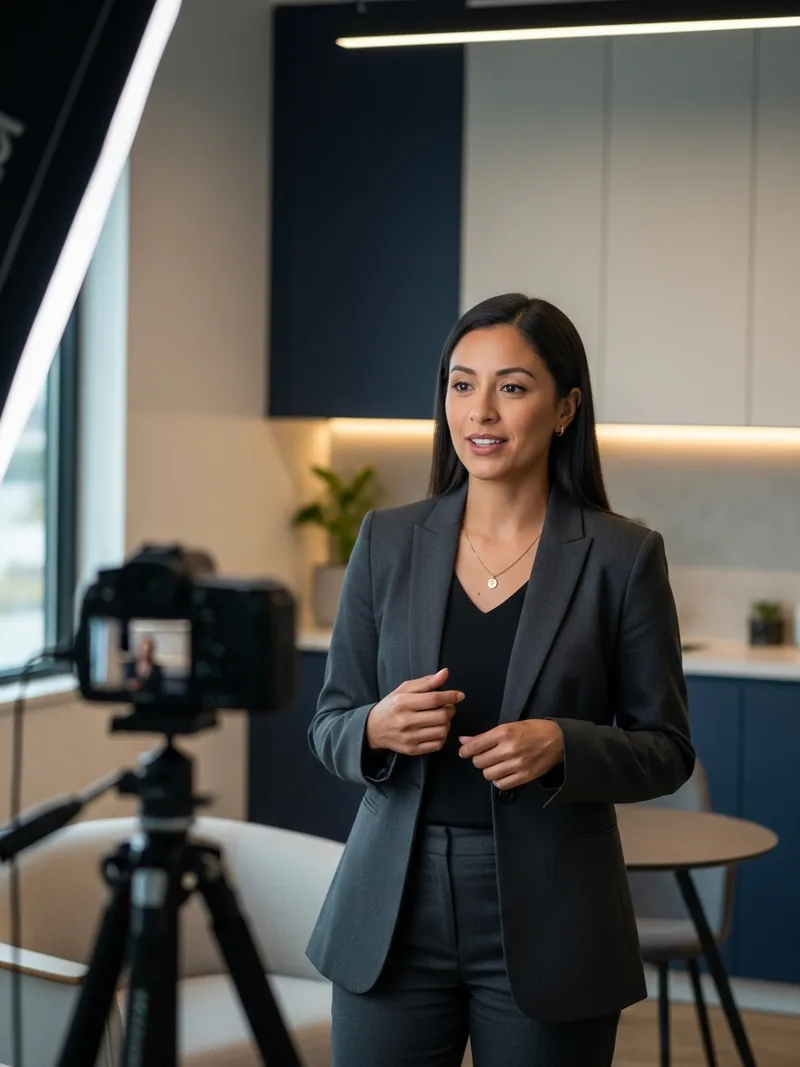
How to sound confident in a media interview comes down to one idea: confidence is not a personality trait, it is preparation the camera can see. When people ask me how to sound confident on camera, that is where I start. The steady voice, the unhurried pause, the clean first sentence: those are not gifts a lucky few were born with. They are the visible result of work you did before you ever sat down in front of the lens.
I have watched executives who dreaded interviews walk in shaky and walk out sounding like the calmest person in the room, and the difference was never nerve. It was reps. They had decided what they were there to say, practiced it out loud, and turned the fear into muscle memory.
Why this matters (and what most executives get wrong)
Most executives treat confidence as a mood they have to summon in the moment. They hope they will feel ready when the light turns red, and when the nerves show up instead, they read that as proof they are just not a natural on camera. That is the wrong diagnosis. Nerves are not a character flaw, they are a signal that you have not yet made the material automatic.
Here is what they get wrong: an audience does not hear your internal state, it sees your behavior. It sees whether you pause before answering or rush to fill silence. It hears whether your voice is steady or thin. It notices whether you lead with a clean sentence or think out loud. Every one of those is a behavior you can rehearse, which means confidence is not something you feel your way into. It is something you prepare your way into.
The camera does not broadcast how you feel. It broadcasts what you practiced. That is good news, because practice is entirely in your control.
The 6-step system to sound confident in a media interview
This is the sequence I run with executives before an interview. It is a system, not a pep talk, and that is the point: a system holds up when the questions get sharp and your pulse does not.
Step 1: Pick three core messages and one headline before the interview
Confidence starts before the interview, not in it. Decide the three things you want the audience to remember, then choose the one headline you most want them to walk away repeating. Write them down, then say them out loud until they feel easy in your mouth. When you know exactly what you came to say, you stop fearing the questions, because every question is just another door back to your three points.
Step 2: Slow down in the room
Nerves speed everyone up. The fix is deliberate: slow your pace on purpose. A slower delivery reads as authority, and it buys your brain the fraction of a second it needs to land a clean answer instead of a scramble. You will feel like you are going too slow. You are not. To the audience, measured sounds sure.
Step 3: Pause before you answer
A short pause before you speak reads as authority, not hesitation. Most people fear the silence and rush to fill it, which is exactly what makes them sound rattled. Take the beat. Let the question land, gather your first sentence, then deliver it. That small pause is one of the most confident things you can do on camera, and almost nobody does it.
Step 4: Breathe low so your voice stays steady
When nerves hit, breathing climbs into the chest and the voice goes thin and shaky. Breathe from low in your body instead, down in the belly, and your voice drops into a steadier, fuller register. Steady breath is steady sound. This is the physical anchor under everything else: you cannot sound calm on a panicked breath.
Step 5: Answer first, then support
Lead with your answer in one clean sentence, then add the support. Do not think out loud on the way to your point, because thinking out loud is what makes a smart person sound unsure. Answer first, and the audience hears someone who knows exactly where they stand. The reasoning can follow, but the headline comes out of your mouth first.
Step 6: Bridge back when a question is hostile or off
When a question is hostile, loaded, or simply off, do not get pulled into the interviewer's frame. Acknowledge it briefly, then bridge back to one of your three messages with a phrase like what matters here is. Bridging is how you stay in command of a tough moment instead of playing defense, and playing defense is what reads as nervous on camera.
The mistake most executives make
The biggest mistake is trying to feel confident instead of preparing to look confident. An executive spends the night before an interview hoping the nerves will pass, rehearsing nothing out loud, and trusting that adrenaline will carry him. Then the light turns on, the material is not automatic, and the very nerves he feared become the thing the audience sees.
The other version is treating the camera as the practice. It is not. The first time you say your messages out loud should never be on the actual interview, because a first take always sounds like a first take. Executives who rehearse silently in their heads are shocked at how different, and how much less sure, they sound the moment real words have to come out. Confidence is built in the reps you do before anyone is watching, not summoned in the moment everyone is.
Record a two-minute mock answer on your phone, then watch it back with the sound on. You will spot instantly what looks confident and what does not: the rushed opening, the filler, the thin voice. That thirty seconds of honest playback teaches more than an hour of hoping.
Case study: turning nerves into reps
Consider an executive facing a first national interview who was convinced he simply was not a camera person. He was smart and warm in a room, and completely different the moment a lens was pointed at him: fast, breathy, thinking out loud, chasing every question wherever it led. He wanted a confidence trick. There is no trick.
What there was, was a system. We picked his three messages and the one headline he wanted repeated, and he said them out loud until they were easy. We slowed his pace on purpose and built in a pause before each answer. We got his breathing low so his voice stopped shaking. Then we did the part that changes everything: we recorded him, played it back, recorded him again. A handful of reps in, he could see his own progress on the screen, and seeing it is what made him believe it.
By the interview, nothing about his personality had changed. He had simply done the work where the audience could not see it, so that when they could see it, it looked like calm. The nerves had not vanished. They had turned into reps, and reps look like confidence.
Hoping to feel confident versus preparing to look confident
| In the interview | Hoping to feel confident | Preparing to look confident |
|---|---|---|
| Where confidence comes from | A mood you try to summon | Reps you did in advance |
| Your messages | Figured out on the fly | Three points and a headline, said out loud |
| A pause before answering | Feels like hesitation, so you rush | Used on purpose, reads as authority |
| Your breath and voice | High in the chest, thin and shaky | Low in the body, steady and full |
| A hostile question | Pulls you into their frame | Becomes a bridge back to your message |
| Practice | Rehearsed silently in your head | Recorded on camera and played back |
Look at the last row. The whole difference between sounding nervous and sounding sure is whether you did your reps on camera before the interview or tried to wing it during.
What to do next
Start today with the simplest rep there is: pick your three messages and one headline, then record a two-minute answer on your phone and watch it back. You will see exactly what to fix, and you will feel the nerves start turning into reps.
If you want help building that confidence into a repeatable system before your next interview, that is the work I do with executives. You can get a quick quote for working with me directly, learn more about executive media training, and go deeper on the prep itself with how to prepare for a media interview.
You do not have to be a natural on camera. You have to be prepared, and prepared is something you can practice.