
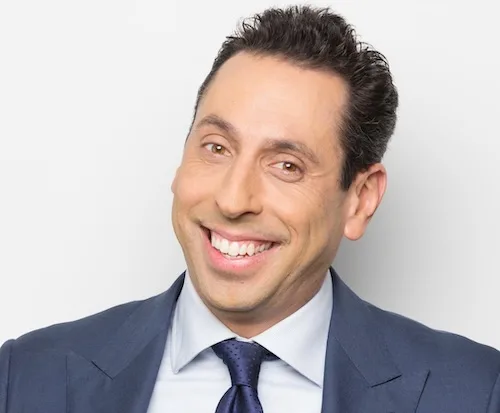
When the stakes are real, generic communication training does not hold up. Quarterly earnings, board presentations, an unexpected reporter call, an all-hands after a layoff. These are the moments where executives are judged on how they communicate, not what they know. Most communication training prepares people for the easy version of the job. Success In Media trains executives for the hard version.
We work one-on-one with C-suite leaders and small senior teams to build the communication skills that hold up under pressure. Clear messaging when the cameras are on, calm presence when the questions are tough, and stories that move stakeholders to act. Every session is on-camera. Every session is built around real situations the executive is facing right now. And every engagement comes with one full year of post-training support, so the work does not end when the day ends.
Who We've Trained
We have trained executives at AIG, the United Nations, Land Rover, State Street, American Express, and across additional Fortune 500 organizations in financial services, technology, healthcare, and consumer brands. We also work with senior leaders at trade and professional associations, mid-market CEOs in pre-IPO and growth-stage windows, and nonprofit executive directors. Many engagements happen quietly, preparing a CEO for an IPO roadshow, a CFO for an analyst day, a head of HR for an internal-restructure announcement. Confidentiality is the default. Named outcomes below are shared with the speaker's permission.
"The most amazing part of seeing Jess in action was his ability to customize his program to exactly fit the unique needs of our company and the executives he was training."
Michael Kingsley, Vice President, Public Relations, State Street Investment Management
"Jess helped me immensely with one of the most seldom used but most difficult skills of being a non-PR business person, dealing with the media. After a robust one-day training I went from being a disorganized and hard-to-watch talking head to an authoritative brand steward ready to discuss our business publicly."
Daniel Peirce, Investor and Advisor (formerly Gatorade, Starbucks, Welch's, adidas Group, TJ Maxx, Save the Children)
What we mean by "executive communication"
Executive communication is not one skill. It is a stack of skills the role demands at different moments:
- Strategic messaging. Turning a complex business reality into three sentences a board, an analyst, or a journalist will repeat correctly.
- On-camera presence. Sounding and looking like the person the audience expected to see, not a nervous version of yourself.
- Story-led delivery. Using a real example to make a number land, instead of letting the number do the work alone.
- Q&A control. Answering the question that was asked, the question that was not asked but should have been, and bridging cleanly between the two.
- Crisis-ready calm. Staying grounded when something goes wrong on stage, on a call, or in a live interview.
Most training programs cover one of these. We cover the stack, in the order an executive will actually need them.
Why on-camera reps change everything

Most executive communication training is heavy on lecture, even when the brochure says it will not be. The problem is simple. There is just not enough practice in an eight-hour day to build a habit. We run our sessions the other way around. In a typical one-on-one engagement, an executive will repeat each on-camera scenario eight to fourteen times in a single day. We call these on-camera repetitions reps for short. In small-group training the rep count drops slightly, but the principle holds. Reps build skill. Lecture does not.
The system itself is intentionally simple. We show the executive an easy-to-replicate framework for whatever the moment calls for, message development, handling tough questions, building soundbites, getting brand mentions and calls to action into a media interview. They practice. We record. Then we play it back together. We name what worked so they can do more of it, and we name what did not work so they can course correct on the spot.
The same loop works whether the moment is a TV interview, a print sit-down, a radio booking, a podcast, an industry newsletter conversation, or a quarterly call. The medium changes. The skill stack does not.
Who this is for
This program is built for:
- CEOs and presidents preparing for IPO roadshows, analyst days, or activist-investor situations
- C-suite leaders (CFO, CMO, COO, CHRO, CTO) facing media, board, or large internal audiences
- Newly promoted executives stepping into a role that demands more public-facing communication than their last one
- Small senior teams (3 to 6 people) where the leadership group needs to communicate with one consistent voice
- Trade and professional association leaders including incoming presidents and executive directors
For larger groups, classroom-style workshops, or programs designed for the broader leadership bench, we run a different format. Inquire here and we will help you find the right one.
What's included
Every executive communication training engagement includes:
- A pre-engagement strategy call to identify the real situations the executive is preparing for
- Custom session design. We never run a stock curriculum.
- One-on-one or small-group on-camera training, with playback after every rep
- Real-time message refinement (the words you will actually use, not generic frameworks)
- A written summary of the executive's strengths and the two or three things to keep working on
- One full year of post-training support included at no additional cost
The post-training piece is the part executives quote back to us most often, and the part hardest to find anywhere else.
How engagements are structured
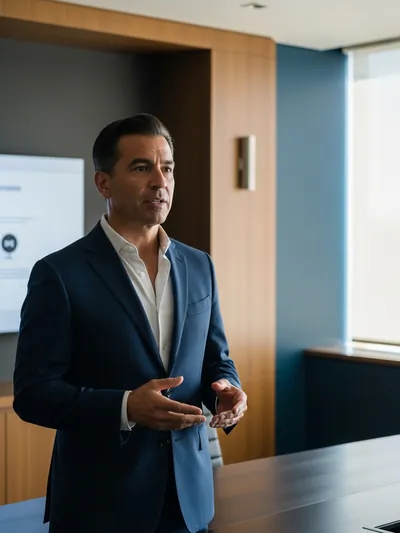
A typical engagement is a one-day or two-day program, but we run many hybrid options. Some clients combine pre-program online learning with a live session. Some run a half-day virtual session for one executive and a full day in-person for a senior team. Some pair an executive with the program over six weeks of shorter touchpoints. The right shape depends on what the executive is preparing for, how much time the calendar allows, and whether the team needs to communicate with one voice.
The simplest first step is a short call. We will guide you to the right structure, and we will tell you honestly if we are not the right fit.
The one-year, 365-day post-training support is part of every engagement at no additional cost. It is not an upsell. Inside that year:
- Quarterly assessments to keep the skills sharp
- Up to seven reach-outs per executive for either a critique on a specific upcoming moment or a pre-event pep talk
- Access to a multimedia learning library with refresher modules
- The option to retake the core training online
We have clients who have told us that one of those reach-outs, showing up at exactly the right time before a high-stakes moment, was worth more than the price of the entire training.