
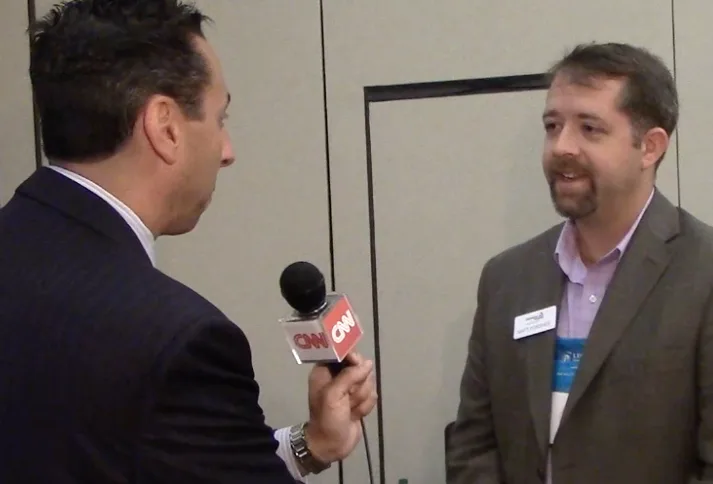
How do you repurpose a media interview? Treat the interview as raw material, not the finish line, and work it in three phases: set up the leverage before you go on, plant reusable assets during the conversation, and then convert the appearance into content, reach, and leads after it airs. Most people do the interview, feel relieved, and move on. That is the moment the real value walks out the door.
Here is how I think about it. An interview is the most expensive thing you will do all week in terms of nerves and prep, and most executives extract about five percent of what it is worth. They get the hit, they share the link once, and that is the whole plan. The appearance itself is only the beginning. Everything you do around it decides whether it was a one-time ego boost or a real business asset.
Why this matters (and what most executives get wrong)
The goal of a media interview is not the interview. The goal is to convert attention into action, to get people to do something after they hear you. That means the appearance is a means, not an end, and the work of repurposing it is where the return actually lives.
What most executives get wrong is treating the interview as a single event with a start and a finish. They prepare frantically, perform, exhale, and consider the job done. So the clip sits on a producer's server, the audience forgets by dinner, and nothing compounds. The people who win with media think in a longer arc: before, during, and after, each phase feeding the next.
The other mistake is passivity. They wait to be handed a link, wait for the audience to come to them, wait for something to happen. Leverage is active. You decide in advance what you want the appearance to produce, and then you go make it produce that.
The interview is the raw material, not the product. What you build before, during, and after it is the product.
The 3-phase system to repurpose a media interview
This is the structure I teach: divide every appearance into what you do before the interview, what you do during it, and what you do after it. Each phase has its own job, and skipping any one of them quietly caps your return.
Step 1: Set up the leverage before the interview
Before you ever go on, decide what you want this appearance to do for you, then build the assets to make it possible. Line up the one link you will send people to, make sure it captures contacts rather than just informing them, and prepare a short list of messages worth repeating. Tell your own audience the appearance is coming so you have watchers ready. The interview has not started and you are already positioned to profit from it.
Step 2: Plant reusable assets during the interview
While you are on, speak in pieces you can lift out later. Deliver a few clean, quotable lines that stand on their own, mention the single destination you want people to remember, and answer in short, self-contained chunks that make good clips. You are not just answering questions, you are manufacturing the raw footage and pull quotes you will chop up and reuse for weeks. Talk so that your best twenty seconds can live without the other nineteen minutes.
Step 3: Repurpose everything after the interview
After it airs, the real leverage begins. Clip the strong moments into short videos, pull quotes into posts, transcribe the audio into an article, and send the appearance to prospects and partners as proof. Add it to your site, your email signature, your next pitch. One booking becomes a month of content and a credibility asset you can point to again and again. This is the phase almost everyone skips, and it is where most of the value was hiding.
The mistake most executives make
The biggest mistake is treating the appearance as the payoff. People pour all their energy into the twenty minutes on air and none into the weeks around it, so the hit peaks the moment it ends and then decays. The interview should be the smallest part of the effort, not the largest.
The second mistake is having no destination. If you get people interested and then send them nowhere, or somewhere that only informs and never captures a contact, the attention evaporates. Interest without a next step is just applause. Give the audience one clear place to go and one clear thing to do, and suddenly the same appearance produces leads instead of compliments.
Before any interview, decide the single destination you will point people to, and make sure it captures a name and an email rather than just delivering information. One appearance, one place to send the audience, one action for them to take.
Case study: the expert who did great interviews and got nothing from them
A subject-matter expert I worked with was booking a steady stream of podcast and local television hits. On paper she was crushing it. In reality, almost nothing was coming back: no leads, no list growth, no compounding reputation, just a folder of links she occasionally shared once and forgot.
We changed the whole shape of the work. Before each appearance she picked one destination and made sure it captured contacts, and she teased the booking to her own audience so people tuned in. During the interviews she started speaking in clean, liftable lines and naming that one destination out loud. Afterward, instead of sharing the link once, she cut three short clips, wrote two posts from her best quotes, turned the transcript into an article, and sent the appearance to warm prospects as proof. Same interviews, same booking cadence. The difference was that each one now fed her pipeline for a month instead of vanishing by the weekend.
Doing the interview versus repurposing the interview
| Approach | Just doing the interview | Repurposing the interview |
|---|---|---|
| Before | Prep the answers, hope it goes well | Pick one destination, ready the assets, tease your audience |
| During | Answer the questions and finish | Plant quotable lines and name your one destination |
| After | Share the link once | Clip, quote, transcribe, and send it as proof |
| Lifespan | Peaks and fades within a day | Fuels content and outreach for weeks |
| Result | An ego boost | Leads, reach, and a lasting credibility asset |
Read the bottom two rows. Same booking, same twenty minutes on air. The gap between an ego boost and a pipeline is entirely in what you do before and after.
What to do next
Before your next appearance, do three things: choose the one destination you will send people to, decide the two or three lines you want to be quotable, and block time on your calendar after it airs to clip, quote, and repurpose it. That single habit turns every interview into an asset instead of a memory.
If you want a repeatable way to prepare for interviews and then squeeze the full value out of each one, that is the work I do with executives and experts. You can get a quick quote for working with me directly, and to build the pieces, here is how to make the most of a media interview and how to choose your key messages for media interviews so the lines you plant are worth repeating.
The booking is the easy part. Whether it becomes a month of leverage or a link you forget by Friday is decided by everything you do around it.