Media training for doctors teaches physicians to make their expertise accessible to general audiences, without dumbing it down, using stories, analogies, and on-camera practice. This case study comes from two days I spent in Los Angeles with five high-level doctors preparing to be the stars of their conference.
I traveled to Los Angeles to work with a group of five high-level doctors who were all focused on a very specific area of medicine. They were preparing for a conference where they would be the stars, and this conference would also have journalists at it. They originally brought me in to help them be ready to speak to the media, and they quickly realized they needed to add a second day for presentation training, because they would all be leading programs from the stage and wanted to give the most compelling talks they could to inspire other doctors.
What did the first exercise reveal?
This group noticed something after the very first recorded exercise: they were too deep in the weeds. They were using too much jargon that would throw off general audiences when speaking to the media. This is the most common pattern I see with physicians, and it is completely understandable. They spend their days speaking with colleagues who share their vocabulary. The habits that make them precise with peers make them hard to follow for everyone else.
The important part is what the fix is not. The answer is not about dumbing the content down. The answer is about making content accessible. Those are two very different things, and doctors feel the difference immediately. Nobody was asked to be less rigorous or less accurate. They were asked to build a bridge from their expertise to their audience.
How do you make medical research accessible?
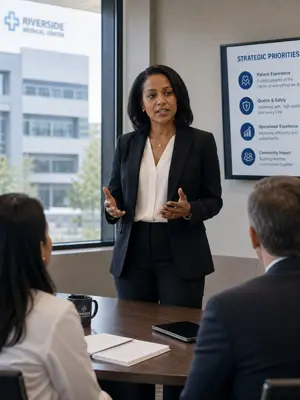
Together, we came up with stories and analogies that made their research and their life's work understandable to anybody hearing them talk about it. A well-chosen analogy does in ten seconds what three minutes of technical explanation cannot: it gives a general audience a handle to hold. And a real story from practice or research makes people care about the finding before they hear the data behind it.
Then we went a step further. We also came up with a way for them to include those same stories and analogies in their work on the stage. The material they built for journalists became the backbone of conference talks designed to inspire other doctors. One set of accessible messages, two high-stakes venues.
The focus group in the room
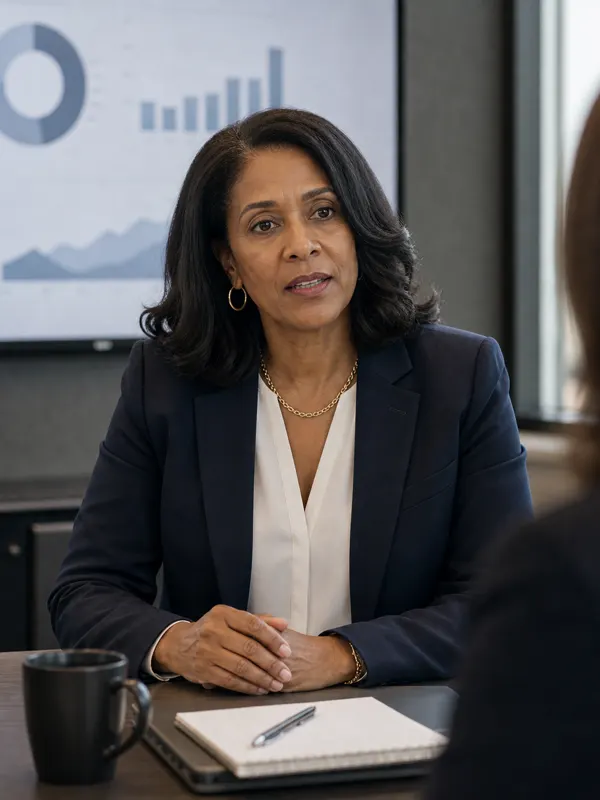
Each of the five doctors tried on the new skills for size and was recorded, with feedback from two directions: from me as the coach, and from the other physicians in the room acting as a focus group. That peer layer matters with doctors. When four colleagues who know the field tell you the analogy landed and nothing important was lost, you trust the new approach enough to use it in front of journalists.
Our methodology is simple. Every time we do an exercise: do more of what you see working, and do less of what you do not like. That, combined with specific systems on messaging, on dealing with any question that comes your way, on soundbites, and on storytelling, creates powerful communicators who move audiences to action, whether in the media or from a stage.
- Jargon is the first thing the camera exposes. Even top physicians discover it in the very first recorded exercise.
- Accessible is not dumbed down. Stories and analogies carry accurate science to general audiences.
- Build once, use twice. The same accessible messages work for journalists and for the conference stage.
- Peers are a focus group. Feedback from fellow physicians validates that nothing important was lost in translation.
- Do more of what works. Recorded exercises plus that one instruction compound quickly over a training day.
If you or your physicians are heading toward interviews, panels, or a conference stage, see our media training for doctors and media training for healthcare organizations. You can also read how storytelling systems drove donations for the ASPCA. When you are ready to plan your own training, get a quick quote.
About the author
Jess Todtfeld, CSP, spent 13 years as a television producer at NBC, ABC, and Fox, holds the Guinness World Record for the most media interviews given in 24 hours (112 completed, 96 certified), is a Certified Speaking Professional, and is the author of the international bestseller Media Secrets. He has trained executives, government leaders, doctors, and nonprofit spokespeople around the world.
Want to talk through a training for your team? Email [email protected] or call (646) 233-1424.
Not ready yet? Start with a copy of Media Secrets or the 7 Media Interview Secrets.