
Media training for government officials gives public servants control over their message, a system for political and off-topic questions, and quotes prepared in advance, without ever teaching them to dodge. This case study comes from a week I spent in Washington, DC working with leaders at the Social Security Administration.
Government work is something I have been proud to support for years, along with the great leaders inside these organizations. I have worked with the Department of Labor, the Bureau of Labor Statistics, the National Park Service, the FDA, the Bureau of Prisons, and many more. On this engagement, the Social Security Administration brought me to Washington for a week to work with various top-level leaders as well as middle-level leaders.
What were they most afraid of?
It turns out all of them had the same worries and fears as many other government employees I have worked with at different levels and organizations. They were concerned they would not have control over their message. They were concerned they would be asked political questions when they were just trying to do important work. And they were worried about looking bad in front of their peers, their bosses, and the public.
In our pre-training Zoom call, people shared exactly what would make both the media training and the presentation training workshops a success for them. Our training is outcome based, so it is important for me to find out exactly what they want. The list was clear:
- Look and feel confident on camera and in the room.
- Have the most control over the answers that make it into a story, which means having irresistible soundbites and quotes created in advance.
- Avoid going down a rabbit hole that a reporter or journalist opens up.
- Walk into any situation with confidence, whether the reporter is hostile or calm and collected with an unknown agenda.
All of these are valid fears, and all of them were perfectly aligned with the systems I was about to share.
The first surprise: the playback looked better than it felt
When I showed up, everyone had been looking at the pre-training materials, and even our first exercise felt empowering. Of course, when they sat down after being put on camera, everyone thought they were the worst person in the room. Then they were confronted with video evidence, and it turned out it looked much better than it felt. That is the first step toward becoming great as a media presenter or when giving presentations and speeches.
Now the real work could begin. The group took part in exercises and answered questions related to their topic. But the part that made the biggest difference were the questions that were off topic and the questions related to politics.
How do you answer political questions without dodging?

They were very happy to start working with a framework I call the answer system. Here is the important part: the old type of media training that many still teach has to do with dodging and being evasive. It just does not work anymore. At this moment in time, if somebody uses those old techniques, that part of the interview gets clipped out, shared on social media, and causes even bigger embarrassment than it would have years ago. The interviewee can show up on YouTube and be mocked and scorned. The stakes are higher than they have ever been.
So instead of worrying about that, everyone focused on how to be the guide in the interview. People mastered a technique I call short answer, long answer. The short answer ties a bow on the dicey or difficult question. Then, as the guide, they move to the media messages they have practiced, messages that are interesting and enticing to the reporter and the audience as well. It is the perfect Venn diagram.
One person was worried about being asked about their own political views, or being asked to answer for decisions made by politicians. Using the answer system techniques, nobody had to feel like they were dodging questions or being inauthentic, yet they were able to guide the interviewer in the direction they wanted to go. The short answer could be something as simple as "time will tell," or "that topic is really beyond what I've been brought out to talk about, but what I can tell you is..." Those are just two techniques. We have 14 other pieces to the system, and this group was amazing at putting it into action.
Soundbites, crisis scenarios, and deep customization
With their new confidence, the group took on the soundbite quote system, where they all crafted irresistible quotes that were ready to go in advance, before any interview. Combined with a message system that is easy to remember, this has been the perfect mix, not only for the Social Security Administration group but for other government groups as well.
We also ran a detailed section on crisis communication, built off scenarios the group themselves brought up in the pre-training Zoom session. Multiple people told me that because the training was customized so deeply to the exact specifications of what would make it a success, everyone walked away with brand new skills they could deploy immediately.
The proof: emails with links
One of my favorite things is receiving emails months after a training with links to articles and videos showing these officials delivering perfect quotes. Quotes that make everybody happy, including their bosses. That is the real measure of a media training for a government agency: not how the practice interviews felt in the room, but what shows up in the coverage afterward.
- The fears are universal and fixable. Message control, political questions, and looking bad are the top three, and each maps to a specific system.
- Video playback beats reassurance. Everyone thought they were the worst person in the room until the recording proved otherwise.
- The answer system is the opposite of dodging. A short answer deals with the question honestly; the long answer guides the interview to messages worth quoting.
- Write your quotes before the interview. The soundbite system puts your best lines in the story instead of leaving it to chance.
- Customization is the multiplier. Crisis scenarios and exercises built from the team's real situations mean the skills deploy immediately.
If your agency or department is preparing leaders for press contact, start with our media training for government agencies, or see how the same systems played out for city and state public information officers. Ready to talk specifics? Get a quick quote and tell me about your team.
About the author
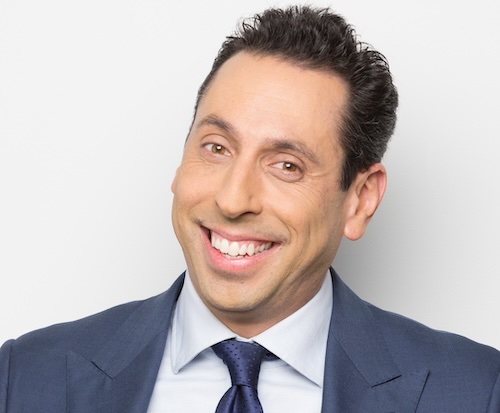
Jess Todtfeld, CSP, spent 13 years as a television producer at NBC, ABC, and Fox, holds the Guinness World Record for the most media interviews given in 24 hours (112 completed, 96 certified), is a Certified Speaking Professional, and is the author of the international bestseller Media Secrets. He has trained executives, government leaders, doctors, and nonprofit spokespeople around the world.
Want to talk through a training for your team? Email [email protected] or call (646) 233-1424.
Not ready yet? Start with a copy of Media Secrets or the 7 Media Interview Secrets.