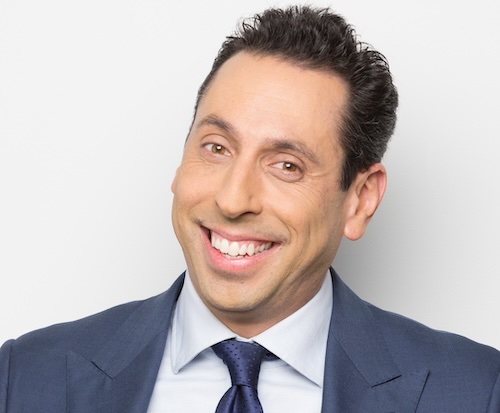
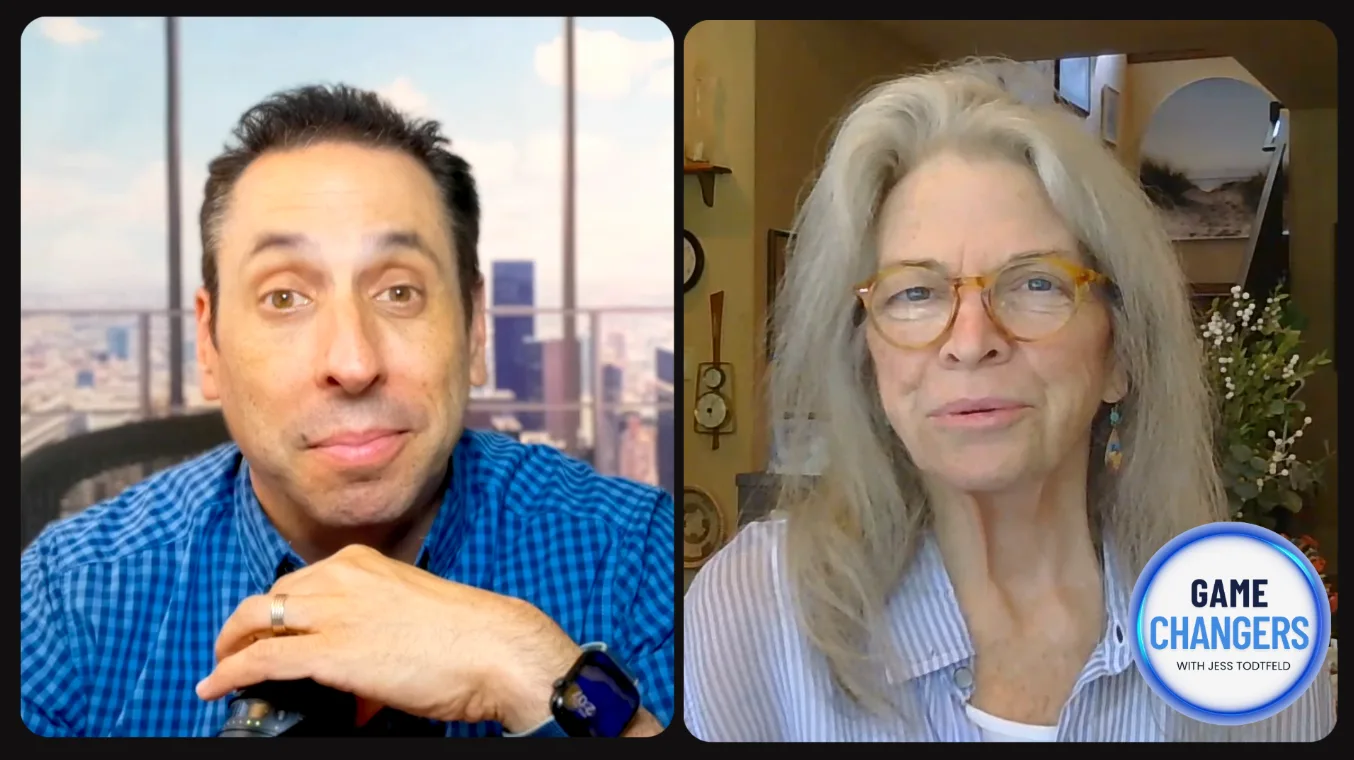
Executive media training teaches accomplished leaders to get to the point, manage the self-talk that creates nervousness, and focus on the audience instead of themselves. In this case study, Dr. Deb Carlin, a psychologist and author, shares how the training moved her from "what is there to learn?" to confident interviews on national television, radio, and podcasts.
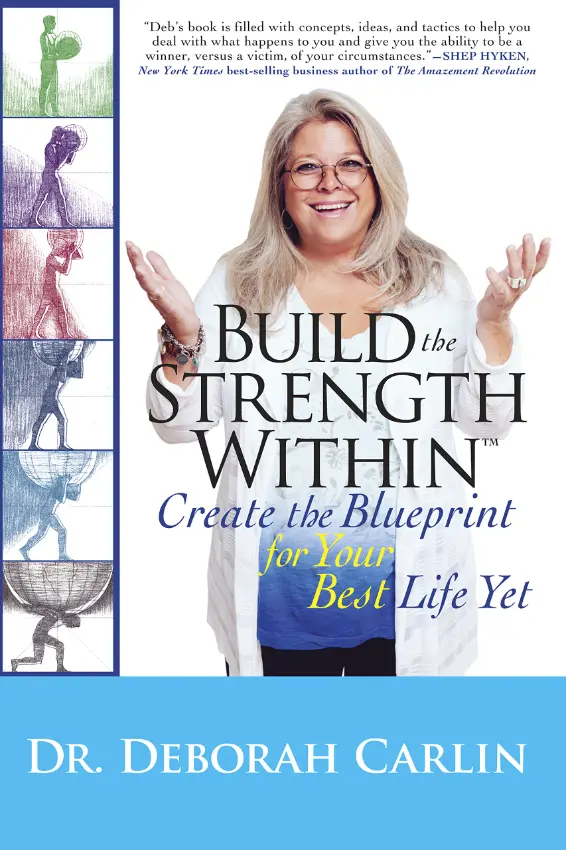
When Dr. Deb Carlin walked into one of my trainings, she had every reason to feel prepared. She holds a PhD in psychology, she had decades of experience advising people through their hardest moments, and she had just published a book she was promoting, Build the Strength Within. We first met at a large national meeting focused on media. Her honest first reaction, in her own words, was tongue in cheek: "What is it that you need to learn to talk to the media? What's to learn?"
That reaction is more common among high-level experts than you might think, and it is exactly why this case study is worth reading. Credentials do not automatically translate into calm, clear communication on camera. What Deb learned over the course of the training, and what she went on to do with it, is a clear picture of what executive media training actually delivers for people who are already accomplished.
Do accomplished executives really need media training?
The first thing Deb named was not a technique. It was confidence. Here is someone with a doctorate and a shelf of accomplishments admitting that the moment a camera turned on, an entirely different set of thoughts took over. She described walking in a little insecure and, in her words, a little arrogant at the same time: "I'm credentialed, I've been doing this, I know what I'm doing." And then, in the same breath, the distracting inner monologue would start.
That is the insight most people miss. Audiences do not consciously notice your credentials in the first few seconds. They feel your energy. If you are uncomfortable in your own skin, adjusting your sleeves or worrying about your hair, the discomfort leaks into your voice and your pacing before you have said anything of substance. The work of executive media training is to close that gap between how much you know and how confidently it comes across.
What does executive media training actually teach you?
For Deb, the training reframed what the job on camera even was. It was not about performing. It was about getting to the point and doing it in a way that pulls people in. Two things shifted for her right away.
Getting to the point. Long, credentialed answers are a comfort habit for experts. On camera, they bury the message. One of the first things Deb took away was permission to cut it out and get to the point, fast. She learned to respect the reality that in many interviews you have about ten seconds to land something that matters, so there is no time to get lost wandering in the wrong direction.
Letting your self-confidence through. The second shift was allowing her own confidence to show rather than second-guessing it. That sounds simple, but for accomplished people it is often the hardest part, because their self-scrutiny is high. The training gave her a way to trust her expertise in the moment instead of auditing it in real time.
How do you quiet the wrong self-talk before an interview?
This was the part Deb, as a psychologist, appreciated most, and she explained it better than most trainers could. Nervousness, she pointed out, usually is not about anything real. It is manufactured by the wrong self-talk. You are not actually in danger. You are telling yourself the wrong things, and your body responds to the story.

That deliberate internal script is one of the exercises we practice. It replaces "Do I look okay? What did they want me to talk about?" with a single, forward-leaning message: I am here to give value. She also learned not to let an interviewer throw her off, because interviewers sometimes get nervous too. The trained response is to stay anchored to your own message and your own energy rather than absorbing theirs.
It helps to know who is saying this. Dr. Deb Carlin is not a first-time spokesperson. She is a doctor of psychology with decades of experience, an author, and a strategist who is brought into family offices and elite peer groups precisely because of her judgment under pressure. She is exactly the kind of expert who could reasonably assume media would come naturally. The fact that she found real value in the training is the point: the skill of communicating on camera is separate from the skill of knowing your subject, and even the most credentialed people benefit from building it deliberately.
What results can you expect after executive media training?
The proof of any training is what someone does with it afterward. Deb did a lot. She went on to appear across a broad range of platforms: radio shows on AM, FM, and internet, television and radio stations around the country, newspapers, and podcasts. She was interviewed so widely that she eventually started her own podcast. For someone who first wondered what there was to learn, that is a significant arc.
One appearance captures the transformation. She was booked on an early morning show in the freezing cold of winter. It was dark when she got up and dark when she reached the studio. The producers had asked her to bring a physical object to use as an analogy, so she brought a war-strategy game and used it to make a point about how people in distress feel like they are at war with themselves and everyone around them. She got so immersed in delivering her message in the few minutes she had that when the segment ended and she looked up, the crew was leaning in.
If you have spent time in television, as I did across 13 years at NBC, ABC, and FOX, you know what that means. The crew has seen every guest. They are not moved easily, and in the early morning they are often tired and just doing their jobs. When that group leans in, you are onto something, and the audience is leaning in too. That is the difference between reciting information and actually connecting.
Hear it from Dr. Deb Carlin
In this short conversation, Deb describes the experience in her own words, from her first skeptical reaction to the confidence she carried onto every set afterward.
What made the difference: laser focus and audience first
When I asked Deb what the training taught her, the phrase she reached for was laser focus. Be here now. Instead of spending her limited time on camera worrying about her hair, her colors, or how she looked, she learned to spend it on the audience and what they needed.
That shift, from self-consciousness to service, is the engine behind everything else. When your attention is on giving people what they need, the small worries lose their grip. It is also why the messaging holds up across formats. Deb learned to be ready for short interviews and for long-form conversations like podcasts, and even to prepare quotable lines in advance for print reporters, who by necessity condense an hour-long conversation into a few sentences. Writing those lines down ahead of time, one of the exercises, is how you keep control of how you are quoted.
About Dr. Deb Carlin
Dr. Deb Carlin is a psychologist, strategist, and author of Build the Strength Within: Your Blueprint. She used her media training to promote the book across radio, television, podcasts, and print. You can find her book and her work by searching Build the Strength Within on Amazon or by searching for Dr. Deb Carlin online.
- Expertise and on-camera skill are two different skills. A PhD and a shelf of accomplishments do not remove the discomfort of a camera. That gap is trainable.
- Nervousness is a script, not a fact. Replacing the wrong self-talk with a deliberate, value-focused script is one of the fastest confidence gains.
- Get to the point. On camera you often have about ten seconds to land something that matters. Long, credentialed answers bury the message.
- Focus on the audience, not yourself. Laser focus on what people need quiets the small worries about hair, clothes, and appearance.
- Skills transfer. The same foundation carried Deb across radio, television, podcasts, and print, and into hosting her own show.
If you recognize yourself in Deb's story, the accomplished expert who quietly wonders whether the camera will do you justice, that is the exact person media training for executives is built for. And if you are still deciding whether it is worth it, our guide to what media training is and what it includes is a good next read.