Media Training for Nonprofits
When your mission is important but the questions are hard, passion alone is not enough. Nonprofit leaders need to sound clear, credible, human, and ready when the interview affects donors, trust, board confidence, or public support.
Why Nonprofits Need Media Training
Donor Trust Is Fragile
When a leader sounds vague, overly polished, or defensive, supporters can quickly lose confidence even if the organization is doing meaningful work.
Mission Stories Get Lost
Many nonprofit spokespersons know the work deeply but default to insider language or broad mission statements instead of vivid, memorable proof.
Accountability Questions Are Real
Questions about overhead, outcomes, leadership decisions, and resource allocation require calm answers that protect credibility without sounding evasive.
For most nonprofits, media coverage is not a vanity project, it is a growth engine. A single well-delivered television segment, podcast interview, or newspaper feature can spark a wave of donations, new volunteers, board interest, and grant-maker attention. Media training for nonprofits is the difference between a three-minute segment that converts viewers into donors and one that leaves the mission invisible. This work is led by Jess Todtfeld, a former producer at NBC, ABC, and FOX, a Certified Speaking Professional (CSP), and the Guinness World Record holder for most media interviews in 24 hours. He has trained professionals at Fortune 500 companies and at nonprofits of every size, from neighborhood food banks to national advocacy organizations.
Most nonprofit leaders reach the top of the organization because they are deeply committed to the mission, not because they were ever trained to represent that mission in the press. When they finally get the opportunity to tell the organization's story to a reporter, they often default to mission language, program acronyms, or vague statements about impact. The reporter, and more importantly, the audience, walks away without the vivid, specific story that would actually move them to donate, volunteer, or advocate. Nonprofit spokesperson training closes that gap.
The accountability environment is also harder than it used to be. Charity Navigator, GuideStar, and investigative reporters scrutinize overhead, CEO pay, program outcomes, and fundraising efficiency. According to Giving USA, Americans gave roughly $557 billion to charity in recent years, and that capital moves toward organizations that can articulate impact clearly and withstand a direct question. A nonprofit leader who freezes when a reporter asks "How much of every dollar actually reaches the people you serve?" will lose the segment, and often the donor, in the same breath.
There is also the crisis dimension. A program failure, a board conflict, a #MeToo allegation, a lawsuit, a grant that gets pulled, every nonprofit eventually faces a story it did not want to tell. Press interview training for nonprofits builds the muscle memory to respond honestly, protect the people involved, and keep the mission visible through the hardest news cycle.
Media training gives nonprofit executives, development directors, board members, and program leaders the skills to tell stories with specificity, handle tough questions about overhead and effectiveness with grace, and turn every interview into a step forward for the cause. The goal is simple: more comfortable, more confident, more in control, and measurably more effective at converting earned attention into mission progress.
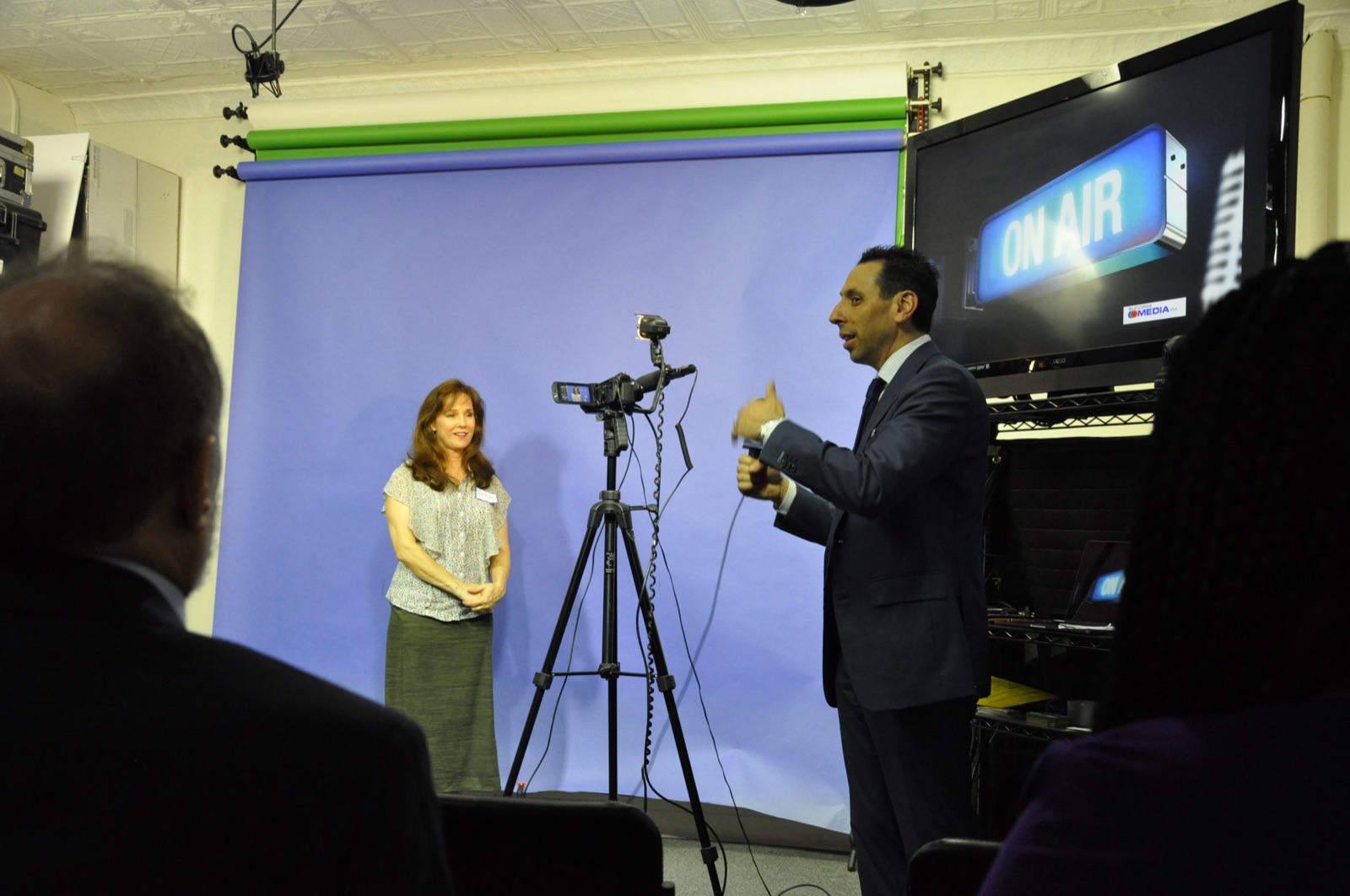
The goal is not just to get coverage. It is to make the coverage work for the mission.
What Nonprofit Leaders Learn in Media Training
- Tell impact stories with the specifics, numbers, and human detail that move donors and reporters
- Handle accountability questions about overhead, executive pay, and program effectiveness with confidence
- Translate mission language and program jargon into quotable lines that resonate outside the nonprofit world
- Coordinate messaging across media, donor, grant-maker, and board audiences so every channel reinforces the others
- Build ongoing relationships with local and national reporters who cover your cause area
- Handle sensitive stories about beneficiaries or communities with dignity and appropriate consent
- Deliver board presentations, conference keynotes, and giving-day asks with the same command you bring to a studio
- Respond to a crisis, a program failure, a lawsuit, a leadership transition, without losing donor confidence
Turning nonprofit stories into support
Click to watch: how nonprofit leaders turn media moments into support
Common Media Challenges Nonprofit Leaders Face
The Giving Season Interview
A local reporter wants to feature your nonprofit during year-end giving. Master the art of opening with a specific person or story, delivering the numbers that prove impact, and closing with a clear, memorable call to action viewers actually follow.
The Accountability Question
A reporter asks about overhead, executive compensation, or a past sector critique. Learn to engage honestly, describe what the organization actually does with its resources, and point to the specific results that tell the real story without sounding defensive.
The Capital Campaign Announcement
Your nonprofit is announcing a significant campaign or new initiative. Learn to position the story beyond the dollar figure, articulate the community problem being solved, and deliver quotable lines that anchor follow-up coverage throughout the campaign.
The Crisis Statement
A staff allegation, a canceled grant, or a program outcome that did not deliver. Learn to deliver an honest holding statement within hours, acknowledge what you know, protect the people involved, and keep donors focused on the mission through the news cycle.
Tailored for Different Types of Nonprofits
Advocacy Organizations
Prepare spokespeople for issue campaigns, legislative moments, coalition media, and interviews where the organization must sound persuasive without drifting into slogans.
Foundations
Help foundation leaders explain strategy, grantee impact, and funding philosophy with the clarity and stewardship language sophisticated donors and journalists expect.
Service Organizations
Train leaders to talk about outcomes, client dignity, operational complexity, and community need without sounding clinical, vague, or overly defensive.
Membership Groups
Equip association and membership leaders to represent the mission, speak for the broader base, and handle internal politics while staying steady in public.
Why Train with Jess Todtfeld
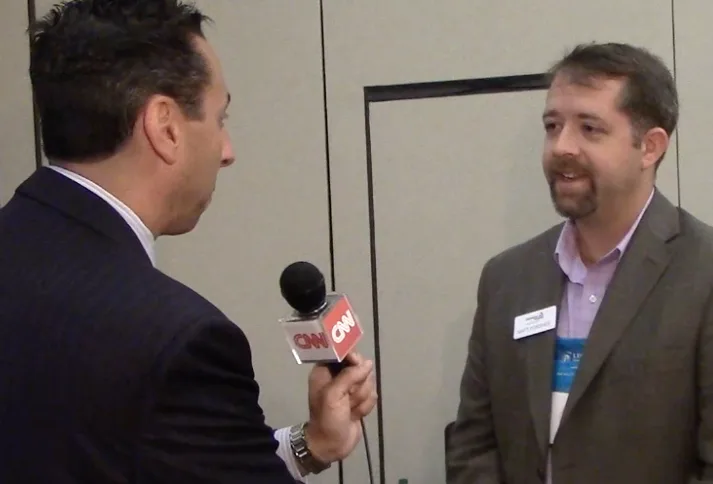
Jess Todtfeld is a former television producer for NBC, ABC, and FOX who has booked and produced thousands of community, mission, and human-interest segments. He knows how local and national producers build nonprofit stories, what makes a nonprofit leader memorable on camera, and how to turn a four-minute segment into sustained fundraising and awareness. He holds a Guinness World Record for the most media interviews in 24 hours and carries the Certified Speaking Professional (CSP) designation, the highest earned credential in the professional speaking industry.
He has trained professionals at Fortune 500 companies, national nonprofits, and neighborhood community-based organizations. His practical, mission-driven approach is built specifically for nonprofit leaders who need to convert earned media attention into real, measurable progress for the cause, more donors, more volunteers, more grant dollars, and more lives changed.
What Nonprofit Leaders Say






- UFCW Int’l Union
- Newark Arts Council
- Urban Resource Institute
"Jess put our nonprofit team through the paces. Their confidence and readiness is sky high."Vanessa WakemanPR Lead, The End Fund
"The instant replay was very helpful. The way that Jess broke everything down into pieces and focused on them one at a time made me feel more comfortable."Jesse WintersASPCA
"I will no longer just stand in one place and read a speech. I now know how to appear more comfortable to the audience and that will help me be more effective."Pat O’NeillUFCW International Union
"The staff uniformly said that the courses were interesting, extremely helpful, and enjoyable. They also said they would like additional training sessions with Jess. I recommend him unreservedly."Scott GouldSr. Agile Coach (CSP, PMP), AARP
"I gained a fresh perspective on image, content, speaking patterns, and the impact of getting my message out. Seeing my presentation on video and getting critical feedback was most helpful."Linwood J. OglesbyExecutive Director, Newark Arts Council
"Your talk helped me feel more in control when responding to media. This will give me more confidence."Linda PallmanBoard President, Lafayette Square Restoration
"We were surprised to find that a big focus was on creating a reaction from those who hear our causes. These are invaluable skills and a must for our important work."Kushal RamyadStaff Development Officer, United Nations
Turning nonprofit stories into support
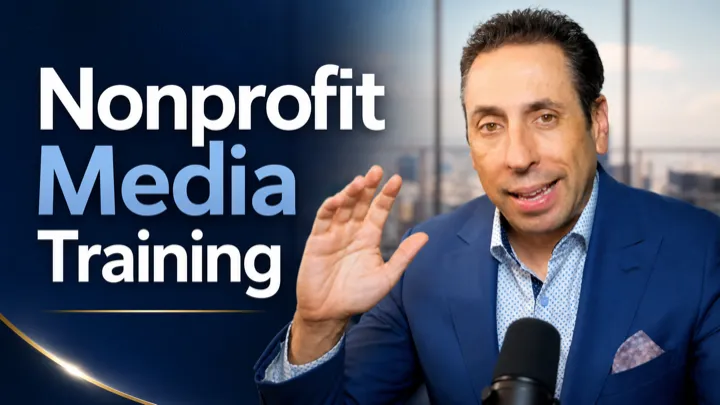
In about 90 seconds, see how Jess helps nonprofit leaders turn media moments into donations, volunteers, and awareness.
Frequently Asked Questions
Nonprofits rely on earned media to build awareness, trust, and donor momentum. Media training for nonprofits prepares leaders to tell impact stories with specifics, handle accountability questions about overhead and outcomes, and turn every appearance into fundraising and mission progress.
Investment varies by format. A half-day group workshop for a small nonprofit team starts in the low four figures, while a full-day intensive with on-camera practice and a custom message book typically runs in the mid-to-high four figures. Multi-day board or staff-wide programs are quoted per scope. Every engagement is tailored to the organization's size and goals.
Yes. Remote media training is delivered over Zoom with live on-camera practice, screen-recorded playback, and the same message development work used in person. Remote training works especially well for boards and program leaders who are geographically distributed.
Message training builds the core language, proof points, and stories the nonprofit wants to land. Media training takes that message and stress-tests it under interview conditions, including hostile questions, time pressure, and on-camera delivery. The best nonprofit programs combine both.
Crisis preparation layers three elements: a short, honest holding statement the CEO can deliver immediately; a bridging structure that keeps the mission story visible through hard questions; and on-camera rehearsal with realistic reporter pressure. Most nonprofit CEOs are ready in one intensive session.
Yes. Group sessions, half-day formats, and virtual delivery make real, high-quality training accessible to small and mid-sized nonprofits. Jess prioritizes practical skills and on-camera reps so every dollar translates into visible progress.
A working nonprofit leader can be noticeably more effective after a four-hour session. Most clients choose a full day, which covers message development, on-camera practice, Q&A under pressure, and playback. Board-wide programs often run one to two days.
Yes. Board members and volunteer ambassadors often speak publicly with almost no preparation. Training gives them a shared message, a simple interview framework, and enough on-camera experience that they represent the organization consistently.
Related Training Programs
- Media training for NGOs, for international and advocacy organizations navigating cross-border press coverage
- Media training for government and public-sector leaders, for nonprofits working closely with elected officials and agencies
- Crisis communication training, for difficult issues, sensitive stories, and fast-moving accountability situations
- Spokesperson training, for board members, ambassadors, executive directors, and staff who speak on behalf of the mission
- Presentation training for nonprofits, for board pitches, giving-day events, and conference keynotes
Ready to Turn Every Interview Into Momentum for Your Mission?
Build the media skills that help your organization handle scrutiny, earn trust, and turn visibility into real progress for the cause.
Trusted by nonprofit leaders at ASPCA, AARP, The End Fund, Safe Horizon, Urban Resource Institute, and more.
Jess has trained spokespeople at the United Nations, AARP, and Fortune 500 companies. Guinness World Record: 112 media interviews in 24 hours, 96 officially certified.