
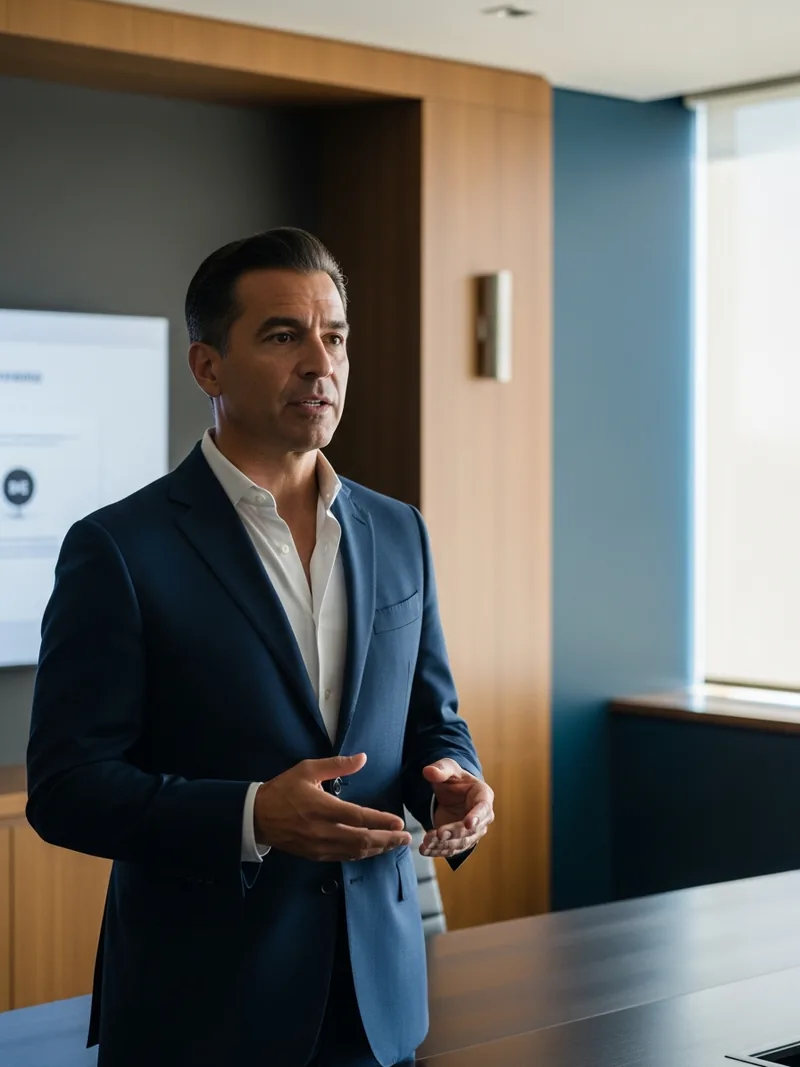
A finalist presentation is the last live meeting in a competitive bid, and it is usually won by the team that connects with the room rather than the team with the densest slide deck. This case study is about the day a Hay Group team proved that in New York City, on a million dollar bid, by refusing to plug in the projector.
A few years back, I flew to Chicago to work with Hay Group, a prominent global management consulting firm specializing in human resources, talent development, and compensation strategies. I worked with a few of their teams on a few different occasions. One of the sectors I work closely with is financial services, and helping their people communicate data better was one of the key priorities.
Why do smart teams lose the room?
Like most of my clients, it was very easy for these teams to get lost in the data. Dense PowerPoints, spreadsheets, and dashboards up on the screen can easily confuse someone who already knows what to look for. In the world of sales there is a great phrase for this: a confused mind always says no. Whether the audience is a current client they want to keep or a future client they want to win, confusion means nothing happens.
I was brought in for multiple rounds of presentation training with senior team leaders. Part of the training is an hour long talk I give on speaking. In it, I show what works and I show the mistakes people make, but I do it in a special way: they do not realize I am making certain mistakes on purpose. Ten or twenty minutes later, I quiz the room on what they remember.
- In the sections where I dumped data, almost nothing stuck. People realized that dumping data is completely ineffective.
- In the sections where I replaced the data dump with our Data-Driven Stories framework, they had near 100 percent retention of the ideas and the message behind each idea.
They were completely surprised, and they immediately realized they needed to be doing this in their own work. Many of the team members put up their old PowerPoints, meaning what they were doing before the workshop, and saw for themselves that the old approach was not working. If they wanted more business and more clients, they needed new systems.
The finalist presentation for the city of New York
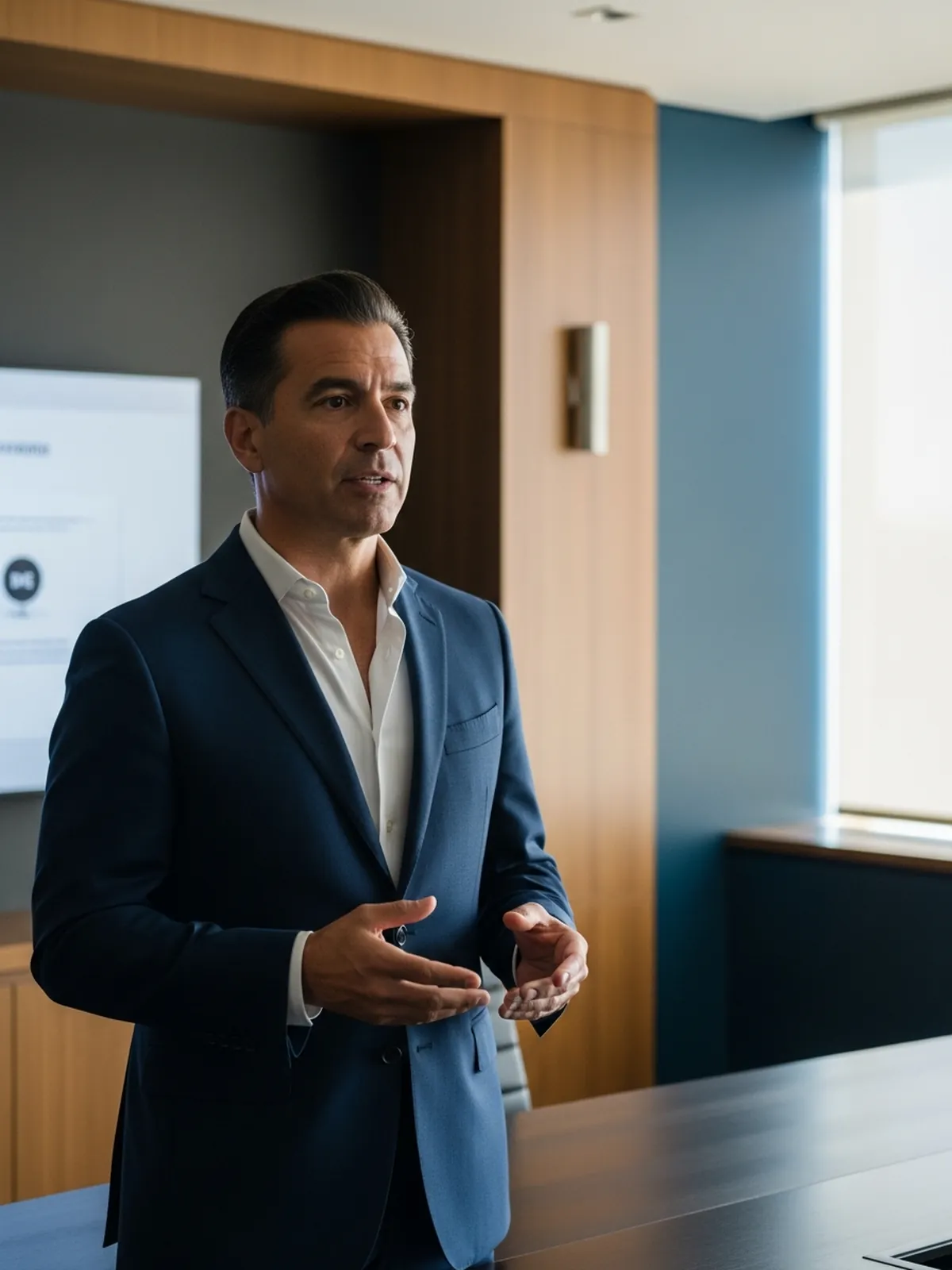
When I returned to the organization at a later date, Les Richmond, Director of Communications, Global Advertising and Brand Management, came up to me in the hallway to share what had happened after I left town.
"Jess, I want you to know what happened after you left town. I had a finalist presentation for the city of New York."
It was a pretty large bid, a million dollar job, and they knew they were competing against other organizations. They had a time slot to meet the buying committee face to face. When they walked in the room, the committee pointed at a computer and a projector and said, "You can plug your deck in there."
Les made a decision with his team. They handed over a printed version of the deck and just had a conversation with these people. When he announced, "We don't need that. We're just going to talk to you today," the entire group became wide-eyed. They knew something was different. They knew this group stood out from the rest. They knew they were not going to get the same presentation they had seen nine times that day.
Les and the team talked about their guidance and their prescription for dealing with the pains this particular group felt. They gave stories and examples of other clients they had helped. They did it in a way that was relatable and made this prospect say, "This is exactly what we need."
In the end, they got the business.
The audience was laser focused. It was unbelievable... we closed a million dollar [deal] assignment. Les Richmond, Director of Communications, Global Advertising & Brand Management, Hay Group
What can your team take from this?
This story gets retold in my trainings because it captures what presentation training is actually for. It is not about prettier slides. It is about a team knowing its message so well that the slides become optional. A few lessons worth stealing:
- A confused mind always says no. If your data confuses the room, the decision defaults to someone else.
- Differentiate in the first ten seconds. Being the one team that talks with the committee instead of presenting at them changes the energy of the entire meeting.
- Lead with their pain, not your credentials. Les and his team spoke to what this specific buyer was feeling, then backed it with client stories.
- Test yourself honestly. If you quizzed your audience twenty minutes after your last presentation, what would they remember?
The same engagement produced a second story I love just as much: an internal meeting at Hay Group where an executive turned off his own PowerPoint mid-meeting and got a round of applause. I wrote that one up in Hay Group, part two. And if you want to see what happens when a story has no point, read the Gartner storytelling case study next.
If your team has a high-stakes bid, a board meeting, or a finalist presentation on the calendar, this is exactly the kind of work I do in executive training engagements. Reach out through the quick quote form and I will come back to you with options.
Not ready yet? No problem. Start with a copy of my book Media Secrets or grab the 7 Media Interview Secrets and put a few ideas to work first.