Why Presentation Training Matters More Than People Think
Most presenters do not fail because they lack intelligence. They fail because they drown the room in information, miss the emotional decision path, or never build toward a clear outcome.
Too Much Information
Smart leaders often over-explain. The audience leaves knowing you are informed but not knowing what to believe, what to remember, or what to do next.
Not Enough Leadership
Some presentations sound competent but never take command of the room. The content may be right, but the energy, structure, or conviction never lands.
No Clear Decision Path
Presentations often end with “any questions?” instead of momentum. Jess helps reverse-engineer the talk from the action, perception, or decision you need.
The goal is not just to sound polished. The goal is to move the room toward a decision.
What This Work Is Really About
Presentation training is not just about stage presence. It is about how your ideas land under pressure. It is about making your thinking easier to follow, your authority easier to feel, and your message harder to forget.
Who Is Presentation Training For?
Executives and Founders
For board meetings, investor pitches, earnings calls, strategic presentations, partner meetings, and leadership moments where credibility matters.
Subject Matter Experts
For brilliant people who know their field cold but need help sounding more compelling, clearer, more concise, and more memorable when it is time to present.
Teams and Leadership Groups
For organizations that want a stronger communication standard before a roadshow, offsite, major conference, or internal alignment effort.
Common Presentation Scenarios
Board Presentations
Clarify the story, reduce unnecessary detail, and lead the room with more authority when you need approval, confidence, or alignment.
Investor Pitches
Strengthen the narrative, sharpen the ask, and build trust so the presentation feels like leadership, not just information transfer.
Keynotes and Conferences
Develop stronger audience engagement, more memorable structure, and a presentation style people want to keep listening to.
Town Halls and Internal Communication
Present change, strategy, or difficult updates in a way that lands with more clarity and less confusion.
Sales and Strategic Presentations
Make the message more persuasive and outcome-driven without sounding canned or manipulative.
High-Stakes Leadership Moments
Prepare for the meeting where the room is skeptical, distracted, overloaded, or politically sensitive and you still need to lead it well.
How Jess Approaches Presentation Training
Each program is customized to the real situation in front of you. That may mean shaping a keynote, simplifying a board deck, rehearsing a fundraising story, coaching executive presence, or helping a technical expert sound more human and persuasive.
The work is practical. You do not just talk about presenting. You rehearse it, refine it, and improve it against the actual audience and actual stakes. That is where the gains happen.
A typical engagement includes:
- Message development: choosing the 3 to 5 points the room must remember
- Structure work: reverse-engineering the talk from the decision you need
- Recorded practice with playback, so you see what the audience sees
- Delivery coaching: presence, pacing, eye contact, and handling questions
- A full year of follow-on support through The 365 Solution
Explore Presentation Training by Audience
Presentation Programs by Engagement Type
The industry pages above cover who is in the room. These four cover the shape of the engagement itself, from a single concentrated day to an ongoing coaching relationship, plus the two moments buyers most often name by their own words.
Formats: One-on-One, Team Cohorts, and Named-Event Prep
Presentation training is scoped to the situation rather than sold as a fixed package. Four formats cover almost every engagement.
- One-on-one intensive. A full day with a single leader, private and built entirely around one presentation or one recurring audience. The usual choice before a board meeting, a keynote, an investor pitch, or a first appearance in a new role.
- Team cohort. A small group trained together, typically four to eight people over one or two days. This is how organizations get a consistent story across a leadership bench, a development team, or a sales force, and it is the most efficient option per person.
- Named-event preparation. A half day or a focused block ahead of a specific date: an earnings call, a gala, a grant panel, a trade show, a hearing, a conference keynote. Short, specific, and entirely about that one appearance.
- Virtual delivery. Fully remote sessions work for individuals and groups, and they are the right rehearsal environment for the video meetings and virtual town halls that now make up most of the calendar.
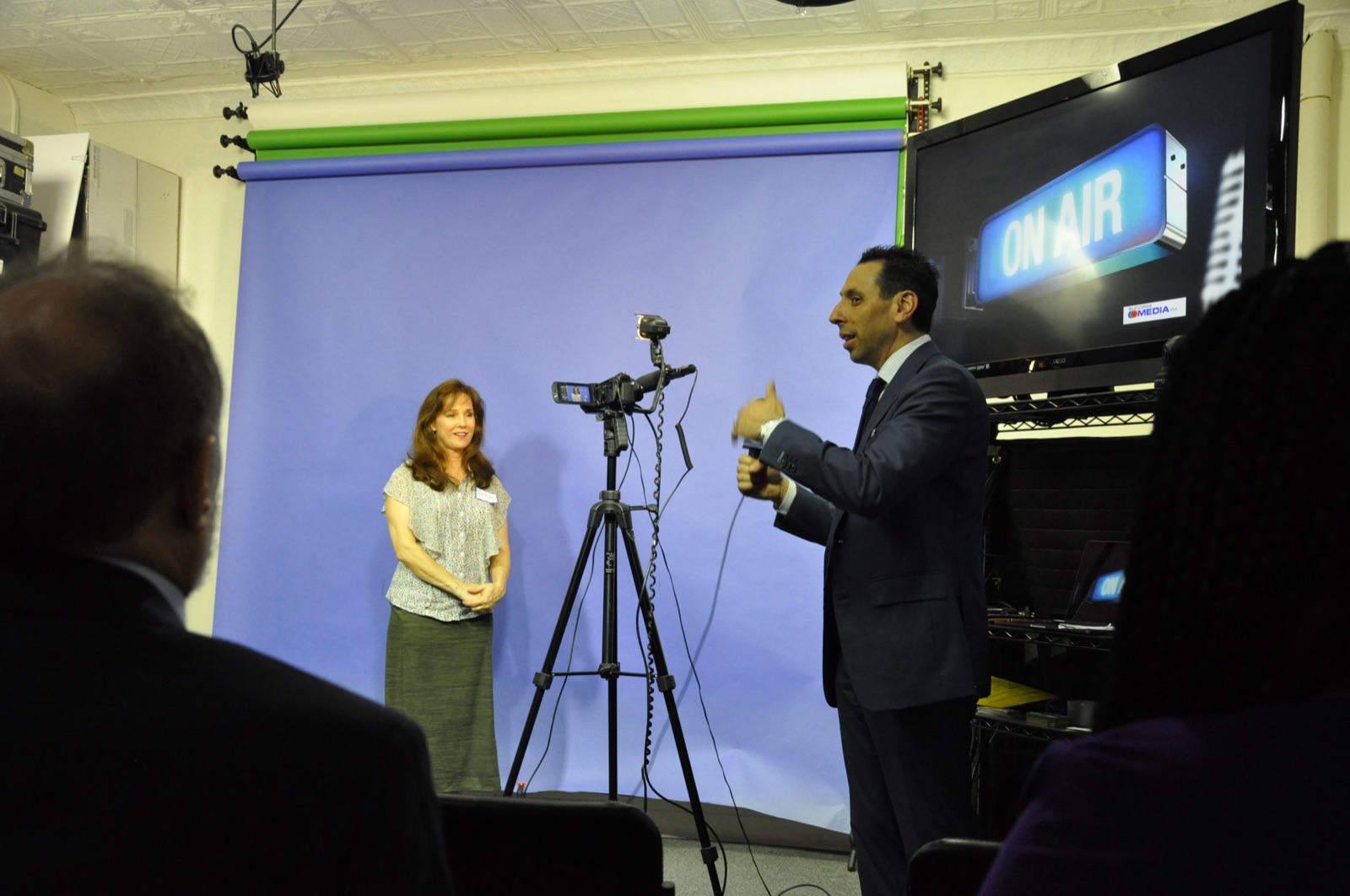
In-person training runs at our Madison Avenue studio with broadcast-quality cameras, at your offices, or at an event venue. See presentation training in NYC for studio details. Standard scheduling is typically two to four weeks out for a one-day intensive. If a date is already fixed, put it on the quote form and we will work backward from it. If you are weighing individual coaching against a team session, we compare the two in one-on-one versus group presentation training.
What Presentation Training Costs
Pricing is per engagement rather than per hour, and two things move the number: how many people are being trained, and how much ongoing support is attached afterward. Our knowledge center sets out the range in detail in what training costs. Every engagement includes The 365 Solution, a full year of follow-on support, at no additional charge, which is what stops the skills fading three months after the session.
Group formats bring the per-person figure down substantially, which is why most organizations start with a cohort and add individual preparation before major events. The fastest route to an exact figure is a quick quote or a short call with Jess, where the scope, the timeline, and the number of presenters get settled in one conversation.
How to Know Whether It Worked
The success condition is agreed before the session, and it is almost always situational rather than abstract: the board approves the plan, the pitch converts, the gala beats its target, the hearing stays on substance, the analyst questions get shorter because the prepared remarks answered them first. Vague goals such as "sound more confident" produce vague results.
Inside the room, the recording does the assessing. The first run and the final run of the same content, played back to back, is the most objective feedback most professionals ever receive on their own delivery, and it removes opinion from the conversation entirely. Most participants find it uncomfortable and then find it decisive. For a fuller treatment of the question, see whether presentation training is worth it and how to measure presentation training ROI.
Common Questions, Answered in Depth
Buyers researching presentation training tend to arrive with the same set of practical questions: how long it takes, whether groups or individuals work better, what happens if you are genuinely afraid of presenting, whether virtual training is as effective as in-person, and how to tell a serious program from a two-hour workshop. We have answered fifty of them in one place.
Start with 50 presentation training questions, answered. From there, the most useful individual pieces are what presentation training actually is, how to structure a presentation, how to stop being nervous when presenting, and how presentation coaching differs from media training.
High Stakes Presenter
If your presentation carries unusual weight, you may also want the more specialized High Stakes Presentation Training approach. That is the lane for moments where the room, outcome, and downside all feel bigger than usual.