A well-run internal meeting is one where every slide has a single clear focus, every minute moves the room toward a decision, and people leave knowing exactly what happens next. This case study is about the moment a Hay Group executive discovered that the fastest way to get there was to turn the PowerPoint off entirely.
I worked with Hay Group, a prominent global management consulting firm specializing in human resources, talent development, and compensation strategies, across multiple teams and multiple occasions. The first story from that engagement is about a million dollar client win. This one happened away from clients, inside their own conference room, and I heard it the same way: someone pulled me aside on a return visit to tell me what happened after I left town.
Why should internal meetings be part of presentation training?
In every workshop I share one of my secret wishes for the team. Yes, I want them to keep more clients and close more future clients. But I also want their internal meetings to be faster, more efficient, and better run. Most organizations spend a staggering share of their week in meetings, and the same habits that lose client rooms, dense slides, no focus, no clear conclusion, quietly drain internal ones.
This gentleman, and I am purposely leaving his name out because everybody should be free to improve without having their name shared everywhere, was honest about what he did. He was running an internal meeting and pulled out a PowerPoint that was pure old school:
- Too much information on every slide
- Too many confusing slides
- No specific focus walking people to what feels like an obvious conclusion
As he started, the whole room erupted and laughingly told him, "That's the kind of PowerPoint that we said doesn't work, ha ha." They said, "This is what we learned in Jess's workshop. What are you showing us exactly? Is this an old PowerPoint?"
The moment he turned off the PowerPoint
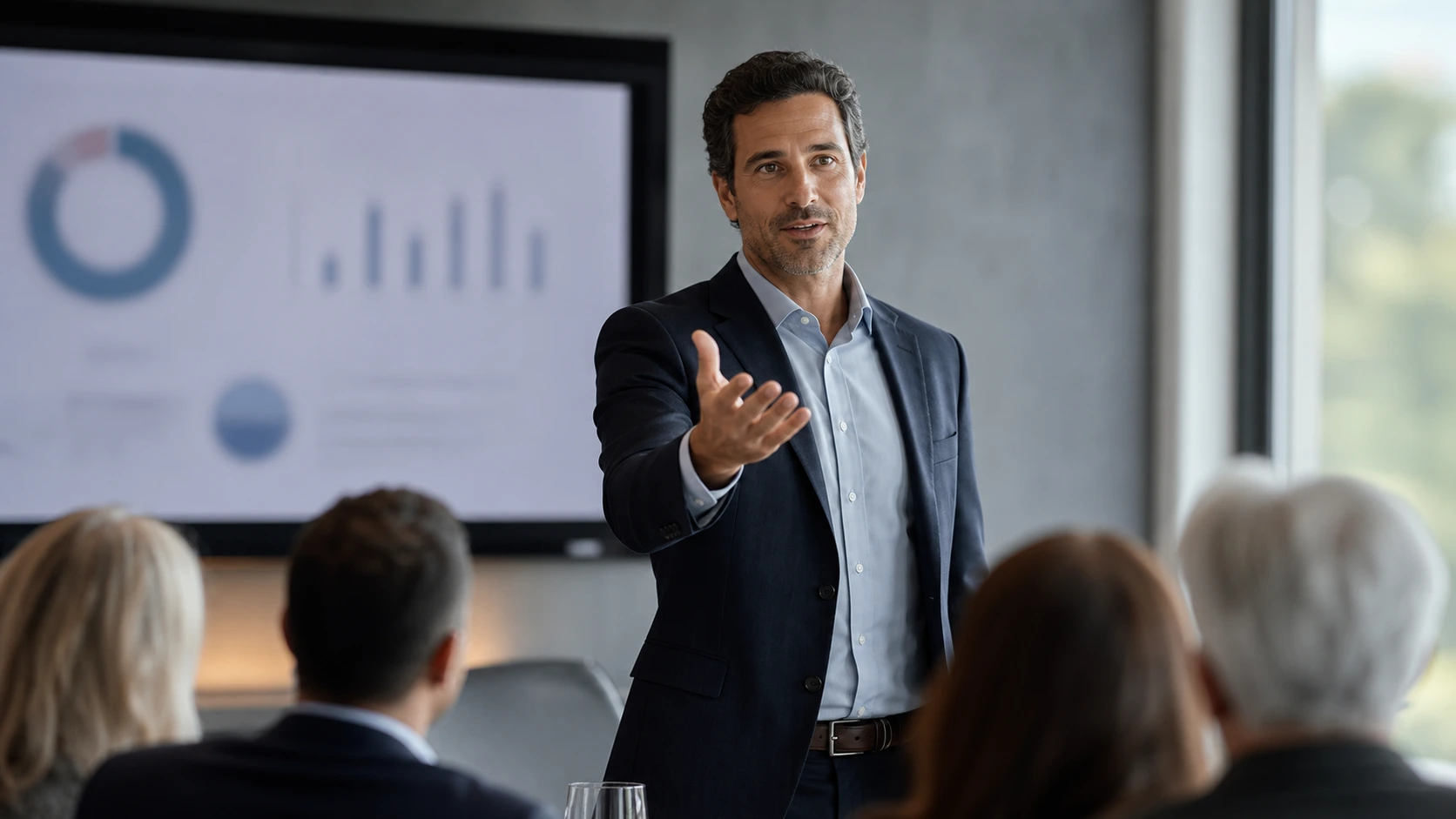
This is the part I love. He looked everybody in the eye, he turned off the PowerPoint, and he said, "Maybe I will just tell you what I wanted to share today."
The group broke out into a round of applause.
He told me he had never gotten applause at work. He knew it was not entirely because of the choices he made walking into that room, but he really wanted me to know that some magic followed. He talked people through what they needed to make happen. Everybody was focused on exactly what he was saying. The meeting was more collaborative, and afterwards people were saying, "We should just do that in the future. This meeting was worth it just to show how we could be faster and more efficient."
In the end, he got credit and kudos from the entire team, when initially he thought he was going to be booed out of the conference room and possibly out of town.
The audience was laser focused. It was unbelievable... we closed a million dollar [deal] assignment. Les Richmond, Director of Communications, Global Advertising & Brand Management, Hay Group
That quote comes from the same Hay Group engagement, from Les Richmond's finalist presentation in New York. I include it here because the two stories are really one lesson: when the deck stops doing the talking and the leader starts, audiences lock in. It worked on a million dollar buying committee, and it worked on a room of colleagues who had seen a thousand internal decks.
What does this mean for your team?
- Your team already knows when a deck is bad. Once a group learns what works, they will call out what does not. That shared standard is worth more than any template.
- Talking beats projecting. If you know your point, saying it directly is faster, clearer, and more engaging than walking a room through cluttered slides.
- Meetings are a trainable skill. Faster, more efficient, better-run meetings are a direct outcome of presentation training, not a side effect.
- Courage gets rewarded. The scariest move in that room, turning off the deck, is the one that earned applause.
If your leadership team spends more time enduring meetings than deciding things in them, that is fixable. This is core material in my high-stakes presentation training, and it shows up in executive engagements of every size. Tell me about your team through the quick quote form and I will map out what a training day could look like.
Not ready yet? No problem. Start with a copy of my book Media Secrets or grab the 7 Media Interview Secrets and put a few ideas to work first.