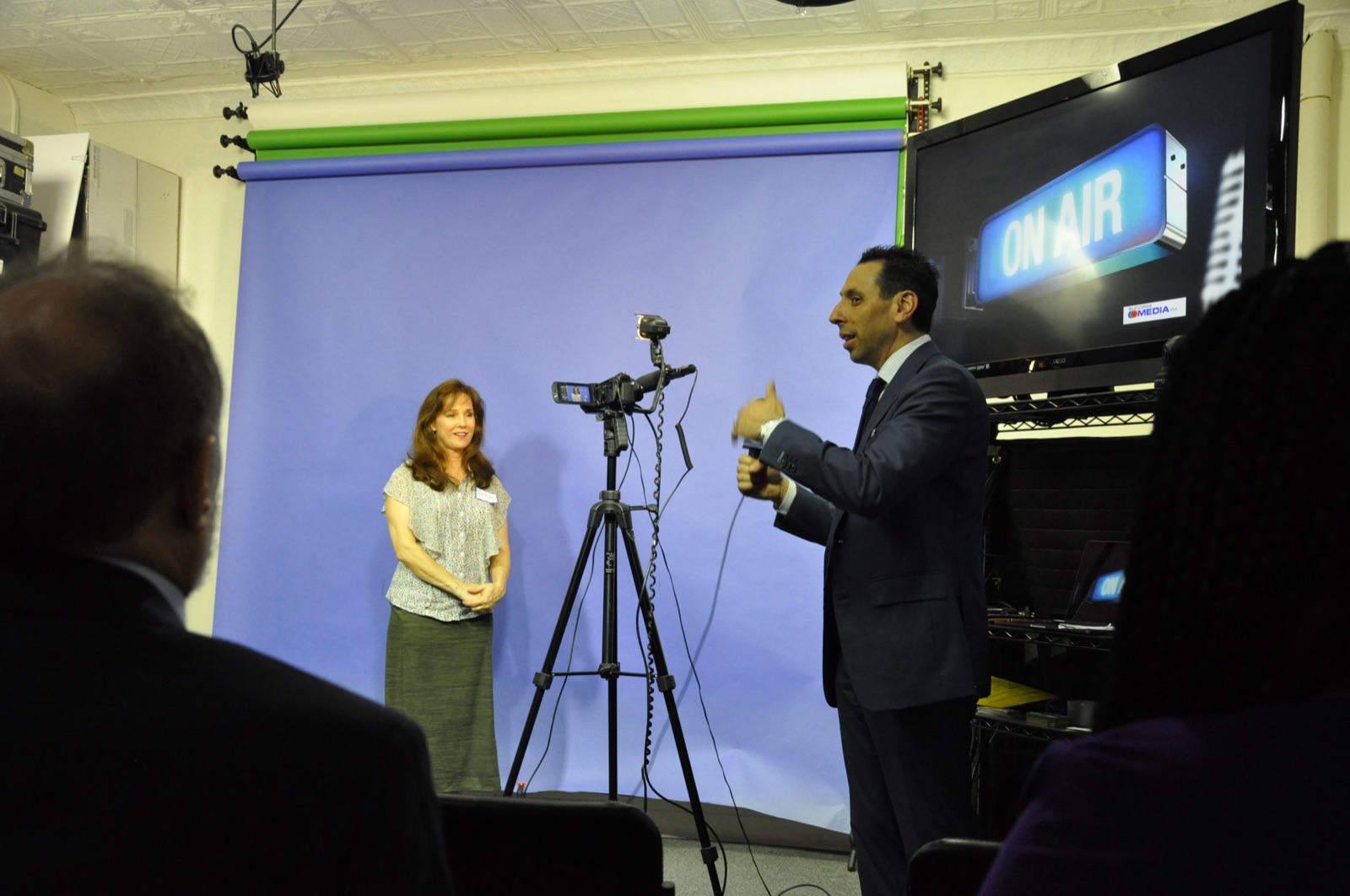
Why Do Companies Choose On-Site Media Training?
Organizations usually bring Jess on-site when they need results fast, want their real team in the room together, or need practical rehearsal grounded in real business pressure instead of generic theory.
High-Stakes Moments Ahead
Your executives need to get interview-ready before a launch, crisis, announcement, or other public-facing moment where a weak answer becomes the story.
One Team, One Standard
Your communications team wants consistent spokesperson performance across multiple leaders, not one strong executive and everyone else improvising.
Real-World Rehearsal
Your organization needs training built around its actual exposure, likely tough questions, and real message challenges rather than a canned workshop.
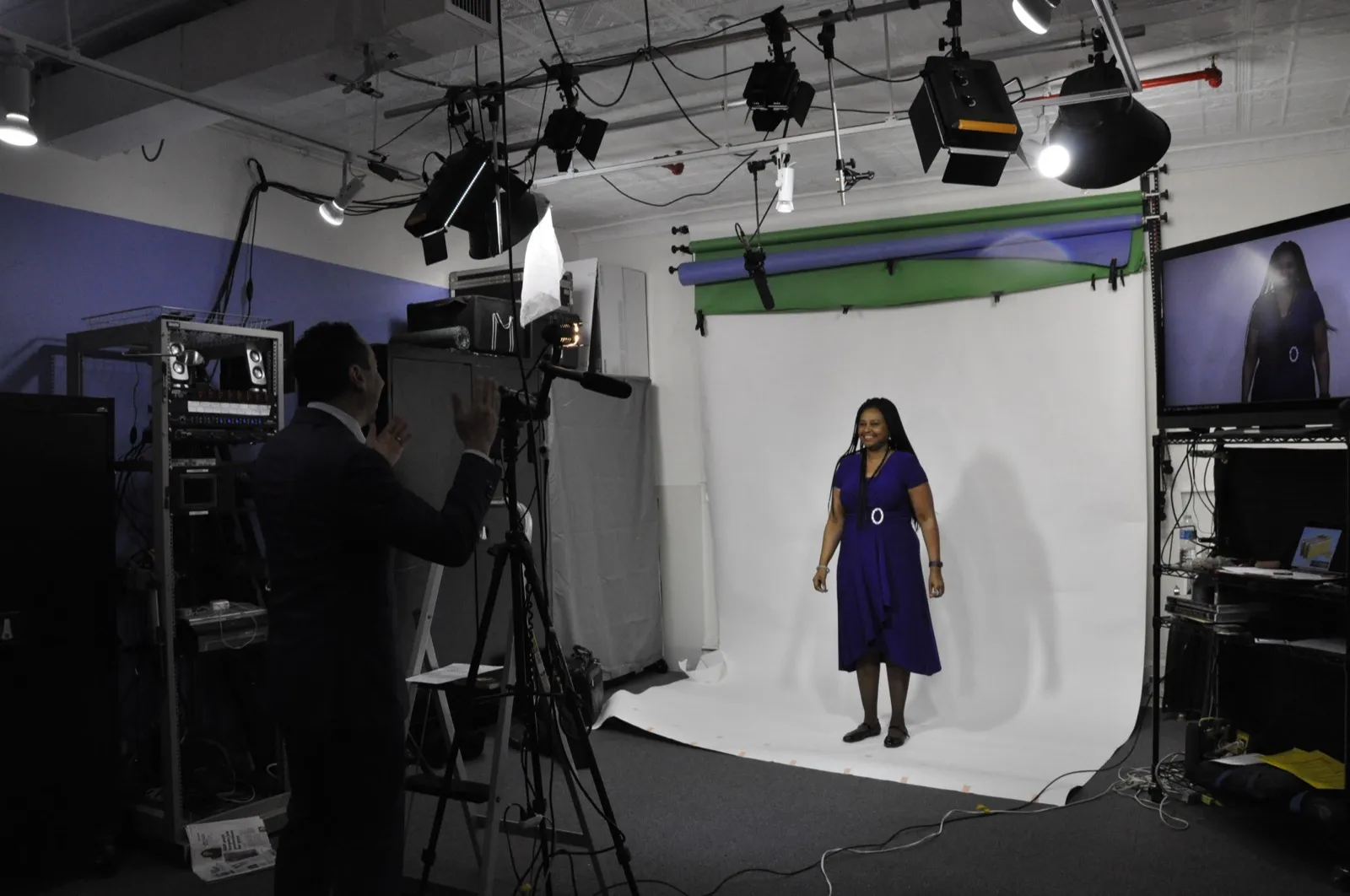
Real coaching. Real playback. Real-time course correction before the public moment arrives.
Why Does This Work Better Than Typical Media Training?
Most media training programs make one big mistake: they talk too much and practice too little.
Too often, participants are put on camera once near the beginning of the day and once near the end. That may create the feeling of training, but it does not create new habits. Jess uses the camera as a working tool throughout the day. Participants are typically on camera at least eight times, sometimes more, so they can immediately see what is working, what needs course correction, and how quickly real improvement can happen.
What Happens During an On-Site Training Day?
Message Development
We build the language around your real business situation, exposure, and communication goals before the reps start.
On-Camera Exercises
Participants are filmed repeatedly in realistic scenarios so strengths, risk areas, and habits become visible quickly.
Immediate Playback
We review the footage right away so people can see exactly what is helping and hurting their performance.
Video Examples and Coaching
People see what strong communication actually looks like, then apply it immediately in the next rep.
Whether someone is preparing for television, print, podcast, radio, internal video, or digital press, the camera remains one of the fastest tools for showing what is landing and what is not. For teams that want to see how the day will be structured in advance, a sample itinerary can be included as part of a customized proposal.
Mobile Studio Setup
Jess travels with a mobile studio and brings the equipment needed to run a serious training day on-site. He is self-contained and can build a strong rehearsal environment inside your office, offsite, or event venue. It is helpful if the room has a flatscreen available for playback, but that is not required.
What Makes This Different
Most media training firms stop when the training day ends. Success in Media includes a full year of post-training support and resources as standard, at no extra charge, because that is what helps the training stick. Clients are not left with a good workshop and no follow-through. They get continued reinforcement before the next interview, the next leadership appearance, or the next moment that suddenly matters.
Why Do Teams Bring Jess In Instead of Settling for Generic Training?
Many companies do not have a messaging problem. They have a performance-under-pressure problem. Their leaders know the facts, but they ramble. They over-answer. They get too technical. They lose warmth when the questions get harder. Or they sound so careful that they accidentally sound evasive.
That is why this page is not about “communication tips.” It is about getting your executives ready for the moment that matters with a trainer who understands what cameras reward, what producers cut, and what audiences remember.
Who Is On-Site Media Training For?
- CEOs and founders preparing for high-visibility media opportunities
- Communications and public affairs teams building spokesperson bench strength
- Leadership teams preparing for announcements, change communications, or reputation-sensitive moments
- Subject-matter experts who are brilliant in the room but too technical, too long-winded, or too cautious on camera
- Organizations that need a practical, fast-moving training day rather than a passive workshop
What Formats and Team Sizes Are Available?
The ideal group size is usually one to eight people. That range creates enough room for multiple perspectives while still allowing deep individual coaching and repeated playback.
That said, Success in Media also builds programs for much larger groups. Sessions for 50, 100, or more participants are absolutely possible. The main difference is how the exercises are structured, how the group is divided, and how much individualized playback is built into the agenda.
On-Site
Best when you want team participation, lower travel friction, and rehearsal inside your own environment.
NYC Studio
Best when you want a dedicated studio setting in Manhattan close to major networks and executive travel routes.
Virtual
Best for distributed teams, urgent scheduling, and leaders appearing remotely over Zoom or Teams.
Results and Support
Every training engagement includes a full year of post-training resources and support as standard. That continuity matters because the real value of media training often shows up in the weeks and months after the session, when a leader needs to prepare for the next appearance, refine messaging, or get quick-turn support before a high-stakes moment. It is one of the clearest reasons clients stay with Success in Media over time and one of the ways the company has built lasting relationships over the last 20 years.
Who Leads the Training?
Written by Jess Todtfeld, founder and president of Success in Media and the trainer who delivers every on-site program. He is a former NBC, ABC, and Fox News television producer who produced thousands of interviews, a Guinness World Record holder for 112 media interviews completed in 24 hours, 96 officially certified, and a Certified Speaking Professional, the highest earned designation from the National Speakers Association. He is the author of Media Secrets, a number one international bestseller in four countries, and he has trained more than 500 executives across Fortune 500 C-suites, founder-CEOs, and senior government, nonprofit, and healthcare spokespeople. Read his full bio.