Presentation Training for Defense and Aerospace Contractors
Program reviews, proposal orals, and industry days are decision rooms. Train the people who carry them to brief so the decision goes your way.
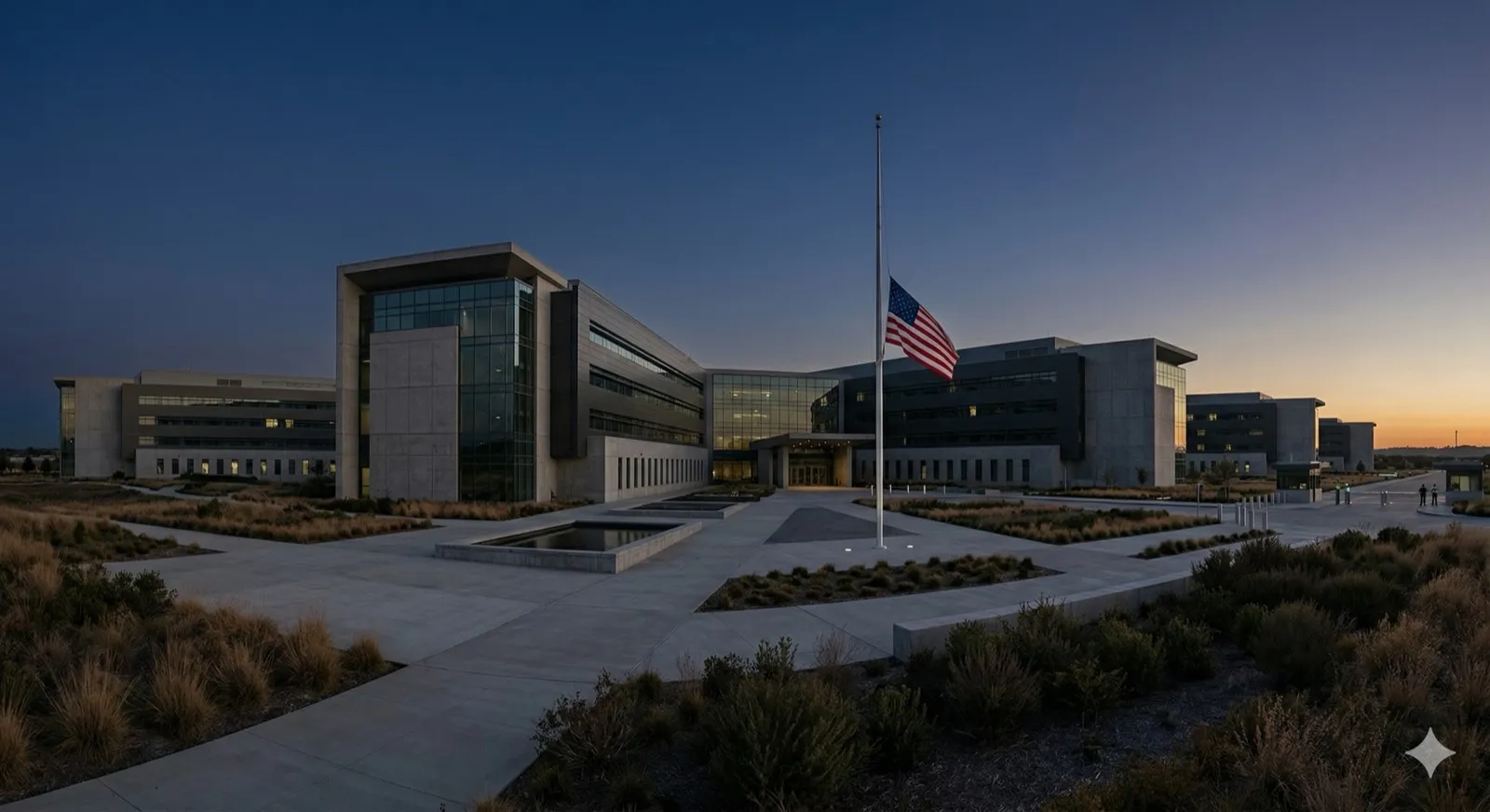
Program reviews, proposal orals, and industry days are decision rooms. Train the people who carry them to brief so the decision goes your way.
Defense and aerospace runs on briefings. A program review decides whether a milestone holds, slips, or gets re-scoped. Proposal orals are scored on delivery in front of an evaluation panel that has already read every written volume. An industry day decides whether an acquisition official remembers your capability a month later or confuses it with three others. The people carrying those rooms are usually program managers, chief engineers, and capture leads: superb on substance, and almost never trained on the room itself. That gap costs contracts, and it costs them at the moment the technical work was actually strongest.
The communication problem in this sector is specific. The audience is almost always mixed: a program executive who needs the decision, a technical lead who will test any number you say, and a contracting officer tracking whether you answered the question that was asked. Half the vocabulary that makes you credible with one of them makes you unintelligible to another. Add compressed time limits, evaluation criteria that reward responsiveness over enthusiasm, and material that often cannot leave the room, and you have an environment that generic public speaking coaching does not address. Our defense and security communication page covers the media side of this work; this program covers the briefing.
You have twenty minutes with a program executive and the outcome is go, pause, or re-scope. The brief has to survive interruption, lead with the recommendation, and hold up when a technical question drops three levels below your slides. Nobody in that room is going to wait politely for your build-up.
The oral phase of a competitive bid is scored on delivery as much as content. Five presenters have to sound like one company, the handoffs have to be clean, and the discussion round rewards the team that answers the question actually asked instead of the one it rehearsed.
You are presenting a capability to acquisition officials, primes, and potential partners in a mixed room with a short slot. The target is not applause. It is a briefing a nontechnical official can summarize accurately to a colleague the following week.
A staff briefing or a delegation visit gives you a small window and an audience with no obligation to follow your technical detail. The work is compression: what the program does, why it matters, what you need, and what happens if the answer is no, in language that does not require a background in the system.
Internal presentations set the tone for a program or an organization. Leaders practice speaking to a workforce about a schedule slip, a reorganization, or a new mission, and delivering ceremonial remarks that sound like a person rather than a personnel file.
Presentation training here is not a lecture on slide design. It is a working session built around the specific room you are walking into next: the program review, the orals rehearsal, the industry day slot, the all-hands after a schedule change. Most engagements run as a one-day intensive, on site at your facility, in person at our Madison Avenue studio, or fully virtual, and every hour is spent on your material rather than on generic examples.
We start at the end. What does this audience need to approve, fund, believe, or stop worrying about when you stop talking? Teams routinely arrive with a topic (the quarterly program status) and leave with a decision (approve the rebaseline before the next milestone review). Everything after this step is judged against whether it moves the room toward that specific outcome.
Your brief gets compressed to a single page: the opening that earns attention in the first thirty seconds, the two or three load-bearing points, the proof behind each, the objection you know is coming, and the ask. Evaluation panels and program executives do not remember decks. They remember the shape of your argument and whether it answered the question they walked in with.
We work through the specific places where your expertise stops transferring: the acronym that means something different to the customer, the chart that needs a paragraph of setup, the risk you describe accurately and the room hears as a red flag. Then we stress-test it, because a point a nontechnical evaluator cannot repeat back correctly did not land.
You deliver, we record, you watch the recording immediately, and you run it again. Then we run the hard version: the interruption at minute two, the evaluator who challenges an assumption, the question you were hoping nobody would ask. Repetition under pressure is what turns a good plan into something you can execute when the outcome is an award decision.
The intensive is followed by The 365 Solution, a full year of follow-on support at no additional charge: coach access before your next high-stakes brief, a full retake of the online course, and short refresher lessons you can pull up on the way to the review. Six months from now, before an unplanned briefing, nobody on your team is starting from zero.
Technical leaders in this sector rarely have a delivery problem in the ordinary sense. They have specific, high-cost habits that nobody inside the program is positioned to name. These are the ones that come up most often.
Engagements are scoped to the situation rather than sold as a fixed package. The formats defense and aerospace organizations choose most often:
Sessions are built around unclassified versions of your material. The structure, sequencing, and delivery work transfer directly to the brief that cannot leave the room. Standard scheduling for a one-day intensive is typically two to four weeks out. When a review or a submission date is already fixed, put it on the quote form and we will work backward from it. If you are weighing individual coaching against training the whole team, we compare the two in one-on-one versus group presentation training, and how long presentation training takes answers the timeline question directly.
Pricing is per engagement rather than per hour, and two things move the number: how many people are being trained, and how much ongoing support is attached afterward. Presentation training generally runs from $1,000 to $5,000 to $15,000, which is set out in detail in our answer on what presentation training costs. Every engagement includes The 365 Solution at no additional charge. For a figure you can take into a bid and proposal budget conversation, request a quick quote or book a short call with Jess.
Team formats bring the per-person figure down substantially, which is why most contractors start with a capture or leadership cohort and add individual preparation before major reviews. If you are working out what to ask a provider before you commit, how to choose a presentation coach covers the questions worth asking, and how to practice a presentation describes the rehearsal method we use inside the session.
Measurement here is not a satisfaction survey. Before the session we agree on what would count as a win, and in this sector it is almost always situational: the milestone review ends with a decision instead of an action item, the orals debrief cites the discussion round as a strength, the industry day produces follow-up contact from the office you were targeting. We also use the recordings. The first run and the final run of the same brief, played back to back, is the most honest measure of change there is. How to measure presentation training ROI goes through the method in full.
Jess Todtfeld is one of America's leading presentation and media trainers. A former television producer for NBC, ABC, and FOX, he brings an insider's understanding of what makes communication land. He holds the Guinness World Record for the most media interviews given in a 24-hour period (112 interviews completed, 96 officially certified) and has earned the Certified Speaking Professional (CSP) designation, a distinction held by less than 1% of professional speakers worldwide and by just over 12% of National Speakers Association members. He is the author of Media Secrets, and he has trained executives, leaders, and technical professionals at Fortune 500 companies and organizations across every industry. His approach is direct, practical, and built around real-world results.
For defense and aerospace teams, the value is the outside ear. Jess is not inside your program, which means he hears the brief the way an evaluator or a program executive hears it: the acronym that lost them, the point that arrived four slides too late, the answer that raised a question nobody had asked. He gives the direct, unhedged feedback that technical leaders rarely get from inside their own organization, and then makes you run it again until the delivery holds under interruption.
Related: See our defense and security communication training page, the High Stakes Presentation Training intensive, or the full presentation training program list.
More answers: Browse 50 presentation training questions, answered, or read what training costs, how to practice a presentation, and how to measure the return.
Contact Jess to scope a presentation training program built around your next program review, orals rehearsal, or industry day.
Jess has trained presenters at the United Nations, AARP, and Fortune 500 companies. Guinness World Record holder and former NBC, ABC and Fox producer.