Presentation Training for Energy and Utility Leaders
Rate cases, commission testimony, and community meetings are decided while you are standing in front of the room. Train your leaders to hold it.
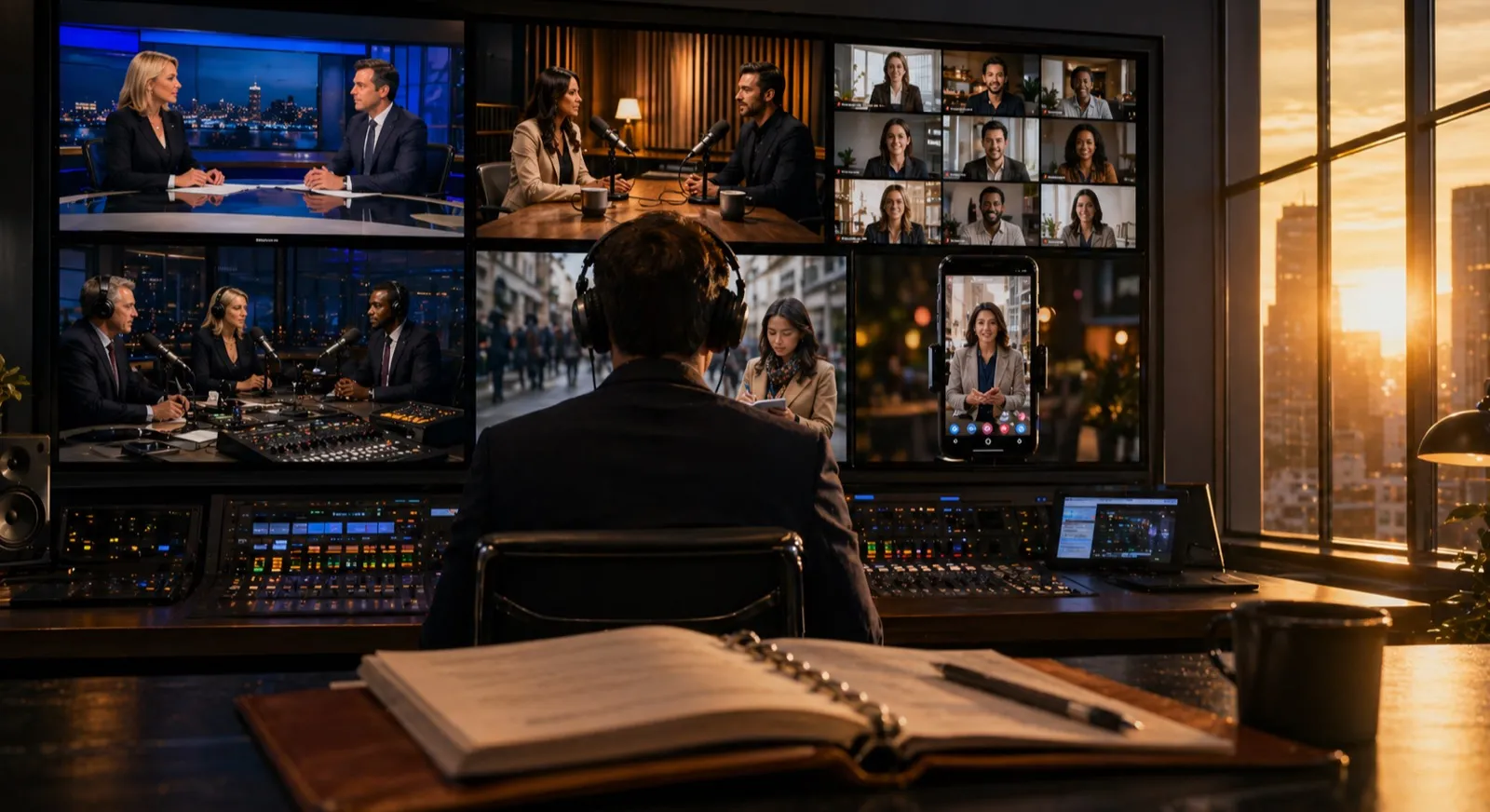
Rate cases, commission testimony, and community meetings are decided while you are standing in front of the room. Train your leaders to hold it.
Energy and utility leaders present far more often than they give interviews, and the presentations are usually the higher-stakes half. A rate case hearing is a presentation with a vote attached. Commission testimony is delivered to people who will read the transcript again later. A siting or permitting meeting puts your project in front of neighbors who did not ask for it. An investor day turns a multiyear capital plan into a story an analyst either can or cannot repeat. In every one of those rooms the decision gets made while you are standing in front of it.
The communication problem here is specific: the material is technical, the audience usually is not, and the setting is frequently adversarial or emotional. Engineers and operations leaders who are precise and careful by training often read as evasive to a room that arrived angry. Regulatory and public affairs teams get the tone right and lose the room on structure. Add hard time limits at commission hearings and the fact that everything is on the record, and general public speaking coaching stops being useful. Our energy and utilities communication page covers the media side of this work; this program covers the room.
Your filing has been read, picked apart, and challenged in writing before you say a word. The presentation has to lead with what you are asking for, justify the assumptions behind it, and survive questions from commissioners, staff, and intervenors inside the time you are given.
Testimony is a presentation on the record. Every sentence can be quoted back later, so precision matters, but a witness who sounds evasive loses credibility no matter how accurate the answer was. The work is the short, complete answer delivered under adversarial questioning.
A transmission line, a substation, a pipeline, or a generation project puts you in front of residents who did not ask for it. The presentation has to acknowledge concerns before it explains anything, put technical detail into plain language, and hold composure when the room is loud.
After an outage, an injury, or a reorganization, an internal presentation carries more weight with your workforce than any external statement. Crews can tell instantly when a leader is reading a prepared line rather than speaking to them.
Capital plans, transition targets, and rate base growth have to arrive as a narrative rather than a spreadsheet. Analysts and directors are deciding whether the plan is real and whether the team executing it is credible, and they decide that partly on how it is presented.
Presentation training here is not a lecture on slide design. It is a working session built around the specific room you are walking into next: the commission hearing, the permitting open house, the investor day, the all-hands after an outage. Most engagements run as a one-day intensive, on site at your offices, in person at our Madison Avenue studio, or fully virtual, and every hour is spent on your material rather than on generic examples.
We start at the end. What does this audience need to approve, permit, fund, or stop fearing when you stop talking? Leaders routinely arrive with a topic (the capital plan) and leave with a decision (approve the recovery mechanism at this hearing). Everything after this step is judged against whether it moves the room toward that specific outcome.
Your presentation gets compressed to a single page: the opening that earns attention in the first thirty seconds, the two or three load-bearing points, the proof behind each, the objection you know is coming, and the ask. Commissioners and community audiences do not remember decks. They remember the shape of your argument and whether it answered what they came in worried about.
We work through the places where your expertise stops transferring: the rate mechanism that needs three sentences of setup, the reliability metric that means nothing to a resident, the qualifier that is accurate on the record and sounds like dodging in a public meeting. A point a commissioner or a neighbor cannot repeat back correctly did not land, however accurate it was.
You deliver, we record, you watch the recording immediately, and you run it again. Then we run the hard version: the interruption two minutes in, the intervenor who attacks an assumption, the resident who is not interested in your data. Repetition under pressure is what turns a good plan into something you can execute when the room is against you.
The intensive is followed by The 365 Solution, a full year of follow-on support at no additional charge: coach access before your next hearing or public meeting, a full retake of the online course, and short refresher lessons you can pull up on the way in. Six months from now, before an unplanned outage briefing, nobody is starting from zero.
Utility leaders rarely have a delivery problem in the ordinary sense. They have specific, high-cost habits that nobody inside the organization is positioned to name. These are the ones that come up most often.
Engagements are scoped to the situation rather than sold as a fixed package. The formats energy and utility organizations choose most often:
Standard scheduling for a one-day intensive is typically two to four weeks out. When a hearing date or an open house is already on the calendar, put it on the quote form and we will work backward from it. If you are weighing individual coaching against training the whole panel, we compare the two in one-on-one versus group presentation training, and how long presentation training takes answers the timeline question directly.
Pricing is per engagement rather than per hour, and two things move the number: how many people are being trained, and how much ongoing support is attached afterward. Presentation training generally runs from $1,000 to $5,000 to $15,000, set out in detail in our answer on what presentation training costs. Every engagement includes The 365 Solution at no additional charge. For an exact figure scoped to your situation, request a quick quote or book a short call with Jess.
Group formats bring the per-person figure down substantially, which is why most utilities start with a leadership or witness cohort and add individual preparation before major hearings. If you are trying to work out whether you need a training engagement or an ongoing coaching relationship, presentation training versus coaching draws the line, and how to practice a presentation describes the rehearsal method we use inside the session.
Measurement is not a satisfaction survey. Before the session we agree on what would count as a win, and in this sector it is almost always situational: the hearing stays on substance, the open house ends with people who still disagree but feel answered, the investor day produces questions about the plan instead of about the numbers behind it. We also use the recordings. The first run and the final run of the same testimony, played back to back, is the most honest measure of change there is. How to measure presentation training ROI goes through the method in full.
Jess Todtfeld is one of America's leading presentation and media trainers. A former television producer for NBC, ABC, and FOX, he brings an insider's understanding of what makes communication land. He holds the Guinness World Record for the most media interviews given in a 24-hour period (112 interviews completed, 96 officially certified) and has earned the Certified Speaking Professional (CSP) designation, a distinction held by less than 1% of professional speakers worldwide and by just over 12% of National Speakers Association members. He is the author of Media Secrets, and he has trained executives, leaders, and technical professionals at Fortune 500 companies and organizations across every industry. His approach is direct, practical, and built around real-world results.
For energy and utility teams, the value is the outside ear. Jess is not inside your rate case or your permitting process, which means he hears the presentation the way a commissioner or a resident hears it: the qualifier that sounded like dodging, the metric that meant nothing, the point that arrived after the room had already stopped listening. He gives the direct, unhedged feedback that senior leaders rarely get internally, and then makes you run it again until the delivery holds when the room turns.
Related: See our energy and utilities communication training page, the High Stakes Presentation Training intensive, or the full presentation training program list.
More answers: Browse 50 presentation training questions, answered, or read what training costs, training versus coaching, and how to measure the return.
Contact Jess to scope a presentation training program built around your next rate case, siting meeting, or investor day.
Jess has trained presenters at the United Nations, AARP, and Fortune 500 companies. Guinness World Record holder and former NBC, ABC and Fox producer.