
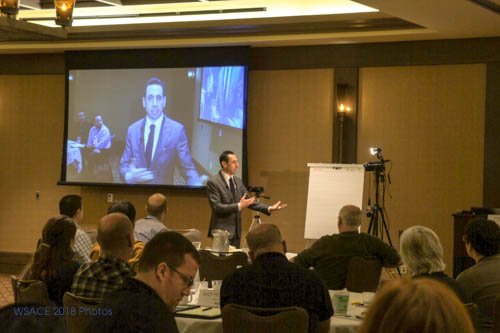
How do you keep presentation confidence momentum going after an early win? Deliberately challenge yourself again, soon, before old habits have a chance to quietly creep back in. One good presentation, one successful stretch outside your comfort zone, does not lock the change in permanently on its own. Momentum has to be actively maintained.
Why this matters (and what most executives get wrong)
It is a common pattern: someone makes real progress, tries something that used to feel impossibly uncomfortable, and it goes well. They feel genuinely different afterward. Then weeks pass, no new stretch happens, and slowly the old caution creeps back in, not through any single decision to regress, just through the absence of continued momentum. What most executives get wrong is assuming that one success is the finish line rather than a single step in an ongoing process.
Momentum works the way it does in physics: it is easier to keep moving once you are already moving than it is to start again from a full stop. The gap between presentations, between challenges, between deliberate stretches, is where old patterns find room to return. Consistently finding the next situation to challenge yourself in, before too much time passes, is what keeps the whole thing moving forward instead of sliding back.
You have to keep finding situations where you challenge yourself. Momentum is something you build again and again, not something you bank once and keep.
The 3-step way to protect your momentum
Step 1: Line up your next challenge before the current one fades
Right after a successful stretch, while the confidence from it is still fresh, identify what the next one will be. Do not wait for motivation to reappear on its own weeks later.
Step 2: Keep the gaps short, especially early on
The longer the space between deliberate challenges, the more room old habits have to quietly return. Early in the process especially, aim to keep finding new opportunities relatively close together rather than letting long stretches of comfort accumulate.
Step 3: Treat every step forward as evidence, not proof
One success is real evidence that you can do this. It is not permanent proof that the work is finished. Keep collecting evidence rather than assuming a single data point settles the question permanently.
The mistake most executives make
The mistake is treating a single breakthrough presentation, or a single successful stretch outside the comfort zone, as the end of the process rather than one point on an ongoing line. Without a next challenge already identified, motivation tends to fade on its own, and the specific discomfort that was starting to feel manageable slowly becomes unfamiliar again. Momentum requires continued input. It does not sustain itself for free.
Ask yourself when the last time was that you deliberately challenged yourself in this area. If the honest answer is longer than a few weeks ago, momentum has likely already started to fade, even if it does not feel that way yet.
Case study: the presenter who kept going after the first win
An executive director for a Virginia based nonprofit I worked with had a genuinely successful first attempt at a stretch presentation, well outside what she would normally have volunteered for, and it went noticeably better than she expected. Rather than treating that as a finished milestone, we identified her next challenge, a slightly bigger version of the same stretch, within two weeks of the first one. That short gap kept the momentum active, and by her third deliberate stretch a couple of months later, what had once felt like a major challenge had become a routine part of how she operated, not because of one good outcome, but because she kept adding to it before it had a chance to fade.
One success versus sustained momentum
| Element | One success | Sustained momentum |
|---|---|---|
| What happens next | Nothing scheduled | The next challenge already identified |
| Gap before the next stretch | Often long, unplanned | Kept short, especially early on |
| Risk of sliding back | High, over time | Actively managed |
What to do next
If you have had a recent win outside your comfort zone, identify your next challenge now, before the motivation from the first one fades. If you want help building a sustained plan instead of relying on a single breakthrough, get a quick quote. For the mindset behind that first stretch, see how to get out of your comfort zone as a presenter, and for keeping the underlying commitment alive, see how to make building confidence a priority.
One good presentation is not the finish line. It is proof you can do this again, and the next one is what keeps it real.