
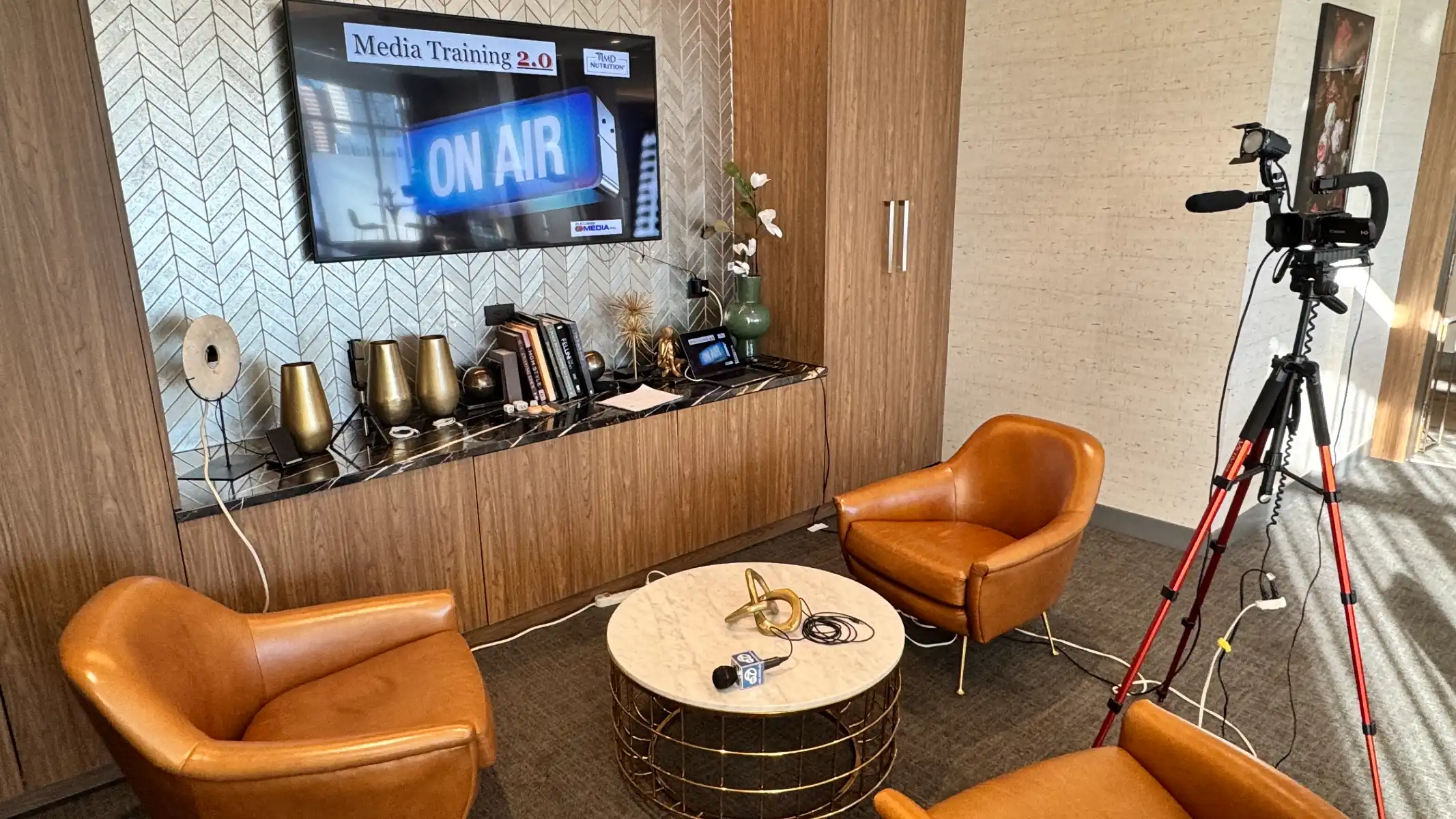
To keep media interview answers simple, use everyday words, get to your point fast, and give one idea at a time instead of a long story or a list of five. That is the whole advice in one sentence, and it is the advice I gave in this short video because I saw the opposite fail so many times from the control room.
Simple is harder than it sounds. Smart, accomplished people walk into an interview and the instinct is to prove they belong there. So the vocabulary goes up, the windup gets longer, and the actual point arrives late, if it arrives at all.
Why smart guests overcomplicate
Nobody sets out to be confusing. It comes from a reasonable place: you want to be taken seriously, you know your subject deeply, and you do not want to leave anything out. Under a camera and a clock, those three instincts combine into answers that are too long, too dense, and too slow to land.
The audience at home does not reward any of that. They are half listening while doing something else. A plain sentence they understand on the first pass beats an elegant one they have to replay in their heads, because they cannot replay it.
What I saw as a TV producer
I spent 13 years producing television at ABC, NBC and Fox. One pattern came up again and again in the pre-interview and on set: a guest with a big list.
Think about what that does to the segment. The guest had five good ideas. The audience heard most of one. The producer is now watching the clock instead of the conversation, and the host is looking for a polite way to move on. The guest walked out believing they had shared five strategies. They shared a fraction of one.
Simple is not the same as dumbed down
This is the part people push back on. They hear "keep it simple" and think it means stripping out the substance. It does not. You can talk about a complex regulatory change, a clinical trial or a supply chain problem and still use words a smart 14-year-old would follow.
The expertise shows in how clearly you explain it, not in how many technical terms you can fit into 20 seconds. If you need help with that translation step, my piece on translating technical jargon for executives walks through it.
How to simplify your answers before the interview
1. Lead with the point
Say the thing you most want the audience to remember first. Background can follow if there is time. If the segment ends early, you still got your point across.
2. Swap the bigger words for the plain ones
Go through your talking points and circle any word you would not use with a friend over dinner. Replace it. "Utilize" becomes "use." The acronym becomes what it stands for, or disappears.
3. Cut the long story to its turning point
Stories work on air, but only the short version. Find the one moment that makes the point and start as close to it as you can.
4. Bring one idea, not five
If you have a list, pick the strongest item and lead with it. If the host wants more, they will ask. Offering "the biggest one is" is far more useful to a producer than "there are five."
Read your main answer out loud and time it. If it takes more than about 30 seconds to reach your point, it is too complicated for television.
Simple answers are also the ones reporters can quote, which is why the same discipline helps when the questions get hard. See how to answer tough media interview questions for the next step. And if you want your team practicing this on camera before a real interview, get a quick quote for media training.