
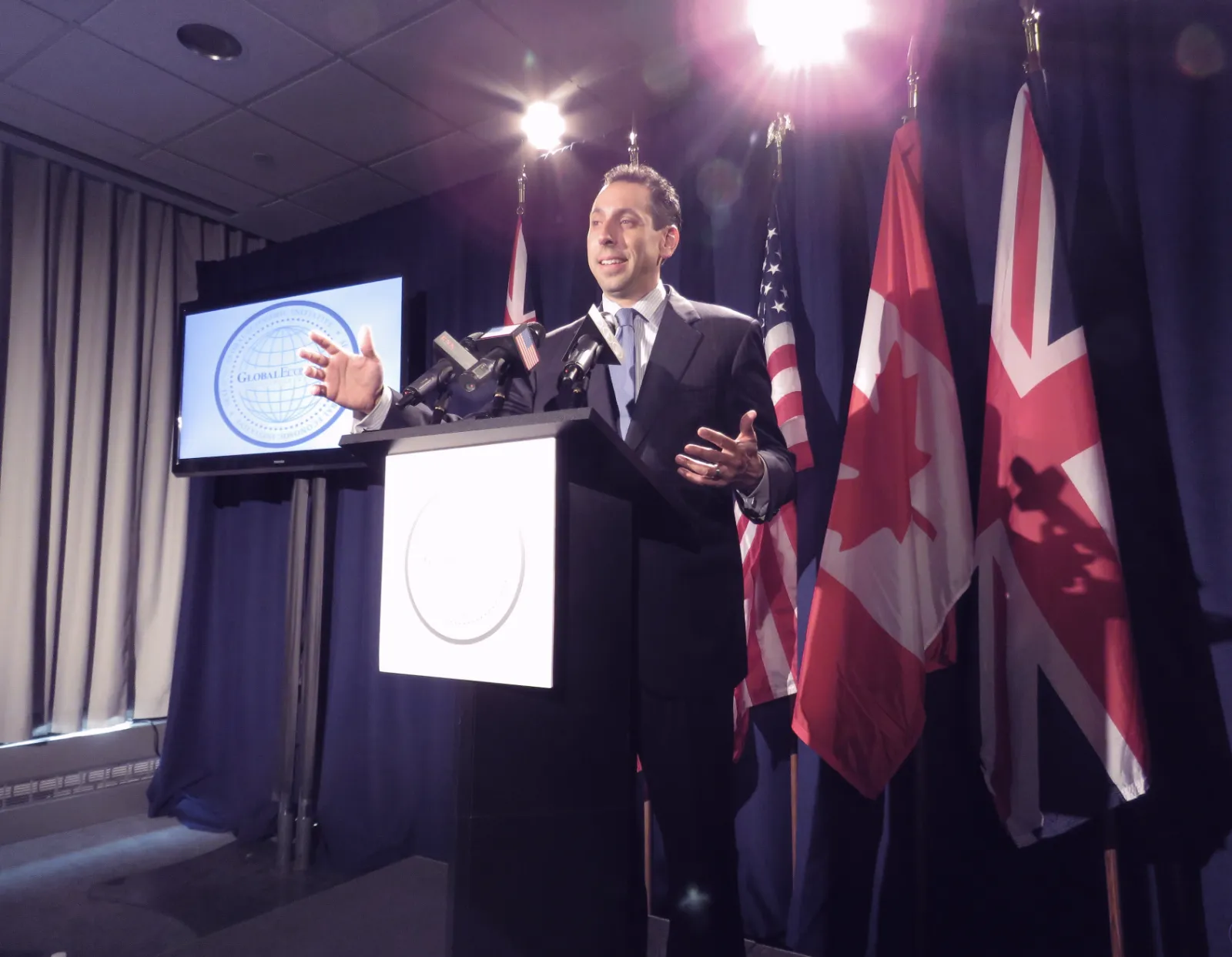
Should you use the lectern a venue provides, or move around instead? Step out from behind it whenever the setting allows. A lectern hides a large portion of your body language and puts a physical barrier between you and the room, even though most speakers use it automatically simply because it is there. Many conferences and events set one up as a default, and most presenters never question whether it is actually helping them.
Why this matters (and what most executives get wrong)
A lectern, the stand you place notes on and stand behind, gets treated as standard-issue equipment for anyone speaking at a conference or formal event. Because it is provided automatically, most presenters assume it is meant to be used, and they plant themselves behind it for the entire talk without weighing the tradeoff. What most executives get wrong is treating the lectern's presence as a requirement rather than an option.
The cost is real. Standing behind a lectern for an entire talk cuts off visibility of roughly three-quarters of your body language, everything from the waist down and much of your gesture range, and it puts a literal barrier between you and the room. None of that is disqualifying, plenty of good talks happen from behind a lectern, but it is a tradeoff worth making on purpose rather than by default.
The lectern being there does not mean you have to stay behind it. It means someone gave you the option to leave it.
The 2-step way to decide what to do with a lectern
Step 1: Use it for what you need, then step away
If you need a place for notes or water, use the lectern for that, briefly, and then move out in front of it for the bulk of your delivery. You do not have to choose between using it and abandoning it completely, you can use it as a home base rather than a fixed position.
Step 2: When you do step out, look them in the eye and move
Once you are out from behind it, use the space. Make eye contact directly with people in the room, and move rather than simply standing in a new fixed spot a few feet from where you started. The point of leaving the lectern is the visibility and connection it opens up, not just a change of scenery.
The mistake most executives make
The mistake is assuming the lectern is doing something for them, professionalism, safety, structure, when for most audiences it does the opposite. It cuts off visibility, creates distance, and can make a talk feel less personal even when the content is exactly the same. Speakers who step out and use the room tend to be better liked by the audience for that shift alone, independent of anything else about the material.
If you know a lectern will be set up before you arrive, decide in advance which parts of your talk you will deliver from it, if any, and which parts you will step out for. Making that decision ahead of time is easier than deciding live, in the moment, under a spotlight.
Case study: the keynote that changed once the speaker stepped out
A high level leader preparing for an address to the United Nations at an event had planned to deliver the entire talk from behind the venue's lectern, as most speakers at that event traditionally did. In rehearsal, we tested stepping out for the talk's most important section, the part built around a personal story, while keeping the lectern as a home base for notes at the transitions. The shift in energy during that section was immediate and visible on the recording, and it became the section attendees specifically mentioned afterward, distinct from the more data-heavy portions still delivered from behind the lectern.
Staying behind the lectern versus stepping out
| Element | Staying behind the lectern | Stepping out |
|---|---|---|
| Body language visible | About a quarter | All of it |
| Distance from the room | A physical barrier | Closed, direct eye contact |
| Best used for | Notes, water, structure | Key moments, stories |
What to do next
Before your next event with a lectern, decide which sections you will deliver from behind it and which you will step out for, and rehearse the transition between the two. If you want help planning where to use the room for a high-stakes talk, get a quick quote. For related physical presence decisions, see why you should move around the room when presenting and sitting vs standing presentations.
The lectern is furniture, not a rule. Use it, then leave it, on purpose.