
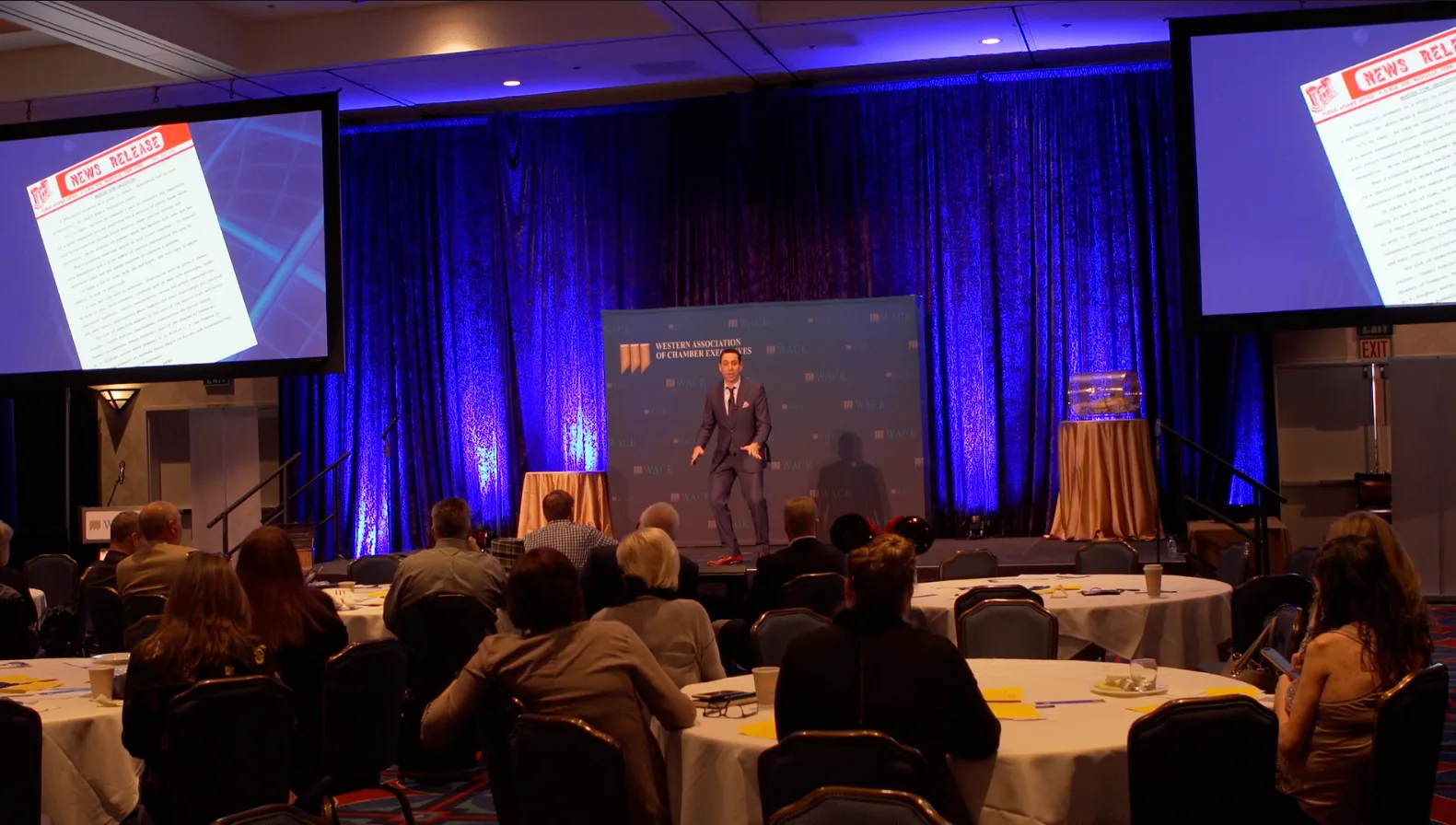
Why should you move around the room when presenting? Movement makes you a little unpredictable, in a good way, and unpredictable is interesting. When you are standing in front of a room full of people whose phones can access anything ever recorded, staying rooted in one spot the entire talk gives them one less reason to keep watching you instead.
Why this matters (and what most executives get wrong)
Plenty of capable presenters plant themselves in one spot for an entire talk, sometimes out of habit, sometimes because it feels safer, and never revisit that choice. What most executives get wrong is treating stillness as neutral, as though standing in one place has no cost. It does. A completely static presenter is easier to tune out, because nothing about the visual field is changing to pull attention back.
This is not about pacing nervously or wandering aimlessly, which reads as anxious rather than engaging. It is about deliberate movement, toward the audience, into the space, in ways that create a small, positive sense of unpredictability. You genuinely do not know what a moving presenter is going to do next, and that curiosity is doing real work to keep people watching.
You are competing with a device in every pocket that has access to everything ever recorded. Standing still the whole time gives it an opening.
The 3-step way to use movement well
Step 1: Move toward people, not just around the stage
Movement that closes distance to the audience does more work than movement that just paces a fixed area. Walking toward a section of the room signals attention and interest in the people there specifically, not just restless energy.
Step 2: Tie movement to transitions in content
Use a shift in physical position to mark a shift in your material, a new point, a new example, a change in tone. This gives the movement a purpose and keeps it from reading as fidgeting.
Step 3: Return to stillness on your most important lines
Movement works because it contrasts with stillness. Plant your feet and stop moving on the line you most want to land, and the sudden stillness itself becomes a signal that this moment matters.
The mistake most executives make
The mistake is treating movement as optional rather than as one more tool for holding attention, right alongside vocal variety and eye contact. In rooms where movement is possible, staying rooted the entire time is a missed opportunity, not a neutral choice. It is one more way you can look like the leader you already are, and it costs nothing except the decision to actually use the space.
Watch a recording of your last presentation with the sound off. If your position on screen barely changes for the full runtime, that is worth addressing even before you touch the content itself.
Case study: the trainer who reclaimed a wandering room
A workshop leader I coached had a habit of staying behind a table for an entire two-hour session, and attendee energy consistently dropped in the back half. We built in a simple rule: move toward a different section of the room at each major topic change, and return to a fixed spot only for the most important closing points. The content of the session did not change at all. Attendee engagement in the back half, measured by side conversations and phone use, dropped noticeably in the next session, and several participants specifically commented that the pace felt faster even though the actual runtime was the same.
Staying still versus moving with purpose
| Element | Staying still | Moving with purpose |
|---|---|---|
| Predictability | Fully predictable | Engagingly unpredictable |
| What it signals | Neutral, sometimes distant | Attention, energy, leadership |
| When it works best | Your most important line | Transitions between points |
What to do next
Watch a recording of your last presentation with the sound off, and note how much your position changed. Build in at least one deliberate move toward the audience at your next major transition. If you want help rehearsing movement into a high-stakes talk, get a quick quote. For related decisions about physical presence, see sitting vs standing presentations and whether to use a lectern or move around.
Standing still is the safe choice. It is rarely the memorable one.