What is Spanish-language media training?

Spanish-language media training prepares an executive to give interviews in Spanish rather than in translation. It covers the same fundamentals as English media training, message control, bridging, and on-camera presence, but it is delivered in Spanish by a trainer who has worked inside Spanish-language newsrooms. The distinction matters because a message map written in English and translated word for word almost never survives contact with a Spanish-speaking interviewer.

Who this is for

Most of the executives we prepare in Spanish are facing one of these six situations.

  • A Univision, Telemundo or CNN en Español interview request, often on short notice
  • A bilingual press conference where the same answer has to land twice
  • A Hispanic-market product launch or campaign with an executive as the face of it
  • Leadership of a Latin American subsidiary who will speak to regional press
  • A crisis that has to be handled in two languages at the same time
  • Spanish-language podcasts, radio and industry panels, where the format is looser and the questions are harder to anticipate

What actually changes when the interview is in Spanish

This is the part most training misses. These are the differences that decide whether an executive sounds authoritative or sounds translated.

Register carries a message of its own

The choice between tú and usted is not a grammar decision, it is a positioning decision. An executive who defaults to the wrong register can read as either distant or presumptuous before the first answer lands. The right choice shifts by outlet, by country and sometimes by interviewer.

Spanish is not one audience

Vocabulary, idiom and pacing differ across Mexican, Caribbean, Andean and Rioplatense Spanish. A phrase that plays as warm in Mexico City can read as blunt in Bogotá. Executives speaking to a US Hispanic audience are speaking to all of these at once, which changes which words are safe.

The sound bite has to be rebuilt, not translated

Quotable lines depend on rhythm and stress. Spanish runs longer than English for the same idea, so a line engineered to be tight in English usually arrives soft in Spanish. The message stays. The construction gets rebuilt from scratch.

Pace works against you

Spanish is typically spoken at a faster syllable rate, and executives under pressure speed up further. The result is a delivery that outruns its own emphasis. Controlled pausing is the single highest-leverage adjustment for most Spanish-language spokespeople.

False cognates fail in public

Words that look identical across the two languages and mean something different are a standing risk in business interviews. The exposure is concentrated in exactly the vocabulary executives use most: results, expectations, commitments and liability.

Bilingual events demand a code-switching plan

In a bilingual press conference, an executive is deciding in real time which language to answer in and whether to repeat. Without a plan, the answers drift apart and the two audiences receive two different messages. We rehearse this as its own exercise.

Native Spanish training versus translated English training

Translated from EnglishTrained natively in Spanish
Message mapWritten in English, then translatedBuilt in Spanish, tested against Spanish questions
Sound bitesLose their rhythm in translationConstructed for Spanish stress and length
Practice questionsEnglish questions, translatedQuestions written the way Spanish-language journalists actually ask them
FeedbackOn content onlyOn content, register, regional word choice and pace
TrainerWorks through an interpreterRan a Spanish-language newsroom
Recorded practiceReviewed in EnglishReviewed in Spanish, the way it will air

How the program runs

Format follows the situation. Most engagements are one of these three.

  • Single-session interview preparation, for a booked interview or a press conference on the calendar
  • A half or full day of media training for one executive or a small group, in Spanish or bilingually
  • Ongoing one-on-one coaching, typically two sessions per month, when an executive is stepping into a sustained public role
  • Every format includes recorded practice with playback, individualized feedback, and exercises to use between sessions
  • Sessions can be delivered in Spanish, in English, or switched deliberately inside a single session to rehearse a bilingual event

Your coach

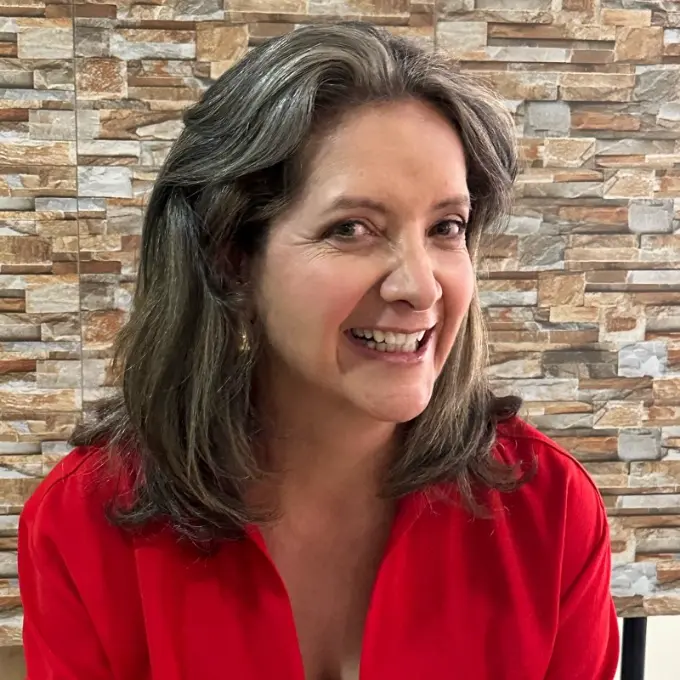
Pilar Ortiz, bilingual executive coach and former Univision news director Univision Tampa Bay, CNN en Español, Telemundo

Pilar Ortiz

Bilingual executive coach, high-impact communication, international television

Pilar Ortiz brings more than 25 years in television, international media and senior executive coaching. She has worked in front of and behind the camera for Univision, Telemundo, CNN, ABC and NBC.

She began her news career in Colombia and went on to become a pioneer of Noticias Univision Tampa Bay, where she served as anchor and news director for more than a decade. That is where she built the skills she now teaches: on-camera presence, message control, storytelling and leadership under pressure.

After her media career she founded Pilar Ortiz Enterprises, an international executive coaching, media training and public speaking practice. Her work spans more than 50 countries with multinational corporations, CEOs, business leaders and high-performing teams.

She is the creator of the Influence Accelerator and the PAC Method (Pensar, Actuar, Continuar), author of Camino al Éxito and El Genio de la Botella, a member of the National Speakers Association, and the first Hispanic co-host of Voices of Experience.

  • 25+ years in television and executive coaching
  • Anchor and news director, Noticias Univision Tampa Bay
  • Univision, Telemundo, CNN, ABC, NBC
  • Work spanning 50+ countries
  • National Speakers Association

The method behind it

The program runs on the same method Jess Todtfeld has used to train more than 100,000 people on six continents. He is a former NBC, ABC and Fox television producer of 13 years, a Certified Speaking Professional, author of the international bestseller Media Secrets, and holder of the Guinness World Record for most media interviews given in 24 hours. Pilar delivers that method natively in Spanish. Very few practices can offer both halves.

Results from Latin America

“Being in front of the camera and watching the evolution from the initial take to the last take, especially under heavy questioning, was very helpful to me.”
Max A. StempelGerente General, AIG Panamá
“Jess' Media Training workshop helped me reduce nervousness and deliver messages that people can remember.”
Pedro ArtanaGerente General, AIG El Salvador
“This has helped us greatly in improving our speaking skills. In this business, improving these type of skills really matters for your career.”
Ed MenaGerente General, AIU Chile

Frequently asked questions

Is the training delivered entirely in Spanish?

It can be. Sessions run fully in Spanish, fully in English, or deliberately switch between the two inside one session when the executive is preparing for a bilingual event. The choice is made by what the executive will actually face.

Can you prepare an executive whose Spanish is a second language?

Yes, and it is a common request. The work focuses on clarity, pace and controlled vocabulary rather than on eliminating an accent. An accent is rarely the problem. Speed, false cognates and overlong sentences usually are.

How is this different from hiring an interpreter?

An interpreter carries your words across. Training changes what you say and how you say it so it works in Spanish on its own terms. In a live interview there is no interpreter between the executive and the question.

Do you cover crisis interviews in Spanish?

Yes. Crisis work is where register and word choice carry the most risk, because a phrase that sounds measured in English can read as evasive or cold when translated. We rehearse hostile questioning in Spanish with recorded practice and playback.

Which regional Spanish do you train in?

We train to the audience the executive will face. That means identifying which regional vocabulary is safe and which words carry different weight across Mexican, Caribbean, Andean and Rioplatense Spanish, then building the message set accordingly.

Can you train a group?

Yes. Small groups work well, typically one to eight people, so every participant gets recorded practice and individual feedback. Larger groups are possible but shift the balance from individual reps toward demonstration.

Is the training virtual or in person?

Both. Virtual sessions work well for interview preparation and ongoing coaching, since the executive is on camera either way. On-site delivery is available for full-day programs and team training.

How quickly can you prepare someone for a booked interview?

A single focused session is often enough for a specific booked interview, and we schedule those on short notice where possible. Sustained public roles are better served by ongoing coaching rather than a single session.

What does Spanish-language media training cost?

Pricing depends on format, length and how many people are being trained. Ongoing one-on-one executive coaching runs as a monthly program. Tell us the situation and we will send a specific number rather than a range.

Prepare your Spanish-language spokesperson

Tell us who is being interviewed, in what language, and by whom. We will tell you what the preparation should look like.

Speak with Jess