
Updated
A speaker bureau can book any speaker, for any client, at any time, including someone not even on its own roster. A speaker management agency, like SeeAgency, books only its own roster (about 25 people) and never books off roster. Neither one launches a new speaker. An agent comes alongside talent who is already busy and helps that person book more, the way a music A&R team works with an artist who already has momentum.
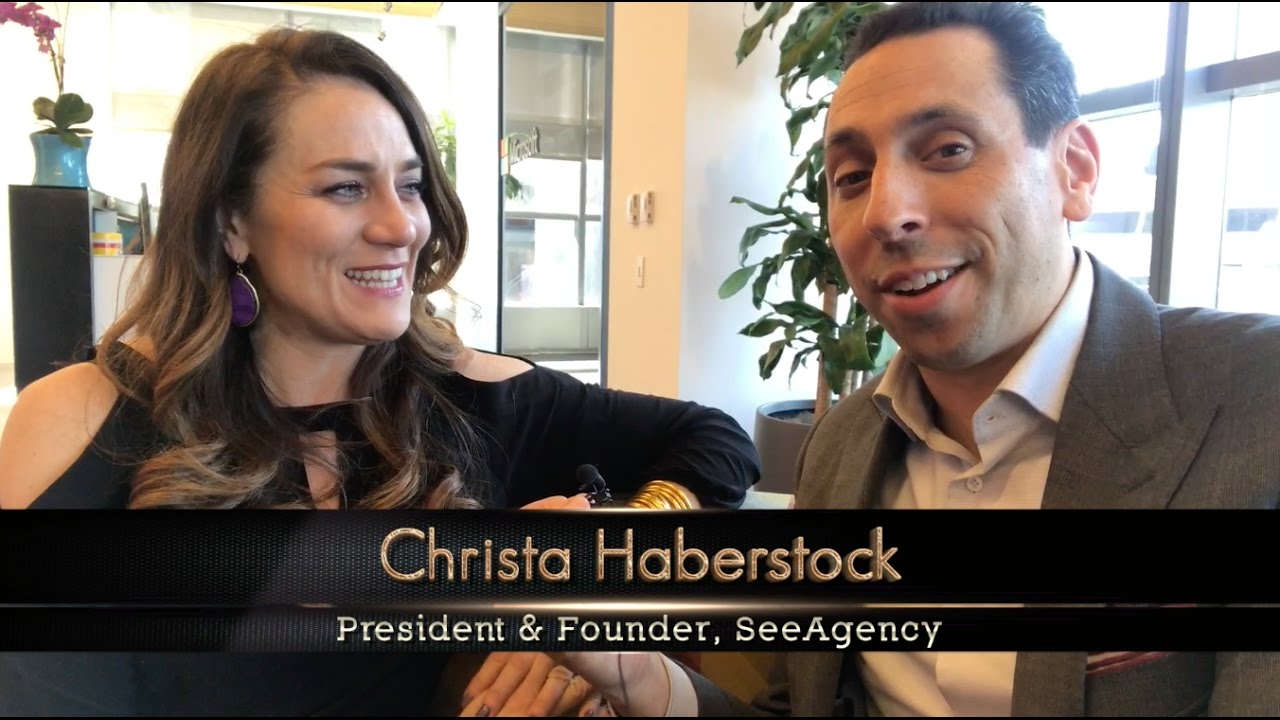
A speaker bureau will book almost anyone; a speaker management agency will only book its own roster, and that difference explains most of why speakers get stuck. I spent three separate interviews on this channel with two people who make that call for a living: Christa Haberstock, Founder and President of SeeAgency, and Jennifer Shaw of Premium Speakers Bureau in Denver, Colorado. Neither of them talked like a sales page. Both of them said the same hard thing from different angles: nobody is coming to launch you.
What is the difference between a speaker bureau and a speaker management agency?
Speakers use "bureau" and "agent" like they mean the same job. They do not, and Haberstock draws the line clean. A speaker bureau can book any speaker, at any time, for any client, and it can place someone who is not even on its own roster. Some bureaus carry exclusive or managed speakers who get a bump of attention and more marketing horsepower, but the bureau itself still books off roster whenever a client wants someone else.
A speaker management agency, Haberstock's category, works differently. SeeAgency represents only its own roster, about 25 speakers, and it does not book outside that roster. Ever. That is the whole distinction, and it is worth sitting with before you spend months chasing "the right bureau" as if it were a management deal.
| Question | Speaker bureau | Speaker management agency (SeeAgency) |
|---|---|---|
| Who it books | Any speaker, on or off its lists | Only its own roster |
| Roster size | Often thousands (some large bureaus list around 8,000 names) | About 25 speakers |
| Books off roster? | Yes, routinely | Never |
| Its job for you | Match you to open dates as they come up | Actively manage and market your career |
Watch: Christa Haberstock on agents, bureaus, and the C-suite
The holy grail fallacy: why finding "the one bureau" will not get you booked
Every speaker eventually hears about the one bureau that will change everything: sign with them, and the calendar fills itself. Haberstock calls this what it is, a fallacy. Large bureaus can carry rosters in the thousands, by her estimate around 8,000 names on some lists, and only a core group of those actually gets booked with any regularity. Being listed is not the same as being chosen.
Cinderella stories exist in this business, she says, but "that overnight success was 15 years in the making."
What a speaker agent is actually for (it is not a launchpad)
Long before she was booking speakers, Haberstock was a singer chasing a record deal. She went to conference after conference believing that if the right A&R person just heard her sing, that would be the moment everything changed. What she learned instead became the model she now runs SeeAgency on: A&R people do not discover unknown talent and build it from nothing. They come alongside artists who are already successful and already busy, and help them do more of what is already working.
She likes to point to something Steve Martin said when asked what it takes to succeed in entertainment: "Be so good they can't ignore you." That is still the actual strategy. Agents and bureaus do not create that. They notice it.
The Trader Joe's test every bureau runs on you
Haberstock's other analogy is Trader Joe's. Buyers, in her framing, are chasing the same thing whether they are picking a grocery store or a keynote speaker: a predictable good outcome. A bureau's whole business rests on being able to tell a client, "I've booked this person several times, they're great," instead of, "I've never booked them, good luck." That is the entire calculation behind who a bureau puts in front of a client, and it explains why an unproven name, however talented, starts at a disadvantage that only a track record closes.
Want the playbook for getting paid to speak?
The Paid Speaker Blueprint is Jess Todtfeld's guide to building a speaking business that actually books: the speech, the marketing, and the materials bureaus and agents look for. Enter your name and email and we will take you straight to paidspeakerblueprint.com to get it.
You'll be redirected to paidspeakerblueprint.com after you submit. No spam, unsubscribe anytime.
The C-suite trap: why success in the boardroom does not book the stage
This is where the interviews get useful for a different reader: the executive who has never taken a paid speaking booking but has spent a career solving hard problems and figures the stage is just the next room. Haberstock has watched the pattern up close. Executives with real stories and real potential run into a wall built by the very instinct that made them successful: "Who is going to do that for me?" Success breeds outsourcing, and speaking does not outsource the way a P&L does. There is no silver bullet here, even at a high level, unless you already carry name recognition and a reputation walking in the door.
SeeAgency has done this exact kind of launch work before, taking an executive from zero speaking history to a real platform, but it is not something the agency offers publicly. It is white-glove, labor-intensive work, handled by one specialist who can take on about one such client a quarter. It means finding your voice, your message, your audience, and your positioning before a single booking happens. It is not slapping a photo on a web page and waiting for the calls to come in.
For an executive who is not ready for that kind of engagement, or who wants to build the case for it first, Haberstock points to a specific resource: associationexecs.com, a subscription database that shows where conferences are actually happening and who is already attached to speak at them. Anyone can work it. You do not need an agent to open the account, draft the emails, or have an assistant follow up.
Materials matter here more than most executives expect. Whatever you send has to match the level of audience you are trying to reach, or it works against you instead of for you. Plenty of accomplished people are convinced they know their topic, and they are wrong about which version of it organizations actually pay for. A LinkedIn headshot is not a speaker kit.
Then there is the catch-22 that stops a lot of first-time speakers cold: video is, by a wide margin, the most important asset a speaker owns, and a speaker who has never spoken professionally does not have any yet. The way around it is not to fake a reel. It is to build credibility somewhere else first, through PR and on-camera media appearances, and then harvest that footage into the platform a bureau or agent will actually respond to.
So how do you actually get booked?
Two threads run through all three interviews. One is what a bureau is looking for in the package you actually send them, which Jennifer Shaw of Premium Speakers Bureau breaks down in exact, tactical detail. The other is what makes a speaker bookable in the first place, long before any bureau ever sees your name, which Haberstock lays out as three specific secrets. Both are worth reading in full.
What Speaker Bureaus Want From You
Jennifer Shaw's exact checklist for the video, headshot, and bio that gets you proposed to a client, plus the gift strategy that gets an agent's attention.
How to Become More Bookable as a Speaker
Christa Haberstock's three secrets to bookability: the speech, the marketing, and the materials, plus why "the standing ovation is for the meeting planner, not for you."
Key excerpts from the interviews
Lightly cleaned excerpts from the recorded interviews behind this article. The raw recordings are the source; these are paraphrased for readability, with direct quotes marked.
On what happens after success (Christa Haberstock, SeeAgency)
CEOs and executives often have great stories and real potential, Haberstock said, but success breeds an instinct to outsource whatever they do not already know how to do: "Who is going to do that for me?" There is no silver bullet for getting booked, even at a high level, unless you already have name recognition and a reputation.
On the SeeAgency roster and off-the-record launch work
SeeAgency has taken on executive-launch work before, but it is not on the website and not offered publicly. It is white-glove and labor intensive, run by one specialist who handles about one such client a quarter, covering voice, message, audience, and positioning before any booking happens.
On bureaus at scale
Big bureaus may list around 8,000 people. Only a core group of those actually gets booked with any regularity. Haberstock's Trader Joe's analogy: buyers repeat a predictable outcome, and a bureau recommends the people it can vouch for from experience, not the ones it has never booked before.
On the video catch-22 for first-time speakers
Video is far and away the most important asset a speaker has, but a brand-new speaker does not have any yet. Haberstock's route around it: build credibility through PR and on-camera media appearances first, then harvest those clips into a real platform.
On associationexecs.com
For an executive not ready for agency-level help, associationexecs.com is a subscription database showing where conferences are happening and who is already attached to speak. Anyone can work it directly: craft the emails, use an assistant, no agent required.