Every rule from the seven toolkit guides, condensed onto a printable one sheet you can hand to an executive before an interview. No email required.
Listen to at least one full episode before you say yes
You will learn the host's pacing, whether they interrupt, how long their intros run, and whether their audience is your audience. If it is not a fit, pass politely. A bad-fit podcast wastes everyone's time.
Use AI to research the show before you go on
Five minutes with ChatGPT, Claude, or Perplexity will tell you more than an hour of clicking around. Two prompts to keep in your back pocket:
The second prompt is gold. Practice your answers to those 15 questions out loud and you will walk into the interview already warmed up.
Send the host a "make me look smart" sheet
Three or four bullet points: the angles you can speak to, a surprising stat or story, and the one outcome you want listeners to walk away with. Most hosts will use it as their interview prep. You just shaped the conversation before it started.
Use the Media Messaging Grid
Three categories, one-word headings at the top. This is your roadmap for a 45-minute conversation, not just a 4-minute hit. Without it, you ramble. With it, every tangent comes back to a message that matters.
Have 3-5 stories ready
Podcasts live or die on stories. Stats fade. Stories get clipped, quoted, and shared. Each story should illustrate one of your three message categories so it does double duty.
Audio quality is non-negotiable
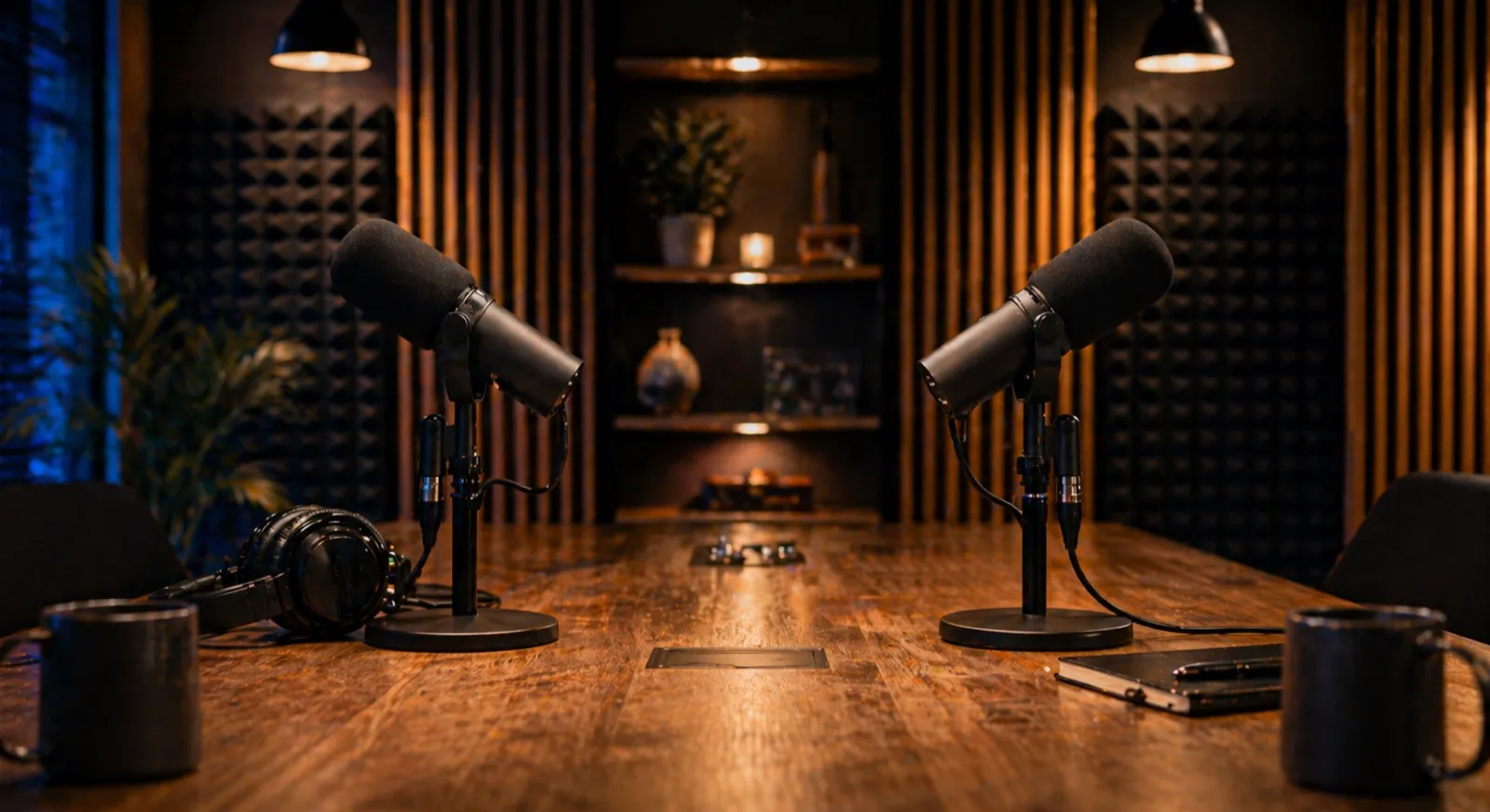
Use a real microphone, not your laptop or AirPods. A USB mic in the $100 range (Shure MV7, Samson Q2U) is the minimum bar. Wear headphones so the host's audio does not bleed back through your mic. Record in a soft room (a closet works), not a kitchen with hard surfaces.
Treat video as live even on "audio-only" shows
Most podcasts now publish video clips to YouTube, Spotify, and social. Camera at eye level. Light on your face, not behind you. Plain background. Lean slightly forward. Assume there is a camera even when you are told there is not.
Energy carries through the mic
Stand up if you can. Use your hands. Smile when you talk. The audience can hear it. Flat energy kills more interviews than weak content.
Have a "killer" opening answer ready
The first question is almost always some version of "tell us about yourself" or "how did you get into this." Do not wing it. Land an answer that makes the listener lean in within the first 90 seconds.
Plug like a pro: offer something free, not a sales pitch
When the host asks where to find you, do not just say your website. Offer a free resource ("a checklist at MyDomain.com/checklist") that the audience actually wants. Hosts will mention it twice. The bare URL gets mentioned once and forgotten.
Bonus tips
Ask for the audio file
Even if they do not share it publicly, you can use clips on your own LinkedIn, site, and email. Most hosts will say yes if you ask before the recording.
Send the host a thank-you and a clip suggestion within 24 hours
Tell them which 60-second moment you think would make a great social clip, and offer to share the episode with your audience when it airs. Hosts remember low-maintenance, high-promotion guests. They invite them back and refer them.
One more thing: episodes live forever
Podcast episodes do not disappear. They get cited by AI tools, indexed by Google, clipped on social, and referenced for years. What you say today will still be quoted in 2030. Do not say anything you would not want pulled out of context. The good news: that permanence works for you when you show up prepared.
This list, plus the six other interview formats, on one printable sheet. No email required.