Every rule from the seven toolkit guides, condensed onto a printable one sheet you can hand to an executive before an interview. No email required.
Lean forward 15 degrees toward the camera or interviewer
This reduces the "camera adds 10 pounds" effect and signals engagement. It works in-studio, on a Zoom call, or on a remote satellite hit.
Look at the interviewer (not the camera) for sit-down interviews
Unless you are doing a satellite hit or a remote interview where the host is in another city. In those cases, the camera lens IS the host. Always confirm with the producer beforehand so you do not show up with the wrong eye line.
Use AI to research the show, host, and audience before you go on
Five minutes with ChatGPT, Claude, or Perplexity will tell you more about a show than an hour of clicking around. Two prompts to keep in your back pocket:
Practice your answers to those 15 questions out loud. You will walk into the interview already warmed up.
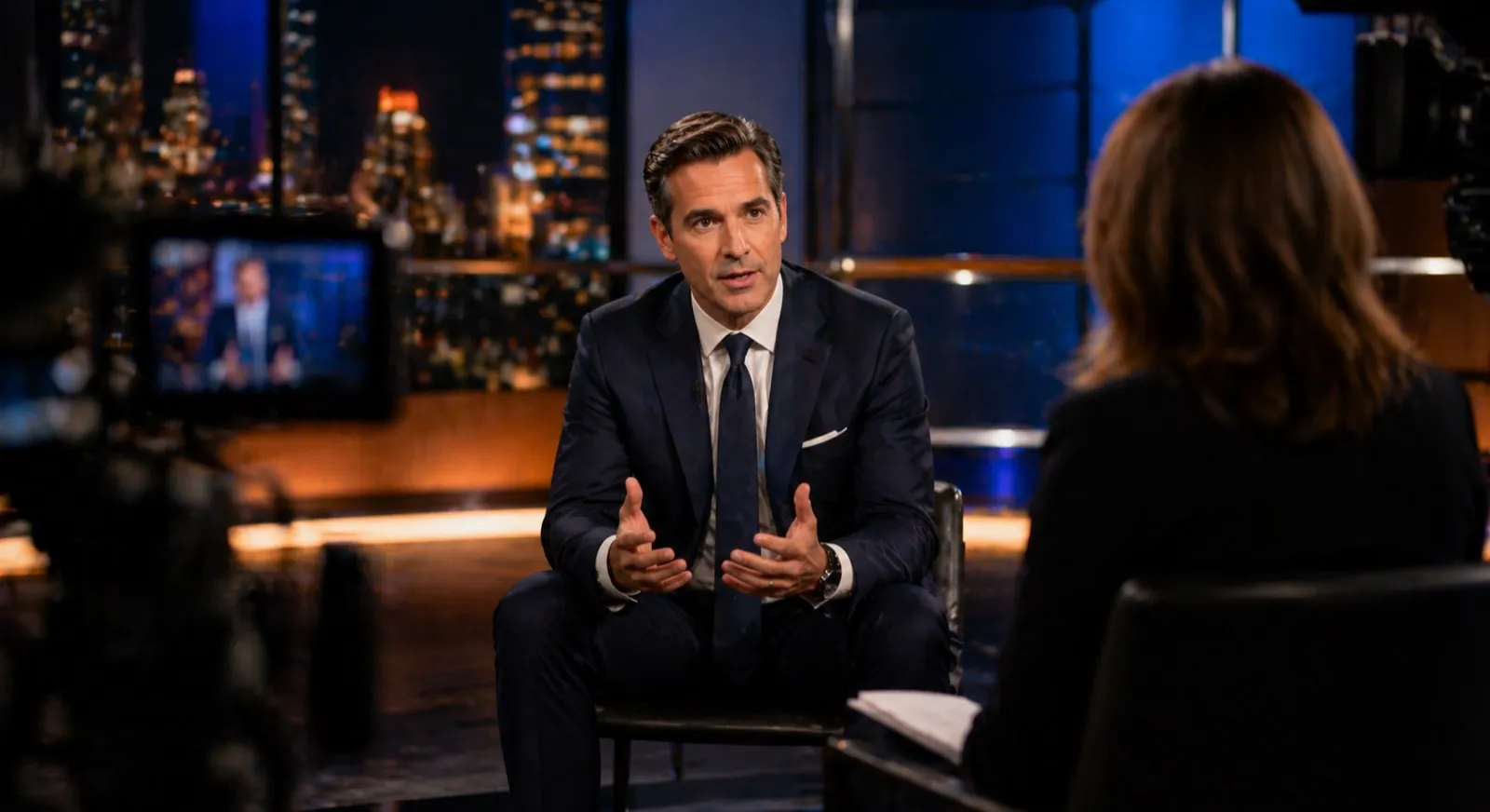
Move your hands, head, and body
You will look more natural and feel more confident. Stiff guests look nervous. Nervous guests look untrustworthy. As the interview goes on, the movement actually starts to make you feel calmer too.
Build your Media Messaging Grid before every interview
Three categories, one-word headings. This is your roadmap. It is the difference between "I rambled" and "I nailed three points." Do this for every TV hit, no matter how short.
Stay focused on three categories
A popular set: Problem, Solution, Call to Action. Pick yours and bring every answer back to one of them. The audience cannot follow more than three messages in a 4-minute hit. Neither can you.
For remote and Zoom TV hits, get the technical setup right
Light on your face, not behind you. Camera at eye level (not looking up your nose). Wired ethernet beats Wi-Fi. A real microphone beats laptop audio. A real wall behind you beats a virtual background, which warps every time you move your hands.
Wear solids, but not pure white, pure black, or bright red
Solid blues, greens, and grays read best on camera. No shiny or noisy jewelry that distracts the viewer or rubs against the lavalier mic.
Energy, energy, energy
Be passionate about your topic. The audience can feel flat energy in 10 seconds and tune out. High energy is contagious, especially on camera. If you are not excited about your message, no one watching will be either.
Plug like a pro: weave it in, do not blurt it out
Do not just shout your URL. Weave it in by offering value: "Anyone watching can grab the free checklist at MyDomain.com/checklist." That gives the host a reason to repeat your URL on air, often more than once. Bare URLs get mentioned once and forgotten.
Bonus tips
Have a "killer" first answer ready
The first question is almost always some version of "tell us what this is about." If you nail the first 30 seconds, the rest of the interview gets easier and the producer relaxes.
Ask the producer for the clip
Most stations will share a copy of your segment if you ask before you go on. That clip becomes a credibility asset on your site, your LinkedIn profile, and your email signature for years.
Compliance note
If you represent an organization with a communication policy or compliance requirements, know it and stick to it. You may need to route outside interview communications through someone else and get approvals before speaking to the media. Build the protocol once, follow it every time.
This list, plus the six other interview formats, on one printable sheet. No email required.