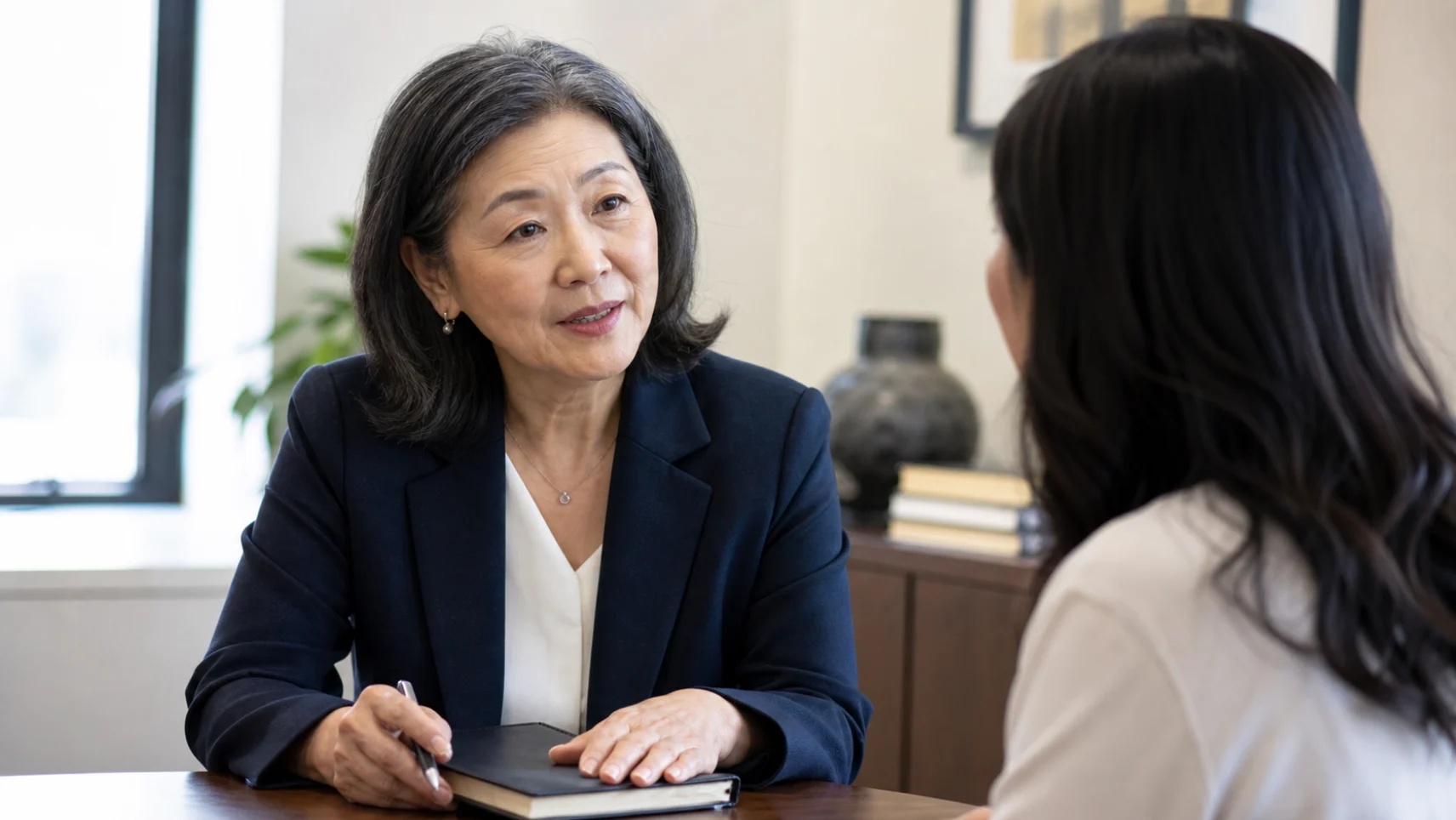



Coaching Is a Different Product From Training
People use the two words interchangeably, then get frustrated when what they bought does not fit. Both sit under the same umbrella, which is speaking done for work, where a mistake carries a real career or financial consequence. The difference is the shape of the time.
Training is a focused block, usually one or two days, dense with recorded practice and playback. Coaching spreads the same intent across months: things to work on inside your ordinary routine, and steady improvement applied to the meetings actually on your calendar rather than to a practice scenario. The rhythm matters as much as the total hours, because two or three touchpoints a month keep the skill at the front of your mind. Our answer on presentation training versus coaching sets the distinction out in full, and if you have one fixed date coming, book the executive presentation training intensive instead.
Not sure whether your situation is one event or a pattern? That is a five-minute conversation.
Get DetailsThe Pattern Coaching Is Built to Fix
Coaching fits leaders whose presenting problem is a standing condition rather than an event. The weekly leadership meeting where your update gets absorbed instead of acted on. The quarterly board appearance that always goes acceptably and never goes well. The client reviews that arrive faster than any preparation cycle. The new role where the audience changed and the old habits did not. What those share is that a single day cannot reach them: a day can rebuild one presentation, but it cannot follow you into next month's meeting and correct the thing you do under time pressure when nobody is watching.
How an Engagement Runs
A baseline recording in week one
You deliver real material on camera before any coaching happens. It is the reference point everything later is measured against, and usually the first honest look a leader has had at his own delivery.
Two or three sessions a month
Sessions run 45 to 60 minutes, close enough together that the work stays live and far enough apart that you arrive with something real. Short reviews get added before a large moment.
Your material, never exercises
We work the actual board deck, the actual town hall opening, the actual client review. Coaching that runs on invented scenarios produces people who are good at invented scenarios.
Practice assignments in between
Small, specific things to run inside the working week: one habit to change in the next meeting, one story to build, one opening recorded on your phone and sent over before the next session.
They Called About a One-Day and Booked Six Months
The Interesting Decision Happened Before Any Training Did
A healthcare VP contacted us expecting to book a one-day presentation training. By the end of that first conversation they had chosen something different: a six-month coaching program with access two or three times a month.
The reason was the shape of the problem. The pressure in that job was not one presentation. It was a stream of them, arriving unpredictably, each one carrying weight. A single day would not have been wrong. It just would not have matched what kept happening.
The Hybrid Option, When Live Hours Are the Constraint
A conventional session spends a meaningful share of its time on explanation: how to structure an opening, why the middle gets planned first, what to do with your hands. None of that changes based on who is in the room, and yet it consumes the most valuable resource in the arrangement, which is live time with a coach watching you.
The hybrid model moves that explanation to video you watch the night before, so the live hour goes entirely to coach-guided practice and correction. Nothing is removed; the expensive hours simply go to the part that builds the skill. Groups heading into financial services and technology used exactly this structure and turned it into an edge for promotions and first jobs.
What the Engagement Includes
Every engagement carries The 365 Solution, a full year of follow-on support at no additional charge: scheduled check-ins, review of upcoming presentations, feedback on a deck or a set of prepared remarks, and somewhere to send the material the night before. Skills fading three months after a session is the most fixable expensive problem in this category, and continuity is how it gets closed.
Coaching runs virtually for most of the engagement, which is what makes a twice-monthly rhythm realistic for a senior calendar, with recorded intensive days at our Madison Avenue studio in New York or on site when a larger reset is useful.
What It Costs, and How You Will Know It Worked
Pricing is scoped per engagement rather than per hour, and two things move the number: how many people are being trained, and how much ongoing support is attached afterward. Presentation training generally runs from $1,000 to $5,000 to $15,000. Every engagement includes The 365 Solution, a full year of follow-on support, at no additional charge. For coaching the number is driven mainly by how long the engagement runs and how often you meet. The detail sits in what presentation training costs.
The success condition is agreed before the first session, and it is almost always situational: the board approves the plan, the client renews, the town hall produces questions instead of silence. Vague goals such as sounding more confident produce vague results. Alongside that sits the baseline recording, played back to back with the same content near the end of the engagement. How to measure presentation training ROI covers the full method.
Choosing a Coach
Presentation coaching is an unregulated category and the gap between the best and worst version of it is wide. The questions worth asking are about evidence: does the coach record and play back, do they work on your real material, can they show named client results, and what happens after the engagement ends. The full checklist is in how to choose a presentation coach, and it is a fair test to apply to us as well as to anyone else.
Why Jess Todtfeld Coaches It
Credentials That Matter in This Room
- 13 years as a television producer for NBC, ABC, and Fox. He reads a presentation the way a producer reads a segment: what earns attention, and what loses it.
- Guinness World Record holder for the most media interviews in 24 hours, with 112 interviews completed and 96 officially certified.
- Certified Speaking Professional (CSP), a designation held by less than 1% of professional speakers worldwide and by just over 12% of National Speakers Association members.
- Author of Media Secrets, a bestselling book on how the media decides what to use and what to cut.
- More than 500 executives trained across IBM, JPMorgan, LinkedIn, AARP, the United Nations, American Express, AIG, ASPCA, and many others.
Related Programs and Answers
- High Stakes Presentation Training, the intensive methodology behind the coaching work
- Presentation training by industry and role
- Presentation training for C-level executives and for medical and healthcare leaders
- Presentation training for insurance professionals
- Presentation training in NYC at the Madison Avenue studio