Presentation Training for Insurance Professionals
Insurance is built on trust. Present with the confidence, clarity, and credibility that wins clients and earns loyalty.
Insurance is built on trust. Present with the confidence, clarity, and credibility that wins clients and earns loyalty.
Insurance professionals must explain complex products, navigate regulatory scrutiny, and build trust with clients who are often skeptical or confused by their options. Whether you are an agent presenting to a prospective client, an executive addressing a regulatory body, or a trainer developing your team, your presentation skills directly impact your results. The insurance industry is relationship-driven, and relationships are built through communication. Professionals who present clearly and confidently close more business, retain more clients, and advance faster in their careers. Those who rely on jargon, data dumps, or scripted pitches lose to competitors who connect on a human level.
The insurance industry faces a particular communication challenge: the products are complex, the language is technical, and the public perception is often negative. Insurance professionals who can present clearly, build genuine trust, and explain coverage without hiding behind jargon create a significant competitive advantage. In a commoditized market, the professional who presents best often wins the business -- even when pricing is comparable. Whether you are an individual agent, a team leader, or an executive, your presentation skills directly determine your results.
You are presenting a group benefits package to a company's HR leadership team. Three carriers are competing for the business. Your proposal may be competitive on price and coverage, but the presentation must differentiate you through clarity, confidence, and the ability to explain complex benefits in simple terms.
You are presenting before a state insurance commissioner or regulatory body. Your remarks must be precise, compliant, and confident. Any uncertainty or imprecision could create compliance issues. You need to present technical information clearly while maintaining credibility.
You are presenting to 200 agents at your company's annual conference. Your presentation must be energizing, practical, and motivating. Agents who leave inspired and equipped with new presentation skills will sell more effectively for the rest of the year.
Insurance presentations fail for a consistent reason: the product is genuinely complicated, so the presenter compensates by explaining more. The day is spent doing the opposite, using your real proposals and your real client conversations.
A benefits committee deciding between carriers, a business owner deciding whether the premium is justified, a regulator deciding whether your conduct was reasonable. Each needs a different presentation, and none of them needs the full product manual.
Coverage presentations habitually build from context to conclusion. Committees want the recommendation and the price early, then the reasoning. We invert the order without losing any of the substance.
Exclusions, riders, deductibles and reinsurance layers are exactly the details that lose a lay audience and exactly the details that matter. We build framings and analogies that hold up under scrutiny so the client understands what they are buying rather than nodding through it.
You deliver, we record, you watch it back, you run it again. Then we run the questions that decide the sale: why is your premium higher, what happens if the claim is denied, why should we move from an incumbent we have used for nine years. Rehearsing the denial conversation is the highest-value hour in most of these engagements.
Every engagement includes a 365-day support program afterward, which agencies typically use ahead of renewal season, an annual agent conference, or a regulatory appearance.
Standard scheduling is typically two to four weeks out. If a finals presentation or a conference date is already set, put it on the quote form and we will work backward from it. If you are weighing individual coaching against a team session, we compare the two in one-on-one versus group presentation training.
Pricing is per engagement, driven mainly by how many people are trained and how much ongoing support is attached. The range is explained in what training costs, and every engagement includes a 365-day continuity program at no additional charge. Training a producer group together brings the per-person figure down considerably. For an exact number, request a quick quote or book a call with Jess.
Insurance is straightforward to measure because the numbers already exist: finals win rate, renewal retention, average time from proposal to decision, and the proportion of accounts that stay after a difficult claim. We agree on the metric before the session. We also compare the first and final recordings of the same proposal, which for most producers is the first objective look they have had at their own delivery. For a wider view, see whether presentation training is worth it, how to measure presentation training ROI, and our 50 presentation training questions.
Jess Todtfeld is one of America's leading presentation and media trainers. A former television producer for NBC, ABC, and FOX, he brings an insider's understanding of what makes communication compelling. He holds the Guinness World Record for the most media interviews given in a 24-hour period (112 completed, 96 certified) and has earned the Certified Speaking Professional (CSP) designation, a distinction held by less than 1% of professional speakers worldwide and by just over 12% of National Speakers Association members. Jess has trained executives, leaders, and professionals at Fortune 500 companies and organizations across every industry. His approach is direct, practical, and focused on real-world results.
Jess has worked with insurance companies and agencies across lines of business, understanding the specific communication challenges of selling protection products. He helps insurance professionals move beyond feature-and-benefit presentations to create genuine human connections that build trust and drive purchasing decisions. His training addresses both the technical communication needs of regulatory environments and the relationship-building skills that drive client loyalty.
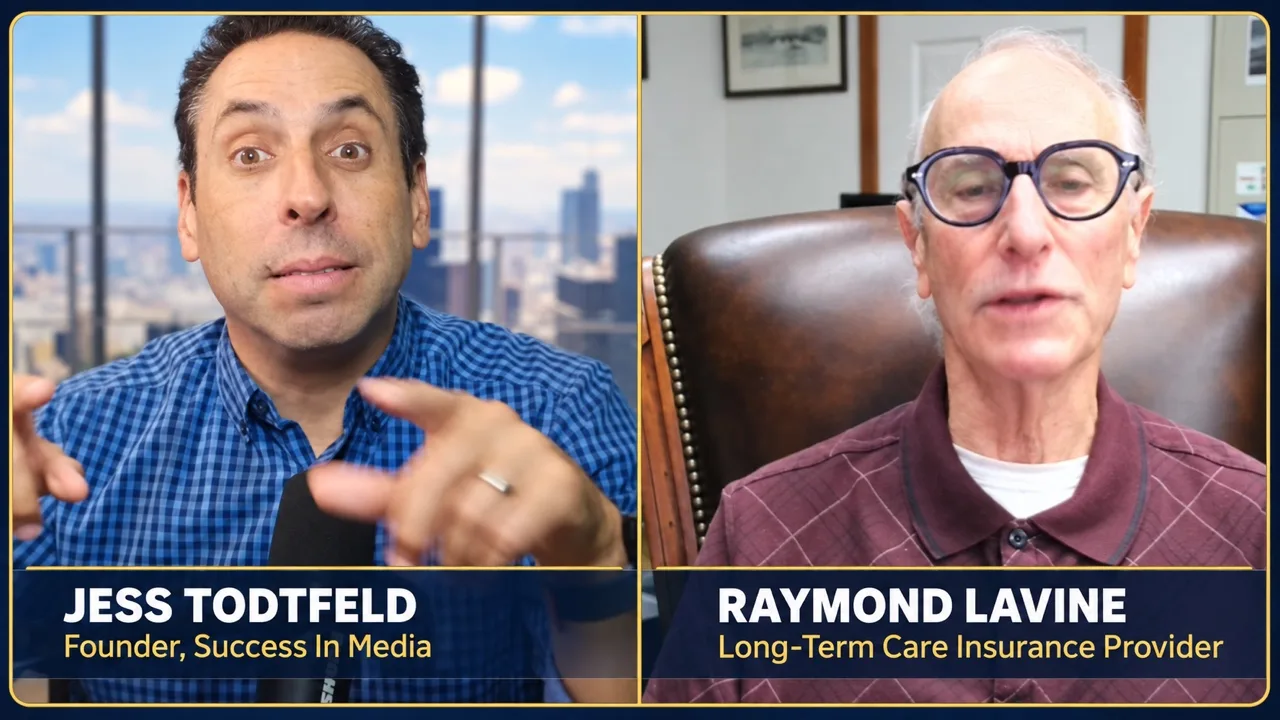
Raymond Lavine on his presentation training with Jess Todtfeld.
Client proof: insurance
“It always goes to, how much does it cost. And this is where I was not good at it, where actually you helped me to tell the story… I don't say how much it costs, because I don't know your health and I don't know which plans are available. So here is how the game is played: I need a health assessment. I'll send you a digital one. Are you opposed to that?”
Raymond Lavine, Extended Care Benefits Advisor, Lavine LTC Benefits
He does not dodge the price question, he re-frames it and closes on the next step in the same breath. That is the examine-diagnose-prescribe structure working in a real sales call.
Read the full case study →Related: See our core executive presentation training program, the High Stakes Presentation Training intensive, or train in person at our Madison Avenue studio with presentation training in NYC.
More answers: Browse 50 presentation training questions, answered, or read how to structure a presentation, what training costs, and how to build confidence in public speaking.
Contact Jess to discuss a presentation training program customized for your specific needs and goals.
Jess has trained presenters at the United Nations, AARP, and Fortune 500 companies. Guinness World Record holder and former NBC, ABC and Fox producer.