Every rule from the seven toolkit guides, condensed onto a printable one sheet you can hand to an executive before an interview. No email required.
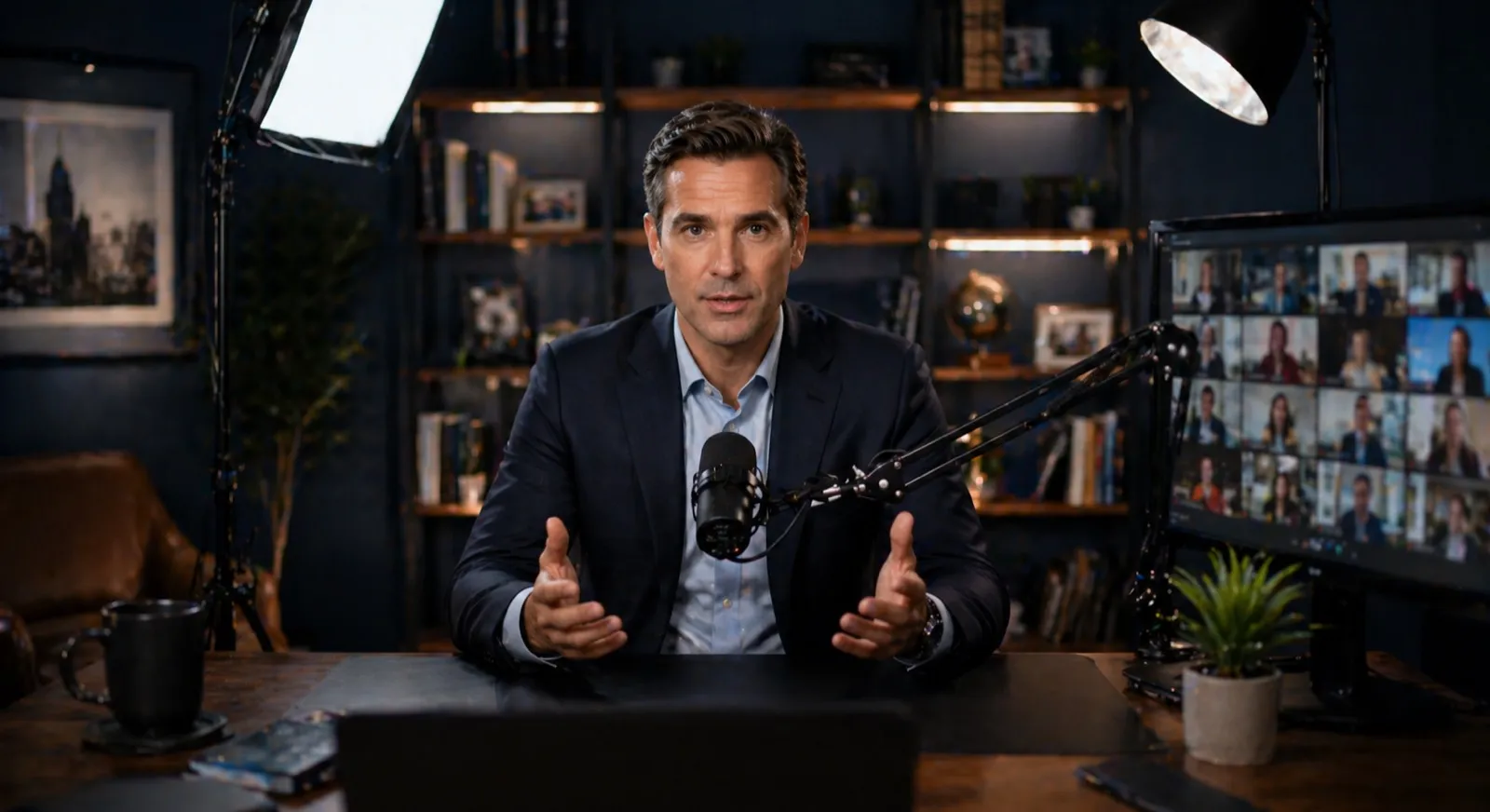
Treat your home or office setup like a TV studio
Camera at eye level. Three-point lighting if you can swing it, otherwise a ring light and a window. Wired ethernet, not Wi-Fi. Real microphone. Tested twice the day before, not 10 minutes before the first hit.
Use AI to prep for each outlet on the tour
With 10-20 hits in a row, you cannot research each one manually. Run this once per outlet:
Write out your ideal answers and build your Media Messaging Grid
Three categories, one-word headings. With 10+ hits, you cannot remember everything fresh each time. The grid keeps you on message across a 4-hour tour.
Sit on the edge of your seat and lean forward 15 degrees
Reduces the "camera adds 10 pounds" effect and projects engagement on camera.
Use your hands in the upper half of your chest
That is the camera's frame. Hand gestures below your sternum are invisible. Above your shoulders looks frantic.
Energy on every single hit, including hit 14 of the day
Your seventh interview matters as much as your first. Fatigue kills tours. Stand up between hits, drink water, do a 30-second reset before the next station joins.
Anything you do in the chair could be broadcast
The "live" mic and camera might already be on while you think you are in a break. Assume you are always on the air until your producer confirms otherwise.
Slight TV smile during questions
Looks pleasant, not nervous. Especially during your introduction. That is when most people freeze with the "deer in headlights" look.
If your earpiece (IFB) pops out, calmly fix it during your own answer
Not during the host's question. Most viewers will not notice if you are smooth about it.
Say "Thanks" or "Thank you" when the host welcomes you and signs off
Silence reads as awkward. Two words read as polished.
Bonus tips
After you think it is over, you might still be on camera
Do not roll your eyes, sigh, jump up, swear, or break character. Wait until your producer confirms you are clear. Then calmly remove the mic and walk away.
Have a local reference for each market
"It is great to be with your Dallas viewers this morning" lands harder than a generic open. AI can give you one local hook per market in 30 seconds. Use it.
This list, plus the six other interview formats, on one printable sheet. No email required.