(646) 233-1424 Book a 15-minute call (opens in a new tab)

Media Training for C-Level Executives & CEOs: Built for the Questions You Hope Nobody Asks

When the news is bad, you are the face of the company. Jess Todtfeld, a former ABC, NBC and FOX producer, trains CEOs and C-suite leaders to answer what they cannot fully answer, to hold steady in a crisis, and to give a reporter a ten-second clip they are glad to see used.

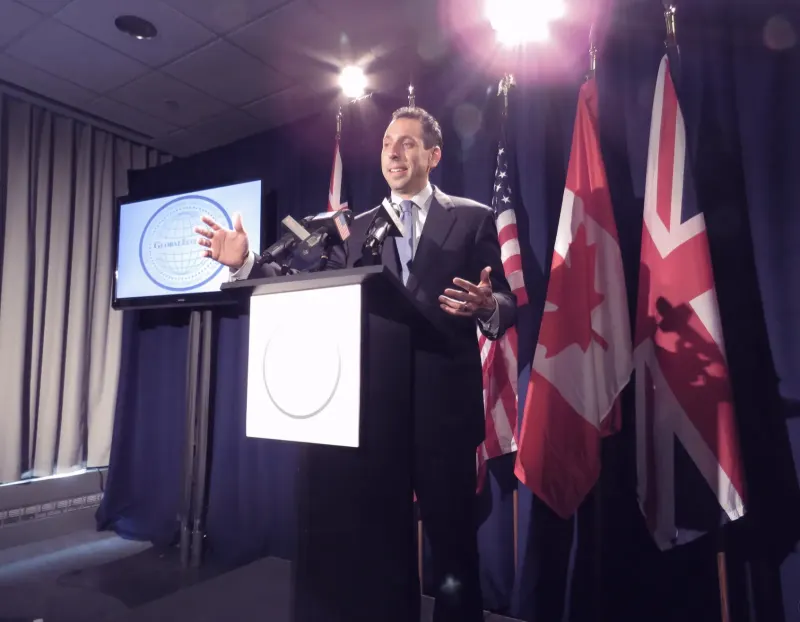
Jess Todtfeld speaking at a lectern fitted with press microphones, flags hanging behind him
Jess Todtfeld13 years producing at ABC, NBC and FOX
Format
One or two days, on camera, with playback
Where
Your office, a private location, fully virtual, or the Madison Avenue studio in New York
Who it is for
CEOs, presidents and the C-suite: CFO, COO, CMO, CHRO, CTO
  • Guinness World Record holder
  • 13 years at ABC, NBC and FOX
  • Certified Speaking Professional (CSP), held by fewer than 1% of speakers worldwide
  • Trained leaders at Google, JPMorgan, IBM and the United Nations
Get Pricing
Quick answer

Media training for C-level executives prepares CEOs and C-suite leaders for the interviews, earnings calls, crisis statements and hard questions that come with leading a company in public. Jess Todtfeld, a former ABC, NBC and FOX producer, builds your core messages, teaches a short-answer-then-message system for tough questions, and has you practice on camera with immediate playback until the answers hold. Sessions are confidential and run at your office, virtually or at the New York studio.

Updated

At the top of a company, every word carries weight. A CEO’s off-hand remark on a business channel, a CFO’s hesitation on an earnings call, a CTO’s overpromise at a product launch: each can follow you for a long time. Yet many C-level executives reach the corner office without ever receiving formal media training. They are brilliant operators, strategists and leaders. The skills that earned them the job are simply not the skills a live camera, a skeptical analyst or a hostile reporter tests.

This is not about learning to spin. It is about learning to lead through communication, in the moments when the questions are hardest. Below are the situations CEOs describe most, and what we do about each one. If the room you are heading into is the board or your own people instead, see our presentation training for CEOs.

The moments that put a CEO on the spot, and how the training fixes each one

Each of these is a normal part of running a company in public. None of them means you are bad at the job. Each one has a specific fix, and each fix gets practiced on camera until it holds.

  1. You are the face of the company when the news is bad

    A recall, a missed quarter, a security incident, a safety problem. Your team has the facts, but the camera wants a person, and it is you. Most leaders either hide behind careful language or apologize on a loop. Both cost them the room.

    How the training fixes it

    We build your three core messages before anyone turns on a camera, then write the first sentence of each answer in advance. For bad news the order is simple: say it first, own it in plain language, give the two or three real reasons, and bring a plan with dates. You practice it out loud until it sounds like you.

  2. The results question you cannot fully answer

    An analyst or reporter asks for a number you cannot give, a decision you cannot discuss, or a rumor you cannot confirm. You have limits, and so does legal. The silence after the question feels a lot longer than it is.

    How the training fixes it

    We teach a two-part answer: a short answer that deals with the question so it stops hanging in the air, then the message you came to deliver. You also get the honest version of “I do not know,” which is always followed by something you do know. Short answers are written in advance, because nobody composes a good one under pressure. We work alongside your legal and communications teams so the words stay inside your limits.

  3. The crisis press conference

    Cameras, a podium and a few minutes to explain something that is still unfolding. You want to sound accountable, avoid saying what you do not yet know, and not read like a statement written by a committee.

    How the training fixes it

    We rehearse the holding statement that buys time, the line that shows accountability, the corrective action, and the first question you are almost certain to get. Then you do it on camera, again and again, and watch it back. The words get shorter and the delivery gets steadier with every run.

  4. The reporter who asks about layoffs, pay or a lawsuit

    The questions you hope nobody asks are the ones that get asked: layoffs, executive compensation, litigation, a product that did not work. A defensive answer is the one that gets quoted.

    How the training fixes it

    We rehearse these in advance, in your own voice. Instead of building a horror list of every scary question, we build the answers you most want to give, and you learn to reframe a loaded question into the one worth answering. Then we put the hard ones to you, including the hostile and the confusing, until the fear drains out of them.

  5. A ten-second clip outlives everything else you said

    You may talk for half an hour and the world will see ten seconds. The sentence that gets pulled is usually the first complete, coherent one you say in response to a question, and it is often not the one you would have chosen.

    How the training fixes it

    Jess spent 13 years as the person choosing that clip. In the Sound Bite Quote System you write the lines you want pulled in advance: short, concrete, easy to repeat. Each of your three messages is sharpened into one, so you decide what gets used instead of leaving it to chance.

  6. You know everything, so you say everything

    The more you know about your company, the easier it is to follow a reporter wherever the conversation goes. A friendly detour becomes a three-minute answer, and you are a long way from what you came to say.

    How the training fixes it

    A message grid keeps you on the road: three columns, three headings, everything you might say sorted underneath. In the practice interviews your partner is told to pull you off track, because real interviewers will. You learn to give a short, honest answer to the detour and walk back to your message.

  7. Nobody around you will tell you the truth

    Your chief of staff, your communications team and your board all know the moment an answer did not land, and most of them will not say so. Seniority does not make leaders harder to advise. It makes them harder to advise badly, and few people want to try.

    How the training fixes it

    That is why the training is on camera. We record you, play back ten seconds, and ask what you think. Executives usually name the problem themselves, quickly, because a recording has no agenda and no career at stake. You get the honest feedback without anyone having to deliver it.

Recognize more than one? Most leaders do. The training covers them in a single day, because they are all the same skill under different pressure: knowing what you came to say, and saying it clearly when someone else controls the questions.

Which one is on your calendar? Tell Jess.

A short, confidential call is the fastest way to scope the right format, timing and group size.

What fixes it: four things you practice, not just hear about

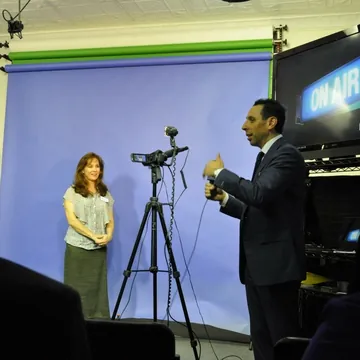
Jess Todtfeld filming a client in a Hot Seat mock interview in front of a studio backdrop
  • Message development

    Three core messages, a headline you could say if someone woke you at 3 a.m., and everything else sorted underneath. You decide the story before a reporter does.

  • The 2 part answer

    A short answer that deals with the question, then the long answer: your media ready messages. You always know your first sentence.

  • Sound bites

    Quotable lines, written down in advance, so the ten seconds that get used are ten seconds you chose.

  • Hot Seat practice with playback

    Realistic mock interviews on camera, including the hard questions rehearsed in advance, watched back immediately while the choices are fresh.

Same facts. A third of the words.

Jess teaches a framework called the Sound Bite Quote System: a quotable answer in 30 seconds or less. Here is one answer, edited the way a producer or writer edits it.

Reporter“Your product was recalled last month. Why should anyone trust you now?”

Executive Take 1: the rambling answer 61 words, 21 seconds

Well, I think it’s important to understand that, you know, we take these things very seriously, and what I would say is that, at the end of the day, we found the problem ourselves, and, frankly, we fixed it in nine days, and going forward we are, sort of, committed to making sure that every customer hears it from us first.

Executive Take 2: the sound bite quote 18 words, 7 seconds

We found the problem ourselves. We fixed it in nine days. Every customer hears it from us first.

Illustrative teaching example, not a client.

In a session you do this with your own answers, on camera, with Jess producing.

Get a quick quote

Real-world scenarios you will master

These are the three situations the live program is built around. Your session is shaped around the specific one you are walking into.

  • The difficult earnings call

    Revenue missed expectations and analysts are sharpening their questions. You need to acknowledge the challenge honestly while pointing to your forward-looking strategy, and keep investor confidence even when the numbers are unwelcome.

    What we practice: saying the miss out loud and first, naming what happened in ownership language, then moving to a plan with dates that the room can hold onto. We also rehearse the follow-up questions, when the same worry comes back in different words.

  • The crisis press conference

    A data breach, product recall or workplace incident puts your company on the front page, and the first statement sets the tone for everything that follows.

    What we practice: a crisis communication framework that shows accountability, states the corrective action and begins rebuilding trust from the first sentence. Then the question-and-answer that follows, including the one you hoped would not come.

  • The hostile interview

    A business journalist has a thesis about your company and is determined to prove it on air. The urge to debate is strong, and it is the wrong move.

    What we practice: staying composed, answering the question behind the question, challenging a flawed premise without sounding defensive, and speaking to the audience watching at home instead of to the interviewer.

Also on the calendar

Many executives book training around a single date. Common ones include:

  • An IPO roadshow, an analyst day, or activist-investor pressure
  • An all-hands after layoffs or a restructuring announcement
  • Congressional testimony or a major announcement
  • A first national television booking

For board presentations, shareholder meetings and keynotes, our presentation training for C-level executives is the place to start.

Who this training is for

This program is for the people who speak for the whole company. If you lead a team or a function rather than the whole organization, our executive media training is built for leaders at every level.

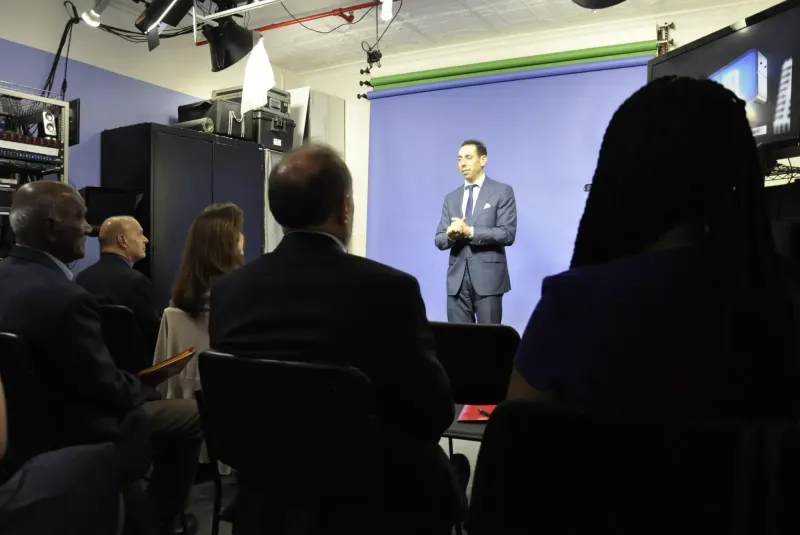
Jess Todtfeld at the front of a small studio, speaking to executives seated in front of him
  • CEOs and presidents
  • CFOs, COOs, CMOs, CHROs and CTOs
  • Newly promoted executives
  • Small senior teams of three to six

Most engagements start with a date: an IPO roadshow, an analyst day, an activist-investor situation, or a first national interview. Senior teams of three to six can train together so the leadership group speaks with one consistent voice.

What you will be able to do

  • Deliver clear, confident messaging on an earnings call that satisfies analysts and reassures investors
  • Manage crisis communications in a way that protects company value and keeps stakeholder trust
  • Handle the adversarial techniques of financial journalists and investigative reporters
  • Present to boards, shareholders and industry conferences with commanding executive presence
  • Navigate sensitive topics including layoffs, regulatory issues and competitive threats
  • Give a short answer, then deliver your message, on any question you are asked
  • Build a personal leadership brand that elevates both you and your organization

How a CEO engagement works

Jess Todtfeld running a mock television interview with a nonprofit leader
  1. Step 1

    A short call about the real situation

    Before anything is designed, we identify the situation you are actually preparing for, who will be asking the questions, and what you most hope will not come up. We never run a stock curriculum.

  2. Step 2

    On-camera practice with playback

    You are interviewed repeatedly, in realistic scenarios, and we watch each run back together. In a one-on-one session a leader typically repeats each scenario eight to fourteen times in a single day. Repetition is the point. Habits that are invisible in a conference room become obvious on the second or third run.

  3. Step 3

    A written summary and a year of support

    You leave with your strengths, the two or three things to keep working on, and the 365-day support program that every engagement includes, so the work does not end when the day does.

Sessions run at your office, at a private location, virtually, or at the Madison Avenue studio in New York. Everything is confidential, and no recording leaves the session without your explicit approval.

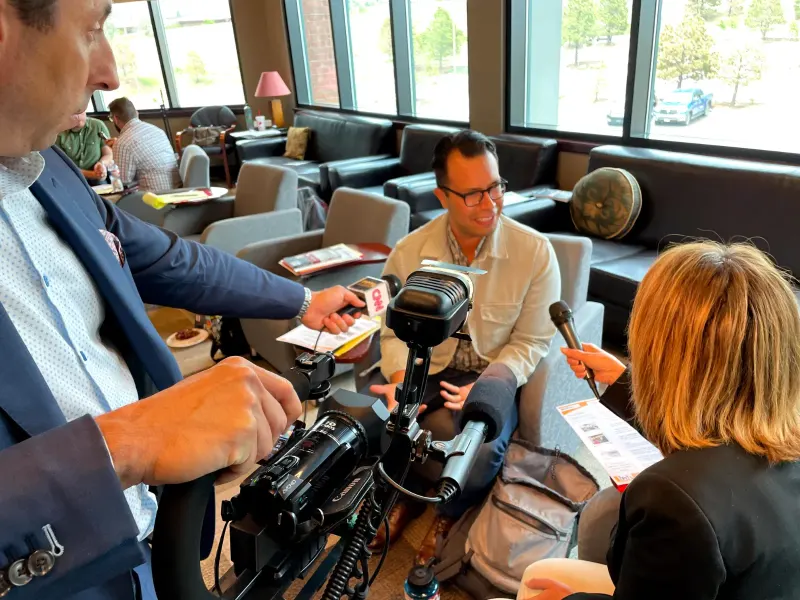
Jess Todtfeld operating a camera while a reporter interviews a seated guest in a lounge
Jess behind the camera. The producer’s view of an interview is the one you are being judged by.

Why train with a former network producer

Jess Todtfeld brings media expertise to the executive suite. As a television producer for ABC, NBC and FOX for 13 years, he produced interviews with CEOs, political leaders and public figures at the highest level, and he stood in the green room with guests who were minutes from an avoidable mistake on live television. He has been the person choosing the clip.

He is a Guinness World Record holder for Most Media Interviews in 24 Hours (112 interviews completed, 96 officially certified), holds the Certified Speaking Professional designation, and has trained thousands of professionals across Fortune 500 companies for more than 20 years.

His approach is direct, efficient and built for leaders who value their time. He understands the constraints executives work under and aims for the most impact in focused, intensive sessions.

The senior leader who caught himself on camera

Jess worked with AIG for eight years, training country presidents from around the world. In one media training day, a senior leader was asked about a mountain he had climbed. It was a gripping story, and it had nothing to do with the interview. Three minutes in, he stopped.

“None of this is important for my media messaging. I just realized that I’m completely doing the wrong thing, which I will never do again.”

A senior AIG leaderMid-answer in a practice interview, on camera

His partner let him try again, and this time he gave a short, honest answer and moved back to how he helps clients. The recording got a round of applause from the group. Two years later he wrote to Jess to say he had not once taken that bait again, and that the practice had made him a better leader.

That is what practice on camera does. The lesson is not in a binder on a shelf. It is a reflex that shows up before the next important interview.
Read the full AIG case study

What executives say afterward

“The audience was laser focused. It was unbelievable... we closed a million dollar [deal] assignment.”

Les RichmondHay Group / Build America Mutual
Les Richmond, in his own words 0:23Play video, testimonial, 23 seconds

“Jess knows how to make CEOs look great. I received coaching from him and was also interviewed by Jess on a national business TV show. He is a professional who understands that the goal of interviews is to drive more business.”

Daniel MilsteinCEO, Gold Star Family of Companies

“Jess gave me easy to use strategies to change my appearance. I realized how body language was influencing my message.”

Michael S. JensenPresident, AIG Europe
Client video review Chief executive review 1:02Play video, 1 minute 2 seconds

See it on camera

Chief executive, Executive media training

A CEO describes walking in unfamiliar with the media and unsure of herself, and leaving with real confidence on camera.

Watch more client video reviews

Frequently asked questions

Why do CEOs need specialized media training?

CEOs face media challenges that other spokespeople rarely do: earnings calls, activist investor pressure, and crisis situations where a single statement can move a stock price. Generic communication coaching does not address those high-stakes, high-visibility moments. The training here is built around them, and around the fact that the person asking the question often has a story in mind before you start talking.

Is the training confidential?

Yes. All sessions are conducted under strict confidentiality. Jess Todtfeld works directly with executives and their communications teams with full discretion, and no recording leaves the session without your explicit approval. Many engagements happen quietly, ahead of an announcement that has not been made public.

What format does the training take?

Training is available as a one- or two-day intensive or in a custom format. Sessions can be held at your office, at a private location, virtually, or at the Madison Avenue studio in New York, whichever gives you the most convenience and confidentiality. Every format includes on-camera practice and playback.

Can you prepare me for a specific upcoming event?

Yes. Many executives engage Jess for targeted preparation before earnings calls, congressional testimony, major announcements, or anticipated crisis situations. A short call comes first, so the training is built backward from the real questions you expect and the real people who will be asking them.

Do you work with our communications and legal teams?

Yes. Jess works with your communications team and, when the situation calls for it, with your legal team, so the words you practice are clear, honest and inside the limits you have to respect. Communications leaders are welcome to sit in, and many find the playback useful for their own work with senior leaders.

I have done media training before. Is this still useful?

Often, yes. The program works for first-time interviewees and for experienced spokespeople. Jess assesses where you are and customizes the work, whether you are preparing for a first national interview or sharpening how you handle the questions you dread most. Repetition on camera is the part most earlier training leaves out.

How much does media training for a CEO cost?

Media training for executives typically ranges between $1,000 and $15,000 depending on scope and number of attendees. One-on-one intensives, small senior teams and full-team programs are all custom-quoted, and every program includes a year of follow-up support.

Walk into the hard interview ready.

Book a short call, or get a quick quote, and let’s schedule your training session.

Personal reply from Jess’s team within one business day. Prefer the phone? Call (646) 233-1424.

Get Pricing Book a call
Watch on YouTube instead (opens in a new tab)