
Updated September 2026
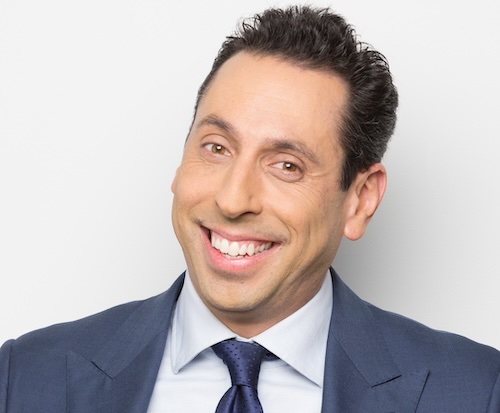
Media training for insurance agents fixes two problems at once: freezing on camera, and leading with the product instead of the client's problem. Raymond Lavine, a long-term care benefits advisor, went from scripting every answer in advance to handling podcast interviews in his own voice, and changed how he opens a sales conversation at the same time.
Why do insurance agents freeze on camera?
Raymond Lavine has been in financial services for decades and has specialized in long-term care benefits for sixteen years. He is not short of expertise. He was short of a way to deliver it.
He came to me through a celebrity branding program that was producing video for its members. The video was the easy part. Being the person in it was not.
That is the specific shape of the problem for most insurance professionals, and it is worth naming precisely, because it is not stage fright. Raymond wanted to talk. He says he was "really eager and enthusiastic to tell it." What he lacked was a structure that let him be spontaneous safely. So he built one out of index cards, and index cards make you sound like a person reading index cards.
The scripted answer is a defence mechanism. It protects you from the fear of being asked something you did not prepare for, and it costs you every ounce of warmth you have.
What changes when you stop leading with the product?
The first thing we worked on was not delivery at all. It was what he was leading with.
Raymond was opening with long-term care insurance. Nobody wants long-term care insurance. People want to retire with dignity, to age with grace, to get more years out of their lives, and to not become a burden to their families. The insurance is how you get there. It is not the thing anybody is shopping for.
Once that flipped, the interviews got easier, because he was no longer trying to make a product sound interesting. He was talking about something his audience already cared about.
This is the part insurance agents tend to resist hardest, because it feels like burying the lede on your own business. It is the opposite. The product lands better when it arrives as the answer to a problem the listener has already agreed they have.
How do you find the client's real pain without being pushy?
In the presentation training work we did afterward, I gave Raymond a framework I use with every insurance and financial services client. I call it poking the pain, and the model for it is a doctor.
A doctor does not walk in and start selling you a procedure. A doctor presses on things. Does this hurt? No. Does this hurt? No. How about this? Ow. Are you sure, let me just check again. Ow. Now both of you know where the pain is, and neither of you had to guess.
Examine, diagnose, prescribe. Imagine a doctor who said: "I see the arm is bloody and there is a bone sticking out, so that seems to be the problem. Anyway, have a nice rest of your day." You would be appalled. You have to prescribe. Most insurance professionals do one of the three well and skip the other two.
People make change for one of two reasons: to seek pleasure, or to avoid pain. Pain is the stronger of the two, and that is simply how humans are built. If someone is about to hurt their family by not making a decision, and you never surfaced it, you did not spare them anything. You are doing them a disservice by not poking for the pain.
You can hear the framework working in how Raymond now handles an inbound call. A man found him online, opened with a question about his mother, and Raymond kept going until the real answer arrived: "No, it's not really about my mother, it's really about me." That is the examine step, and nothing useful happens before it.
Does presentation training help an insurance agent sell?
Media training and presentation training are different programs and they solved different problems for him. The media work was about being comfortable and telling the story. The presentation training for insurance professionals program, which I sometimes call speak to close, was about the structure of a live sales conversation.
Raymond had strong feelings about the alternative. On conventional sales training: "It is dead." What he objected to was the inauthenticity of it, the sense that you have to say a special magic phrase instead of being a person. That is a fair objection, and it is why the program is built around being more of yourself rather than less.
The clearest change showed up in how he handles the price question, which in his business arrives early and arrives loaded.
His answer now is that he does not know yet, and he explains why: he does not know your health, and he does not know which plans are available to you. He compares it to retirement planning, and he asks about your economic range rather than your budget. That is not a dodge. It is a diagnosis happening out loud, and it buys him the health assessment he needs before any number is honest.
What does it look like a few years later?
The reason this case study exists is that Raymond called back. He is a regular podcast guest now, he does virtual presentations across the western states he serves, and he sounds like himself doing it.
That sentence is the whole outcome, and it is worth reading twice. He did not throw the structure away. He got comfortable enough inside it to move around. That is what trained looks like, and it is the opposite of what people fear training will do to them.
Asked to sum up what the work actually was, he put it better than I would have:
He has since been recognized with an EXPY Award for excellence in media and communications, contributed a chapter called "Empathy in a Time of Need" to the book Empathy and Understanding in Business, and hosts his own podcast, Planning with Purpose: The Caregiver's Blueprint. He has also, in the last year, been through a severe health crisis and come out the other side still willing to get on camera and talk about it, which tells you something about how far the camera fear went.
What should an insurance agent fix first?
If you sell insurance and you know you are worse on camera than you are across a table, the order that worked here is a reasonable one to copy.
- Change what you lead with. Not the product. The outcome the client actually wants. This one is free and it changes every conversation you have.
- Get recorded and watch it back. We recorded Raymond on video and played it back to him. It is uncomfortable and it is the fastest feedback in the business.
- Replace the script with a structure. Scripts break when you get an unexpected question. A structure bends.
- Learn to examine before you prescribe. Most of the selling problem is a diagnosis problem wearing a costume.
Raymond's own closing advice to anyone in his position, offered without any prompting from me, was to go take a course in media relations. I will take it.
If you want the same work for yourself or your agency team, the two starting points are media training for insurance and presentation training for insurance.
Raymond Lavine is an extended care benefits advisor at Lavine LTC Benefits in Gig Harbor, Washington. Quotes in this case study are from a recorded video interview with Jess Todtfeld and are used with his permission. His side of the same conversation, on what long-term care planning actually involves, is here.
Hear it from Raymond
Video coming shortly.
Raymond Lavine on what media training and presentation training changed for his long-term care practice.