
Updated
You do not have to feel calm on camera to look calm on camera. If you look the part, you get credit for it, whether or not you feel it internally. The move is act it and become it, not fake it till you make it. There is no fakery involved: you are performing a real skill, calm body language, the same way you would perform any other trained behavior.
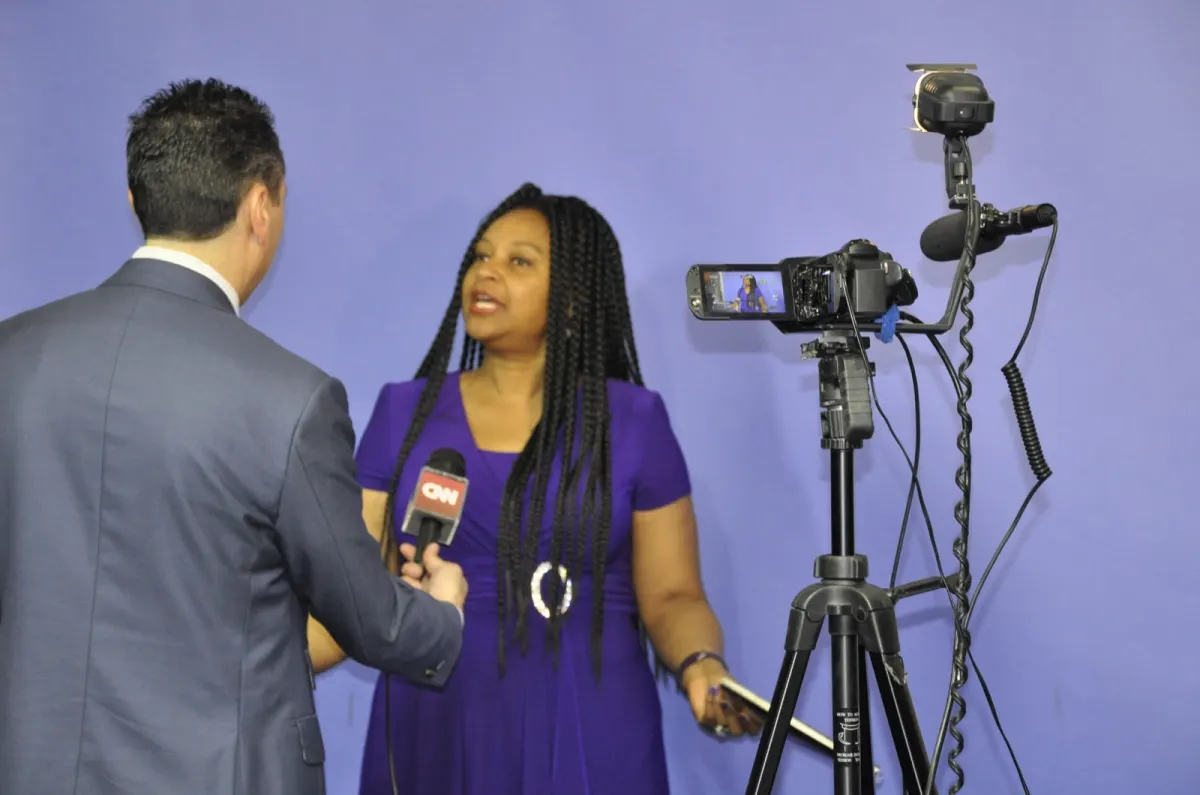
I learned this the hard way, on my own first on-camera interview, after years of being the one behind the camera instead of in front of it. I sat down, somebody started counting down, five, four, three, and I felt myself getting nervous. I remember thinking, wait, why am I nervous, I have spent years in television studios, this should not bother me at all. It bothered me anyway.
Why this matters (and what most executives get wrong)
Most people assume they need to fix the internal feeling before they can perform well externally. Calm the nerves first, then the calm behavior will follow. That order sounds logical and it is backwards for most people most of the time, because nerves rarely disappear on command right before a camera turns on.
What actually works is the other direction. I noticed, giving speeches and presentations, that people would tell me afterward, wow, you looked so calm and comfortable up there. Which meant I got credit for being calm and comfortable, even in moments I did not feel that way at all. The audience was responding to what they could see, not to what I felt.
This is not fake it till you make it. That phrase has fakery baked into it, and fakery is exactly what you do not want on camera. Act it and become it is different: you are performing a real, learnable behavior, the same way an actor performs a real emotion without lying about anything.
How to act it and become it before an interview
1. Notice the gap between how you feel and how you look
The video practice is worth it's weight in gold here. You are very likely more visibly composed than you feel internally already. Most people underestimate how much of their nervousness is invisible to a viewer. Start from that fact instead of from the assumption that your nerves are showing.
2. Align your energy
You are not trying to be someone else... just the best version of you. Notice what is on the video. Do you need to level up? Usually you do slightly. This way you continue to "look" the part.
3. Hold the behavior through the nervous moment, not after it passes
The countdown, the first question, the first fifteen seconds, these are exactly when the behavior matters most, because this is when the internal feeling is loudest. Act it precisely when it is hardest, not once it gets easier.
4. Let the behavior catch up to the feeling
This is the become it part. Held long enough, the calm behavior genuinely starts to produce something closer to the calm feeling. It is not instant, and it is not guaranteed every time, but it moves in that direction far more reliably than waiting to feel calm first.
If you look the part, you get credit for it. That is the lightbulb moment, and once you see it, you cannot unsee it.
The mistake most executives make
The most common mistake is waiting. Waiting to feel ready, waiting for the nerves to pass, waiting for confidence to show up before stepping in front of the camera. Confidence very often shows up after the behavior, not before it, and the people who wait for it first tend to wait through their entire interview.
The second mistake is treating this as performance in the dishonest sense, and then feeling guilty about it. There is nothing dishonest about choosing calm, steady body language on purpose. It is a skill, the same as choosing your words carefully, not a deception.
Case study: the countdown that never gets easier, and does not need to
Years into doing this professionally, I still notice the same flicker of nerves in the exact moment a countdown starts before an interview. That has not gone away, and I no longer expect it to. What changed is what I do with it: the posture, the pace, the steady voice go on regardless of what is happening underneath.
Executives I coach report the same experience once they stop trying to eliminate the nerves first. The nerves do not vanish. They simply stop being visible, and stop being the thing running the interview.
What to do next
Before your next interview, pick the two or three physical behaviors you want to hold regardless of how you feel walking in: your pace, your posture, your voice. Practice holding them on camera specifically during the moment you expect to feel most nervous. If you want to build that muscle with a coach watching for exactly where it slips, get a quick quote.
For the physical side of this, read body language in a media interview, and for what to do with the anxious energy itself, what to do when your heart is pounding before a media interview.