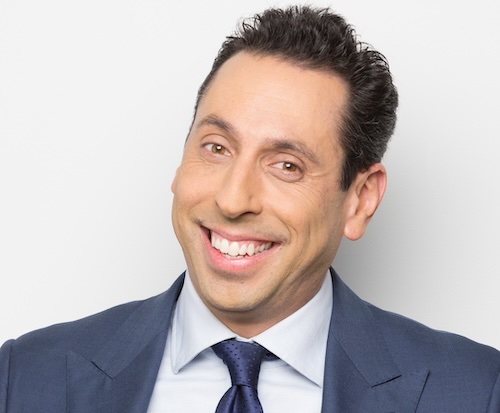

He told me he had read at least forty books on presenting. He still could not command an audience, and the part that bothered him most was that he could not work out why. A few hours of coaching later he watched the transformation happen on the video playbacks.
This is a doctor in the Boston area, and the reason his case sticks with me is that he had done everything the self-teaching route asks you to do. He was not lazy, he was not in denial, and he was not short of information. He was short of feedback.
Forty books is not a small number
Forty books is a serious commitment. It is more reading on the subject than most professional speakers have done. He could name the frameworks. He knew the advice about openings, about pausing, about not reading your slides.
And when he stood up in front of a room, none of it converted. He described it accurately: he could not command an audience. Not that he panicked or froze, which would at least have been a diagnosable problem. Something subtler was happening, and no book had been able to tell him what it was.
What "could not command a room" actually means
It is a vague complaint, and it is worth making it concrete, because the vagueness is part of why he was stuck. Nobody can fix a feeling.
In practice, when someone says they cannot command a room, what is usually happening is that the audience never quite hands over its attention. People stay polite and stay partly elsewhere. The talk is being received rather than followed. There is no single dramatic failure to point at, which is exactly the problem: there is nothing obvious enough to prompt anyone to give feedback.
The causes are almost always specific and almost always invisible from the inside. Sentences that fade at the end so the meaning drops out. A pace that speeds up at the important part. Too many points, so nothing gets a chance to land. The best material arriving as a summary instead of a story. Slides doing the talking while the human being narrates them. Each one is small. Together they are the difference between a room that is watching you and a room that is waiting for you to finish.
Why reading about presenting does not transfer
There are three reasons, and they compound.
1. A book cannot see you
Every book on presenting is written for a general reader who does not exist. It cannot know that you drop your volume at the end of every sentence, or that your best story arrives as a summary instead of a story, or that your face does something at minute two that makes a room stop trusting you. Those are the things that were actually costing him the room, and they are invisible from inside a book and from inside your own head.
2. Knowing and doing are different skills
Reading builds knowledge. Presenting is a physical performance skill, closer to a sport than to a subject. You would not expect forty books on tennis to produce a serve. The skill lives in repetitions with feedback, not in comprehension.
3. Without outside evidence, you correct the wrong thing
Left alone with advice and no feedback, people fix whatever they are most self-conscious about, which is almost never the thing that is actually hurting them. He had probably been polishing details that no audience ever noticed while the real issue sat untouched for years.
Self-teaching is the slow lane. A coach who has done the exact thing you are trying to do, and who has coached people like you, is the fast pass.
What a few hours actually did
Two ingredients, both of which a book structurally cannot provide.
Video playback
He saw himself present. Then he saw himself present again after an adjustment. The transformation was not something he had to take on faith from a coach; it was on the screen, round after round. That is the piece that ends the guessing. You stop debating whether a change helped and simply watch whether it did.
Style tweaks plus proper storytelling
The work itself was not exotic. A set of style adjustments, and then storytelling done properly rather than gestured at. Most experts, doctors very much included, compress their best stories into a sentence of summary because the detail feels self-indulgent. The detail is the whole mechanism. A summarized story carries information; a told story carries the room.
Together those two things brought out the leader that was in him the whole time. That phrasing matters. Nothing was installed. Something was uncovered, which is why it happened in hours rather than years.
Nothing was installed in him. Something was uncovered, which is why it took hours instead of years. Jess Todtfeld
What forty books did give him
It would be wrong to treat the reading as wasted. It was not. When we got to work, he already had the concepts, the vocabulary, and a clear sense of what good looked like. That is not nothing; it is most of the reason a few hours were enough.
Somebody with no background at all usually needs part of the time spent on explanation before any practice can happen. He needed none of it. Every minute went to doing, watching, adjusting, and doing it again. The books had loaded the theory; what was missing was the only thing they could never supply, which is somebody watching him and a recording to settle the arguments.
That is the sequence I would recommend to anyone who reads their way into a subject: read, then get watched. The reading makes the coaching faster. The coaching makes the reading usable. Doing the second without the first is fine. Doing the first without the second is where people spend years.
Read, then get watched. The reading makes the coaching faster; the coaching makes the reading usable. Jess Todtfeld
So is self-teaching pointless?
No, and I would not tell anyone to stop reading. The honest framing is that it depends on two things: how much time you have, and how well you think you can teach yourself a brand-new skill with no outside eyes on you.
If you have years and enjoy the process, the do-it-yourself route genuinely gets people there. It is simply the slow lane, and it has a specific failure mode, which is his: you can put in enormous effort, absorb the entire literature, and still be blocked by something nobody has ever told you about. That trade-off is worked through in can you self-teach presentation skills.
How to choose the coach if you go that route
Since his whole problem was the absence of qualified outside eyes, the quality of those eyes matters enormously. Three checks I would apply to anyone, including me.
- Real-world experience. Have they actually given speeches and presentations like the ones you plan to give, or supported someone who has? Never take advice from someone who has not had the experience.
- People like you. Have they coached your kind of professional, with your kind of audience and your kind of subject matter?
- A video call before you commit. You must see how they present themselves. Someone who presents poorly will pass along poor skills, and a coach unwilling to get on camera to demonstrate the coaching is the biggest red flag there is.
Also check the program itself. Plenty of trainers spend the day telling war stories and give trainees practice only in the morning and again at the end, which is nowhere near enough. Look for plenty of practice that is recorded, played back, and coached. More on that in how to choose a presentation coach.
- Information was never his problem. Forty books in, he had knowledge and no feedback.
- A book cannot see you. The habits costing him the room were invisible from inside his own head.
- Storytelling has to be told, not summarized. Experts compress their best material into a sentence and lose the room doing it.
- Hours, not years. The leader was already there. Playback plus outside eyes surfaced him.
If you recognize yourself in this
Doctors and physician leaders carry a particular version of the problem: deep expertise, high stakes, and audiences that need the meaning rather than the data. That is the focus of presentation training for doctors, and for the highest-pressure rooms, high-stakes presentation training.
If you want to know how quickly you would see something, start with how long presentation training takes. Other questions buyers ask first are collected in the presentation training questions hub, or tell me your situation on the quick quote form.
Not ready yet? No problem. Start with a copy of my book Media Secrets or grab the 7 Media Interview Secrets and put a few ideas to work first.