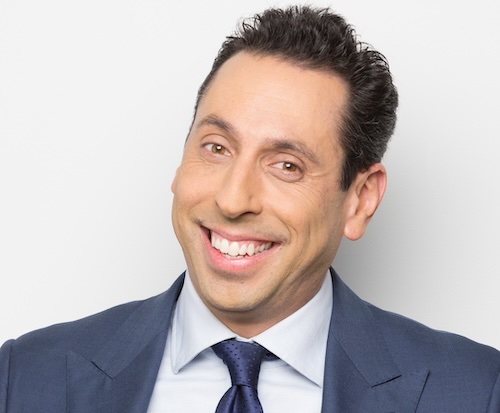

He came in sure he would be terrible. By the third on-camera practice round, this United Nations leader was blown away by how interesting and charismatic he looked on screen. A stone-faced executive teared up in the room, because he had not thought it was possible.
I have trained members of the United Nations for more than 15 years, and this is the session I think about most. Not because the technique was unusual. Because of how completely wrong he was about himself, and how fast the evidence overturned it.
He arrived with a verdict, not a question
Most people who book presentation coaching arrive with a question: how do I get better at this. He arrived with a verdict already delivered. He was going to be terrible. He had presumably been telling himself this for a long time, and nothing in his professional life had contradicted it, because nobody in a senior meeting stops to say "you looked compelling just then."
He also had the specific profile that makes this belief hardest to shake. He was composed, formal, and low in visible expression. In the language people use about themselves, stone-faced. Someone with that presentation style tends to assume that what they feel inside, which is flat, is exactly what the room sees. It rarely is.
Why almost everyone is wrong about how they come across
There are two separate signals in any presentation, and people confuse them constantly.
- What it feels like to deliver. Internal, noisy, dominated by nerves, self-monitoring, and the memory of the sentence you just fumbled.
- What it looks like from the audience seat. External, much calmer than the inside version, and mostly made of things you were not thinking about at all.
You have unlimited access to the first signal and almost none to the second. So people build a lifelong theory of how they present out of the only data they have, which is the wrong data. A coach saying "you are more engaging than you think" cannot dislodge that theory, because it is one opinion against years of felt experience.
He had built a lifelong theory about how he came across out of the only evidence he had, which was the wrong evidence. Jess Todtfeld
Composed is not the same as flat
The specific trap for a formal, senior, low-expression person is assuming that composure and dullness are the same thing, and that the only exit is to become someone louder. That is why so many reserved executives resist this work: they think the goal is a personality transplant they neither want nor believe in.
It is not. Watch what actually reads as compelling on a recording and it is rarely volume. It is a person who is clearly interested in what they are saying, who lands the ends of their sentences instead of letting them fade, who lets a story have its detail, and who is willing to stop talking for a moment. None of that requires becoming extroverted. A composed person doing those four things reads as authoritative, and authority is a more useful currency at senior level than enthusiasm.
That is roughly the gap he was living in. He had assumed his composure was a deficit. On camera it was an asset that needed four small adjustments, not a rebuild.
What the three rounds looked like
The structure of this work is not complicated. It is deliberately repetitive, because repetition with playback is the mechanism.
Round one: the baseline
The first recorded round exists to be watched, not to be good. Everyone hates it, which is expected and useful. Watching it is the first time most people see the difference between the disaster they experienced and the ordinary, perfectly acceptable human being on screen. That gap is already smaller than they assumed.
Round two: one or two changes, not ten
The temptation after a first playback is to fix everything. That does not work, because you cannot deliver and analyze at the same time. So round two carries one or two adjustments at most: a place to slow down, a story to tell properly instead of summarizing it, a habit to drop. Small inputs, delivered again on camera.
Round three: the round that surprises people
By the third round the adjustments have stopped being conscious tasks and have started being how the person talks. That is the round he watched and could not reconcile with what he believed. He was not watching someone performing charisma. He was watching himself, mostly relaxed, telling something he cared about, and it read as interesting and charismatic on screen.
Then a formal, composed, senior United Nations leader teared up in a training room. Not because anyone had complimented him. Because the recording had.
Advice can be argued with. A recording cannot. The playback is not an opinion about how you came across; it is the thing itself, and it settles the question in seconds rather than sessions.
How fast does this happen
Faster than almost anyone expects. Working with a coach who records you during practice, you should see the change within a few hours. After a full-day intensive, people tend to look back at the first round and realize how far they leapt in a single day. That is the difference between a high-level training with a coach and reading a book about presenting.
It is worth being precise about why the speed is possible. Nothing about him actually changed in an afternoon. His beliefs about himself changed, and behavior followed. That is a much shorter path than building a new skill from nothing.
What to do if you are the one who is certain
If you recognize yourself in him, and a large number of senior people do, four things are worth doing in this order.
Get the evidence before you get the advice
Record yourself delivering something real, before anyone coaches you on anything. Most people skip straight to fixes and never establish what they are actually fixing. The baseline is the whole point, and it is usually far less alarming than expected.
Separate delivering from analyzing
These are two jobs and they compete for the same attention. This is exactly why practicing in front of a mirror fails: you are trying to perform and evaluate simultaneously. Deliver first, watch second, and never both at once.
Plan the middle before the opening
Most people build a presentation front to back and spend their best energy on an introduction that is not anchored to anything yet. Decide the two or three things that have to survive the room, then construct the introduction and the conclusion around them. Even then you are only halfway there, because a plan is not a performance.
Say it out loud, more times than feels necessary
Skipping practice is what almost everybody does, and it is why so many senior presentations are effectively first drafts delivered to an audience that deserved a finished one. Practicing with a coach lifts style, leadership, body language, voice, and the ability to move a room to act. Practicing alone on camera still beats not practicing at all by an enormous margin.
The part that matters for international leaders
People ask constantly whether this translates across cultures and across regions. The short answer is yes. The core skills are universal: becoming more interesting and more succinct, getting to the point, using stories and analogies properly, not data dumping, and staying in control of a room. Leaders from every region tell me those are exactly what they want.
What does need care is context: what will actually land for a particular group in their region, and which habits read differently in different places. Fifteen years inside the United Nations has kept me sensitive to that. The universal mechanics still apply; the examples and the emphasis change. That is the work described on presentation training for international speakers.
- Certainty is not evidence. He was completely sure he would be terrible and completely wrong, on the basis of years of felt experience.
- Three rounds beat three hours of advice. Record, watch, adjust one thing, record again. The loop is the method.
- Do not try to fix everything after round one. You cannot deliver and analyze at the same time, so change one or two things per round.
- The visible change is fast. A few hours of recorded practice, and a full day tends to feel like a leap.
Where to go from here
If you are trying to work out whether your leader needs a focused block of training or ongoing coaching, that distinction is covered in presentation training versus coaching. If the question is simply how quickly you would see something, start with how long presentation training takes, and for running the loop yourself between sessions, how to practice a presentation.
For senior leaders who have to hold rooms across countries and cultures, this is the work I do in high-stakes presentation training. More buyer questions are answered in the presentation training questions hub, or describe the group on the quick quote form.
Not ready yet? No problem. Start with a copy of my book Media Secrets or grab the 7 Media Interview Secrets and put a few ideas to work first.