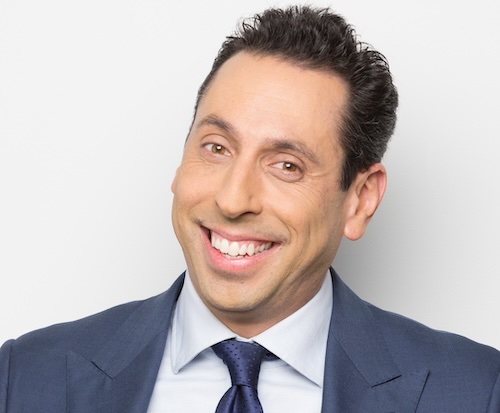

She started in what I call the mediocre middle: not terrible, not amazing. By the end of the work she was exceptional, she had caught the eye of the CEO, and she was on the fast track. Today she is one of the top three people at an insurance company and in line to be the next CEO.
This is the case study I reach for whenever somebody asks me whether presentation training is worth the money. It is not a story about a nervous person who learned to survive a speech. She was already competent when she came to me. That is exactly what makes it useful.
What the mediocre middle actually is
The mediocre middle is the widest band in any organization. People in it are not a problem. They show up prepared, they get through the deck, nobody winces, nobody complains. They also do not get talked about afterward.
That is the trap. Being bad at presenting gets flagged and fixed, because somebody eventually tells you. Being average gets nothing, because there is no incident to react to. You can sit in the middle for a decade and never receive a single piece of feedback that would move you, because from the outside there is nothing obviously wrong.
She knew where she was. That was the first advantage she had over most of the room. She had decided this was a skill worth raising the bar on, rather than a fixed trait she had been issued at birth.
Presenting is a leadership, communication, and life skill. It is not decoration on top of the real work. It can be the difference between getting the job or the promotion you want and not getting it.
Why the middle is the most expensive place to sit
Senior leaders are not evaluated only on results. They are evaluated on results plus the ability to explain those results to people who were not in the room when the work happened. Boards, regulators, clients, and the executive committee all meet you through a presentation, not through a spreadsheet.
In insurance and financial services that gap is wider than almost anywhere else. The products are complex, the language is regulated, and the temptation is to protect yourself by saying everything. Say everything and you have said nothing anyone will carry out of the room. That is how a genuinely capable leader gets read as merely solid.
So the cost of the middle is not embarrassment. It is invisibility. Decisions about who is next are made by people whose entire exposure to you is a handful of twenty-minute windows a year.
What raising the bar actually involves
People imagine this work is about tips: hold your hands like this, stand there, do not say um. Tips are the smallest part of it. The change comes from three things done repeatedly.
1. Recorded practice, played back immediately
Almost nobody has an accurate picture of how they come across. The gap between how a presentation feels from the inside and how it lands from the outside is enormous, and it never closes through description. It closes the moment you watch yourself. A coach can tell you that you are rushing your best point. The recording ends the argument in four seconds.
This is why I insist on multiple recorded reps with playback rather than a day of lecture. You should see meaningful change within a few hours of this kind of practice, and after a full day you tend to realize how far you have moved. Reading about it does not do that. Watching yourself does.
2. Structure, built middle first
Most people write a presentation front to back and burn their best energy on an opening that is not yet anchored to anything. Plan the middle first: the two or three things that must survive the room. Then build the introduction and the conclusion around them. At that point you are only halfway there, because a plan is not a performance.
3. Enough practice that the material stops being a first draft
Skipping practice is the single most common failure I see at senior levels, and it is understandable: the calendar is full and the deck feels finished. But a presentation you have never said out loud is a first draft, and a first draft delivered to a board is exactly what it sounds like. Practicing with a coach elevates style, leadership, body language, voice, and the ability to move an audience to act.
How a presentation skill becomes a promotion
Here is the mechanism, because it is less mysterious than it looks. She did not get promoted for presenting. She got promoted because the presenting made the rest of her visible.
When she stopped delivering competent, forgettable updates and started delivering things people repeated afterward, three things happened in sequence. Senior people began to remember what she had said. Remembering led to being asked her opinion outside her own agenda item. Being asked her opinion led to the CEO forming a first-hand view of her judgment. That is the fast track. It was not a favor; it was a consequence.
She did not get promoted for presenting. She got promoted because the presenting finally made the rest of her visible. Jess Todtfeld
If you want the measurement side of this, the test I use is whether an audience understands what you said, remembers it, acts on it, and passes it on to somebody else. That framework is laid out in the doctors' keynote case study on measuring what a room actually kept, and in more depth in how to measure presentation training ROI.
Two fair objections to this story
Whenever I tell it, two reasonable people push back, and both deserve a straight answer.
"She was probably going to be promoted anyway"
Possibly. I cannot run the counterfactual, and I would distrust anyone who claimed they could. What I can say is that the sequence is observable and it is not rare: the presenting changed, then what senior people knew about her changed, then her opportunities changed. Plenty of people with equivalent ability never get the second step, and the reason is almost always that the only exposure decision-makers had to them was a competent, forgettable twenty minutes.
"This is style over substance"
It is the opposite. Substance that nobody can follow, remember, or repeat does not function as substance inside an organization. The work here was not learning to seem impressive. It was learning to get real analysis out of her head and into other people's heads intact, which is the only form in which analysis ever affects anything. If a room cannot retell your point, the point did not arrive.
What this kind of work costs and how long it takes
Presentation and public speaking training typically runs $1,000 to $5,000 to $15,000 depending on scope and the number of people involved. The honest answer to "which one do I need" depends entirely on the outcome you are after. It would be silly to go to college for two or three hours, and by the same logic a very short session is not the right instrument for a leader trying to change how an entire organization perceives them.
The other variable is format. The best class size is one, because every exercise is yours and the leaps are bigger in less time. Group workshops are excellent for team building and friendlier to a budget. The trade-off is laid out in one-on-one versus group presentation training, and the timeline question in how long presentation training takes.
- Average is not safe. Bad presenting gets fixed because somebody says something. Average presenting gets ignored for years.
- The decision comes first. She improved because she treated this as a skill to raise the bar on, not a personality trait.
- Recorded practice is the engine. Watching yourself closes the gap between how it feels and how it lands faster than any amount of advice.
- Visibility is the payoff. Being remembered leads to being consulted, and being consulted is how senior people form a view of your judgment.
If this sounds like someone on your team
Insurance leaders carry a specific burden: explain complex, highly regulated products clearly, hold a room of skeptical stakeholders, and stay composed under hard questioning. That is the work in presentation training for insurance and in high-stakes presentation training for senior leadership teams.
More answers to the questions buyers ask before they start are collected in the presentation training questions hub. If you would rather just describe the situation, use the quick quote form and tell me who the leader is and what they are presenting into.
Not ready yet? No problem. Start with a copy of my book Media Secrets or grab the 7 Media Interview Secrets and put a few ideas to work first.