The Podcast Host Gear Checklist
What to buy, in what order, and where spending more actually changes the show.
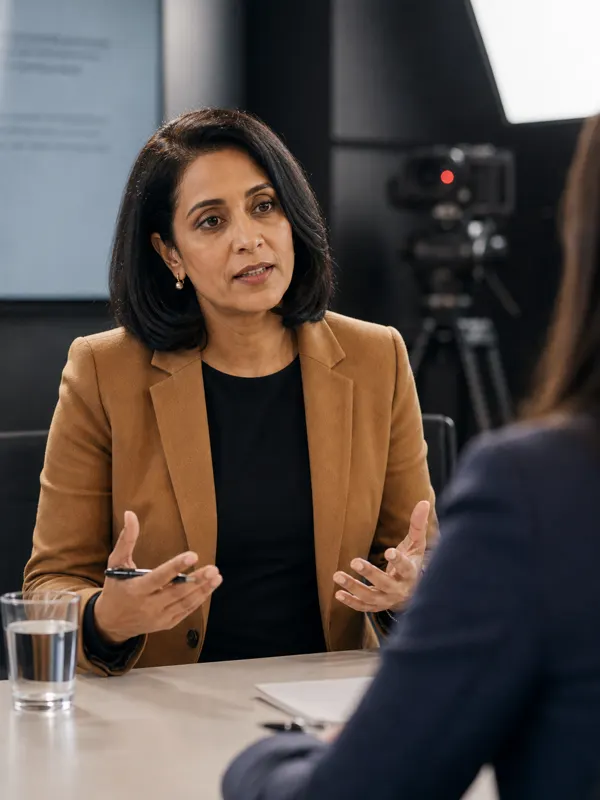
A podcast host should buy in this order: a broadcast dynamic microphone, an interface or production console, closed-back headphones for every seat, a recording platform that captures locally, room treatment, lighting, then a camera. Expect $800 to $1,500 for a solid two-person setup. The platform choice protects more interviews than any microphone.
As the host you are on every single episode. Your voice is the one your audience hears most, and your setup is the one that has to work every week rather than once.
That changes the math. A guest can get away with a good USB microphone. A host should buy the microphone once, buy the room treatment nobody notices, and spend real money on the recording platform, because the platform is what stops a bad connection from destroying an interview you cannot get again.
What microphone should a podcast host buy?
As the host your voice is the through-line of every episode. You are also the one your audience hears most, so this is where the budget belongs. A dynamic microphone close to your mouth keeps your room out of the recording.
Buy the microphone once. It will outlive three computers.Jess Todtfeld
Shure SM7B
The microphone in nearly every professional studio. Superb background rejection, forgiving of an imperfect room, and effectively indestructible. Needs a decent preamp or an inline booster.
View product →RODE NT1 5th Generation
If your room is treated and you want detail rather than broadcast thickness. Runs XLR or USB, which makes it a safe first XLR purchase.
View product →Audio-Technica AT2035
Punches far above its price. The sensible pick when the budget has to cover an interface too.
View product →Do you need an audio interface or a podcast console?
An XLR microphone needs something to plug into. A simple interface converts the signal for your computer. A production console adds per-channel processing, sound pads and multi-guest handling, and replaces a pile of separate boxes.
Match this to the show you actually make, not the show you imagine making. A solo interview show does not need eight channels.Jess Todtfeld
RODECaster Duo
A full production studio in one box: processing per channel, sound pads, multitrack recording, and a clean path for a remote guest. The answer if you record regularly.
View product →Focusrite Scarlett 2i2 (4th Gen)
The default home-recording interface for a decade. Two inputs, clean preamps, nothing to learn. Right for a solo host or a two-person show.
View product →Zoom PodTrak P4
Four microphone inputs with four headphone outs, runs on batteries, records to an SD card. The cheapest honest way to sit four people around a table.
View product →What headphones should a podcast host use?
You need to hear problems while they are still fixable. A buzz, a clipped level, a guest drifting off mic: all obvious in headphones and all invisible on speakers until you are editing.
Keep a spare pair. Guests forget theirs, and an interview recorded through someone's laptop speakers is an interview with echo baked in.Jess Todtfeld
Beyerdynamic DT 770 PRO
Comfortable enough for a three-hour session, well isolated, and detailed enough to catch problems early.
View product →Sony MDR-7506
The broadcast default. Buy several for the guest chairs and stop worrying about it.
View product →RODE NTH-100
Designed for exactly this job, with a cooler earcup than most closed-backs and a lockable cable that guests cannot yank out.
View product →What camera is best for recording a video podcast?
If you publish video, or cut vertical clips for social, the camera decides how much you can crop. Shooting 4K and publishing 1080p gives you room to punch in on a moment without it turning to mush.
The clips are where most of the audience growth happens now. Shoot with the clip in mind, not just the episode.Jess Todtfeld
OBSBOT Tail 2
4K with AI tracking that follows a moving host, which removes the need for a camera operator on a multi-person show.
View product →Elgato Facecam Pro
4K60, no drivers to fight, and it slots straight into a streaming workflow if you also go live.
View product →Logitech MX Brio
Enough camera for a show that publishes at 1080p, at a price that leaves budget for the audio, which matters more.
View product →How do you light a podcast studio?
One light in front removes the shadows. A second light behind or to the side separates you from the wall, which is the difference between looking recorded and looking produced. Lighting matters more than the camera.
Curate what is behind you before you buy anything. A real, tidy background beats a virtual one, and it beats a branded backdrop that reads as an advertisement for an hour.Jess Todtfeld
Elgato Key Light (two)
App-controlled brightness and color temperature, mounted on desk clamps so no floor space disappears. Two of them cover key and fill.
View product →Aputure amaran 60d S with softboxes
Real COB lights with Bowens mounts. Bigger, softer light and a serious step up in how the video reads.
View product →Neewer LED panel kit
Stands, panels and diffusion in one box. Not elegant, but it puts light in the right places for a fraction of the money.
What is the best podcast recording platform?
This is the most important choice on the page and it is not hardware. Platforms that record each person's audio and video on their own device protect you from a bad connection, because the good file never has to survive the internet. Recording a Zoom call captures the compressed stream, wobbles and all.
Whatever you use, tell the guest which platform in the invitation and ask them to click the link once, the day before. The first two minutes of most interviews are spent finding the mute button.Jess Todtfeld
Riverside
Local recording up to 4K, a guest experience that requires nothing but a browser, and editing tools built in. The default recommendation for a video show.
View product →SquadCast
Reliable, simple for guests, and now owned by Descript, so the handoff into editing is short.
View product →Zencastr
Recording plus hosting, the RSS feed and monetization in one subscription. Fewer tools to run if you are starting from scratch.
View product →How do you treat a room for podcast recording?
Every hard surface sends your voice back into the microphone a few milliseconds late, which is what makes a recording sound like a bathroom. You do not need a studio. You need to break up the reflections in the few feet around the microphone.
Before you buy anything: record thirty seconds in the room and listen on headphones. Most people have never actually heard their own room.Jess Todtfeld
Acoustic panels behind and beside you
Treat the wall your microphone points at first, then the one behind you. Slat-style wood panels look intentional on camera, which matters if the wall is in the shot.
A reflection filter on the mic
A curved shield mounted behind the microphone. It only treats the few inches that matter most, which is the highest return per dollar in this category.
Rugs, curtains, bookshelves
A rug on a hard floor and a curtain over a bare window do real acoustic work. Record in the room with the most soft furniture in it.
Common questions
What is the best microphone for a podcast host?
The Shure SM7B remains the default in professional studios because it rejects background noise and forgives an untreated room, though it needs a strong preamp or an inline booster. If the budget has to stretch to an interface as well, the Audio-Technica AT2035 delivers most of the quality for far less.
Do I need a RODECaster, or is an audio interface enough?
An interface is enough for a solo host or a two-person show recorded remotely. A production console like the RODECaster Duo earns its price when you record multiple people in the room, want per-channel processing and sound pads, or are tired of running a separate mixer, recorder and interface.
Should I record on Zoom or a dedicated podcast platform?
Use a dedicated platform. Zoom captures a compressed stream, so every connection wobble is permanently baked into the file. Riverside, SquadCast and Zencastr record full-quality audio and video on each person's own device and upload afterward, which means a bad connection during the call does not damage the recording.
How much does a good podcast setup cost?
Around $800 to $1,500 for a two-person show: roughly $400 for the microphone, $180 to $400 for the interface or console, $200 to $300 for headphones, $150 a year for the recording platform, and $100 to $300 for room treatment. A camera can wait, because audiences forgive imperfect video and leave over bad audio.
What is the most common mistake new podcast hosts make?
Spending on the camera first and the room last. Lighting and acoustic treatment change how a show reads far more than resolution does, and both are cheaper. The second most common mistake is not starting a backup recording, which every experienced host learns exactly once.
Spend in this order
If you are building from nothing: microphone, headphones, recording platform, room, lighting, then camera. That order surprises people, because the camera is the fun purchase and the room treatment is the boring one.
Audiences forgive imperfect video constantly. They leave over bad audio within a minute, and they never come back to tell you why.
Being on the show is the easy part
Success in Media prepares executives, authors and founders for the interview itself: the stories, the structure, the calls to action, and the practice that makes it land. Jess Todtfeld is a former ABC, NBC and Fox television producer with 13 years behind the desk deciding who was worth booking.
Speak with JessLast reviewed September 2026. Approximate street prices in USD, checked September 2026. Prices move. Treat these as a range, not a quote.
A broadcast microphone
- Shure SM7B $399 · Top pick
- RODE NT1 5th Generation $249 · Best condenser
- Audio-Technica AT2035 $149 · Best value
An interface or a production console
- RODECaster Duo $399 · Top pick
- Focusrite Scarlett 2i2 (4th Gen) $179 · Best value
- Zoom PodTrak P4 $149 · Best for panels
Closed-back headphones, for everyone at the table
- Beyerdynamic DT 770 PRO $179 · Top pick
- Sony MDR-7506 $100 · The standard
- RODE NTH-100 $149 · Best newer option
A camera that matches your ambitions
- OBSBOT Tail 2 $599 · Top pick
- Elgato Facecam Pro $299 · Best plug-and-play
- Logitech MX Brio $130 · Best value
A two-light setup
- Elgato Key Light (two) $200 each · Top pick
- Aputure amaran 60d S with softboxes $189 each · Best quality
- Neewer LED panel kit $120 for a kit · Best budget
A recording platform that records locally
- Riverside From $15/mo · Top pick
- SquadCast From $10/mo · Best audio-first
- Zencastr From $20/mo · Best all-in-one
Something soft on the walls
- Acoustic panels behind and beside you $100 to $300 · Top pick
- A reflection filter on the mic $50 to $120 · Best value
- Rugs, curtains, bookshelves Free · Free fix