
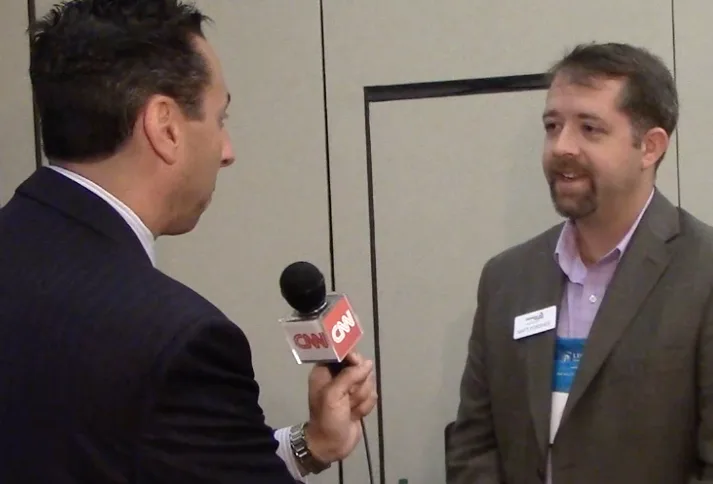
Reporters tend to quote what you say early, so your best line belongs at the start of every answer, not the end. That is the opposite of how most smart people prepare. They build to a conclusion. The reporter has usually stopped listening for one by then.
Someone in a recent workshop asked me exactly that: where in an interview should I put my best points? It is a better question than it sounds, because the honest answer comes from the edit room, not from a media training slide.
What I watched reporters do with their notes
I spent 13 years as a TV producer at ABC, NBC and Fox. I sat next to reporters while they went back through an interview to decide what to use. There was a pattern, and it was not subtle.
They would open their notes, or scrub to the top of the footage, and find something good right there. Fine. Done. Sometimes one of them would say, wait, there was something great later on. And the answer from the rest of us was, that is nice, but we are going with the opening.
Nobody was being unfair to the guest. A reporter on deadline has a stack of other work. The first usable thing is usable. The hunt for something slightly better costs time they do not have.
Why saving the best for last backfires
Most executives answer like they are giving a closing argument. Context first, background second, caveats third, and the point somewhere around the two-minute mark. It feels responsible. It feels like earning the conclusion.
In an interview, you are not earning anything. You are handing over material. If the usable line is buried at the end of a long answer, a print reporter has to pull it out of context, and a TV or radio producer has to cut around the preamble. Either way, you are giving them a reason to go with someone else's tidy sentence.
This gets worse with length. Somewhere between 30 seconds and a minute is an answer a journalist can use. Go past that and, as I tell people, they have to take you out of context. I covered that in more detail in the piece on answering tough media interview questions.
How to build an answer that opens with the good part
I teach a structure I call the answer system, and it fits this problem neatly. You cannot control the questions, though you can prepare for them and practise them. You have 100% control over the answers, because you can write them out ahead of time.
Start with a short answer that deals with the question. It can be a yes or a no. It can be "I don't know what happens in other organizations," followed by something you do know. It ties a bow on the question. Then you get to move to where you want to go.
The trick is that the short answer is not filler. It sets up your strongest line, and your strongest line comes immediately after it. Short answer, then your best point, then the supporting detail if there is time.
A worked pattern
- Answer the question in a few words.
- Say the line you most want quoted, in a sentence a reporter could drop straight into a story.
- Add a proof point, a fact or a short story.
- Stop. Do not wander on to fill silence.
The same rule applies to the whole interview
If a reporter is only going to take one answer, it is probably one of the earlier ones you gave. That means the first few minutes of an interview carry more weight than people expect. Do not warm up on the weak material and save the real message for when you finally feel comfortable.
So decide before you walk in what your strongest two or three points are, and get at least one of them into your first couple of answers. If you wait for the perfect opening in the question, you may not get one.
You will not run out of good material
When I coach this, someone always says: but if I use my best line first, I will have nothing left. I see the same fear in speaking coaching. A client says, I want to save the strongest moment for the end of my talk.
My answer is the same in both rooms. Challenge yourself to put the best thing first. You rise to the occasion. You tend to find other good moments after it, because you are no longer holding back, and the audience, or the reporter, feels right away that this matters.
A quick test for any answer
Read your answer back and underline the sentence you would want to see in print or hear on the air. Now look at where it sits. If it is in the last third, move it up. If your answer works without the first two sentences, delete them. The reporter is going to do that edit for you anyway, and you will like your version better.
There is a related skill in writing the line itself so that it is worth lifting. My piece on the sound bite system covers the techniques I teach for that.
Check where your best point landed
Take the last interview you gave, or the next one on your calendar, and mark where your best point landed in each answer. Then rewrite the first two answers so it comes first. If you want a second set of eyes on it, get a quick quote and we can book a call to build your answers together. For the bigger picture, see how media training works.