
Updated
A cliche used on its own says nothing. A cliche attached to your point makes the sentence quotable. Say the bottom line is, or at the end of the day, and then deliver the thing you came to say. Reporters reach for those sentences because they sound finished.
The rule you learned, and why it does not apply here
In seventh grade English your teacher told you never, ever to use cliches. It was good advice for writing an essay.
Media folks just cannot stop themselves. They quote a cliche the moment somebody hands them one, because a familiar phrase does something useful for an editor: it signals that a complete thought is arriving, and it gives them a clean place to start the quote.
Attach it, do not leave it standing alone
This is the part people get wrong. You would never just say, a penny saved is a penny earned, and stop. That makes no sense inside an answer about your business.
What you do is take something like the bottom line is, or at the end of the day, and attach it to what you were already going to say.
Look, the bottom line is, when it comes to media interviews, you need to do this. The moment I attach that phrase to what I am saying, the answer comes alive.
Nothing about the substance changed. The sentence just got a handle on it, and a sentence with a handle is a sentence somebody can pick up.
These are not tricks
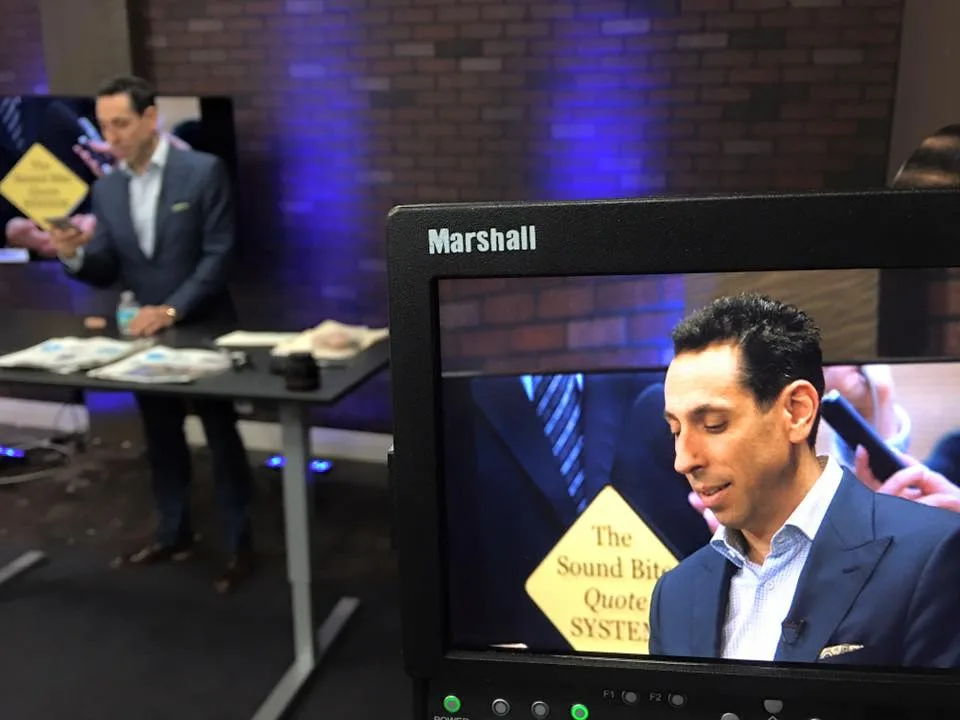
People call these tricks. They are not. They are part of the sound bite system, and the goal of the system is simple: maximize your chance of getting quoted.
That matters more than it sounds. A brilliant answer that never makes the piece did not do anything for you. The techniques are how a real point survives an edit.
Three techniques you can use tomorrow
1. Mix in a cliche
The bottom line is. At the end of the day. Attach one to a point you were going to make anyway. Use it on the points that matter most, not on every sentence.
2. Speak in absolutes
Stand behind what you say. Look, we must do this. An absolute has an edge on it, and an edge is what makes an editor stop scrolling.
3. Make a prediction, with a number in it
Next year we will have thirty five percent of that workforce gone. A prediction with a specific number is close to irresistible, because it is checkable, it is bold, and it is exactly the kind of sentence a headline gets written from.
Anything that comes out of your mouth can be quoted, and that cuts both ways. An absolute or a prediction you cannot stand behind is just as quotable as one you can.
Where sound bites fit in the rest of the system
Sound bites are the last layer. First you need somewhere to go, which is the message grid, and a way to get there, which is the short answer. The sound bite is what makes the point land once you have arrived at it. Read the message grid and the three part answer for the layers underneath.
If you want your team taken through the full list with recorded practice on their own questions, get a quick quote.